Sep 2, 2026
OEM Packaging Checklist for Private Label Noodles
Use this buyer checklist to define noodle pack size, materials, artwork, languages, barcodes, date codes, cartons and approval records.
Private-label noodle packaging should be treated as a technical purchasing specification, not only a graphic-design task. A clear packaging brief prevents artwork, packing and quotation errors later.
1. Identify the product and pack size
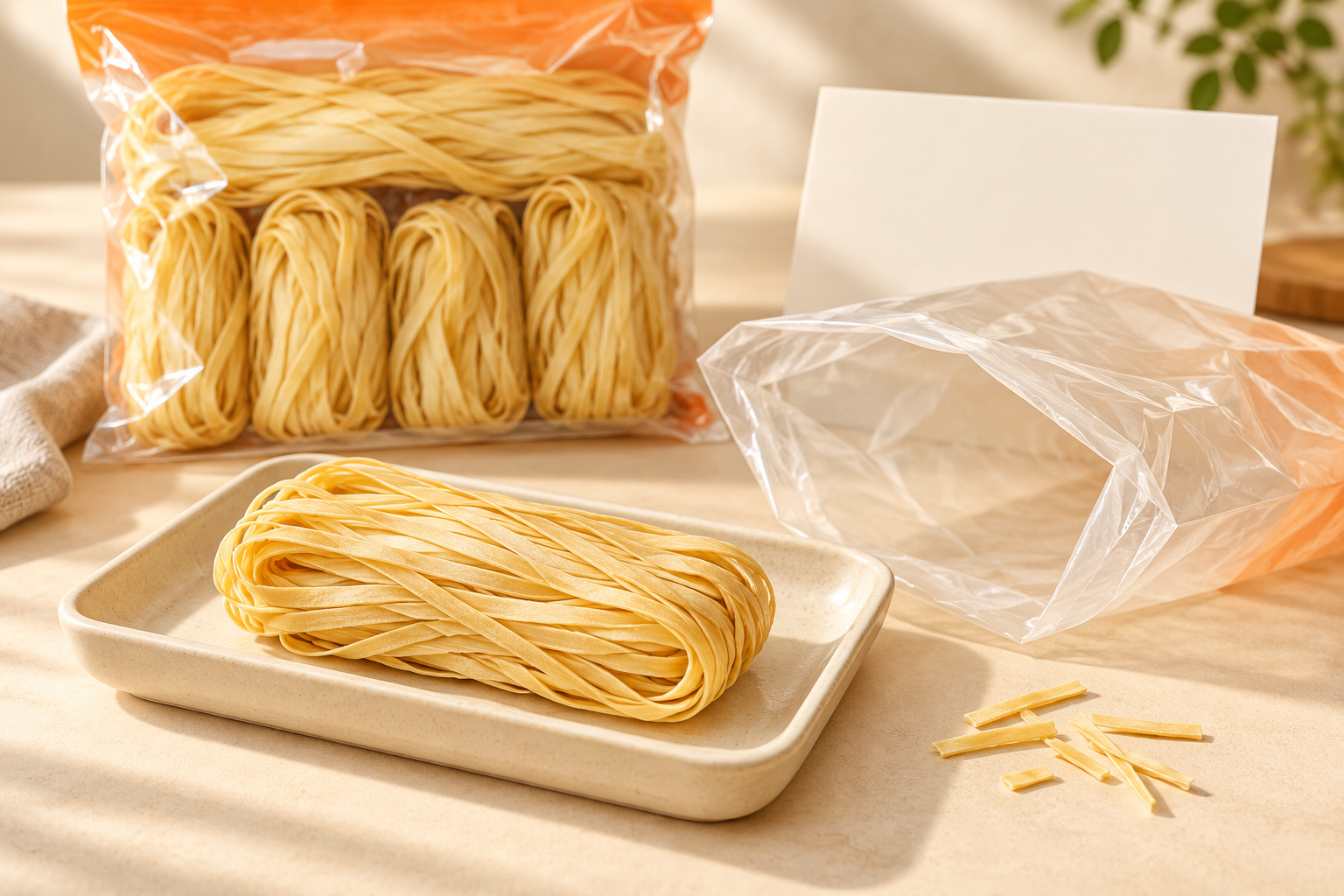
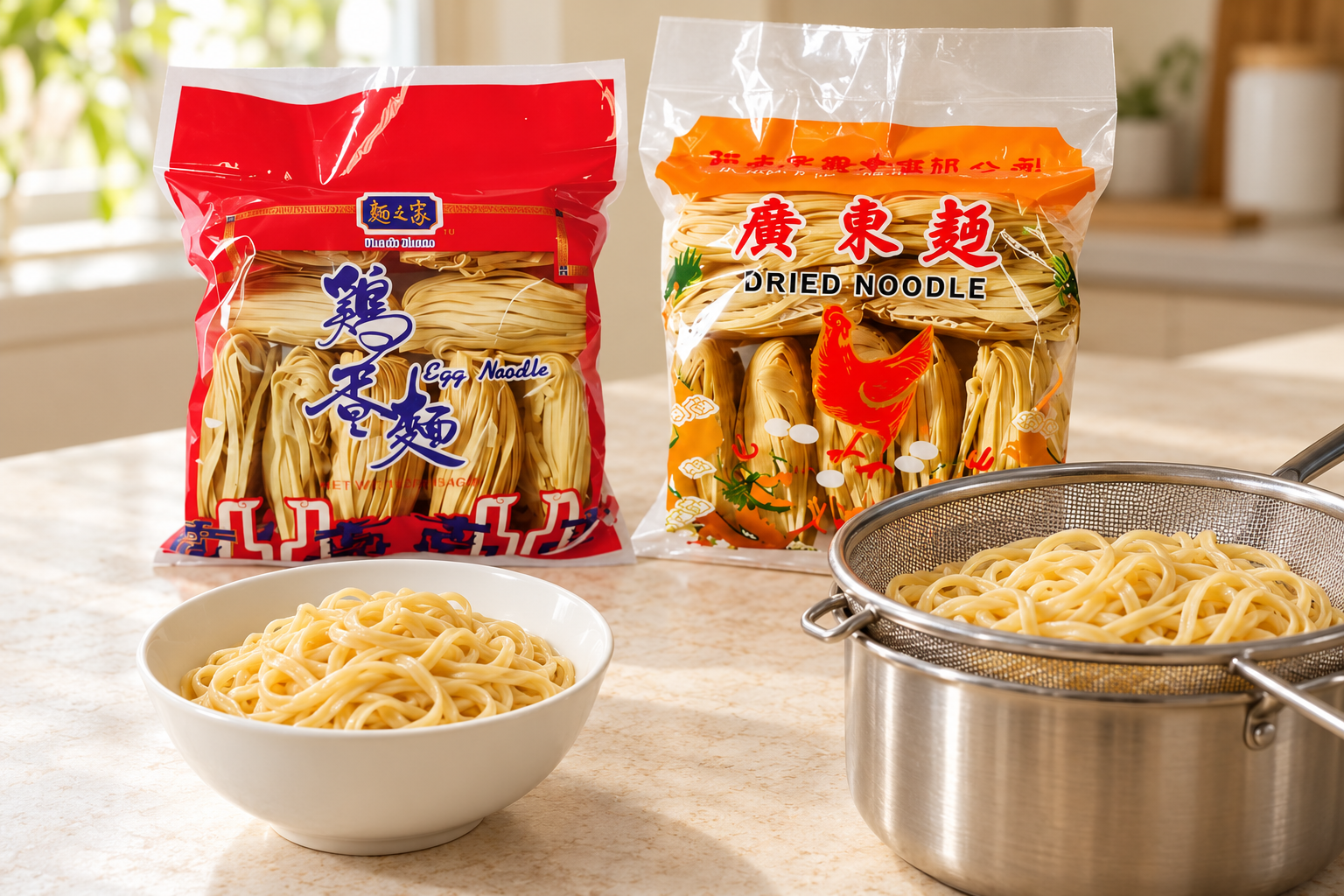
Name the exact noodle SKU, unit weight and units per carton. Catalog formats include 454 g bags packed 30 per carton, Shanghai Noodles in 340 g bags packed 30 per carton, and Amoy Flour Vermicelli in 300 g bags packed 40 per carton.
Confirm the selected format because carton size and loading references change with the pack.
2. Define the packaging structure
State the intended bag or box format, required barrier properties, finish and sealing requirements. Ask the supplier to confirm the material structure suitable for the product and shelf-life target.
Do not copy a competitor's material specification without checking it against the actual noodle and distribution conditions.
3. Prepare complete artwork content
The buyer should provide brand assets, product name, net weight, ingredients, allergen statement, nutrition panel where required, origin statement, importer details, barcode, cooking instructions, storage information and recycling marks required by the market.
Every factual statement must match the approved product specification.
4. Mark variable information
Reserve clear areas for production date, best-before date, batch code and any traceability information. Confirm the printing method, code format and reading direction on the actual pack.
5. Specify languages and market versions
List all required languages and whether one multilingual pack or separate regional versions are needed. The catalog states that language customization can be discussed, but final artwork responsibility and legal review should be agreed in writing.
6. Define the shipping carton
Provide carton marks, SKU code, quantity, gross and net weight requirements, barcode and handling marks. Confirm whether the retail pack changes the standard carton dimensions or loading calculation.
7. Control approvals
Use version numbers for every artwork file. Approval should cover the dieline, text, color reference, barcode check, variable-code position and carton mark. Keep the final signed or timestamped version with the purchase order.
8. Confirm commercial effects
Printed packaging can affect MOQ, setup costs and lead time. The catalog's typical 100-carton MOQ and 15–20 day lead-time references must be reconfirmed for private-label work.
Who is responsible for label compliance?
The buyer and importer should confirm destination-market requirements. The supplier should provide accurate product data and review manufacturability, but market compliance should never be assumed.
Should artwork start before product approval?
Use preliminary artwork only for planning. Final artwork should follow confirmation of the exact formula, pack size and required product information.