Oct 12, 2026Buying Guides
Choosing an Egg Noodle for US Retail: Review the Product Identity Before Copying the Catalog Name
Before carrying a catalog Egg Noodle name into a US retail brief, review the intended product identity, formulation evidence and physical form. The catalog does not determine the applicable route.
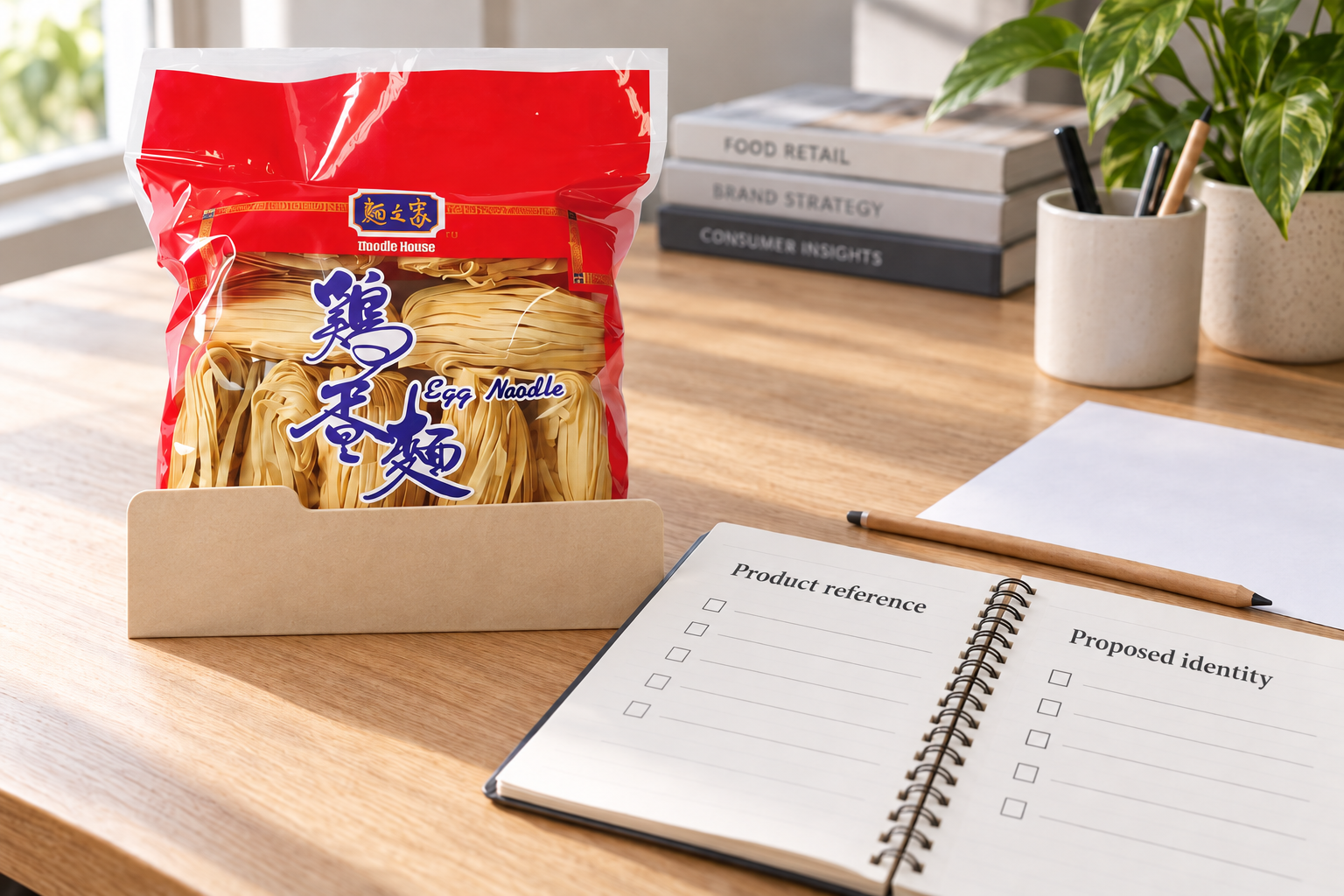
AI-generated editorial illustration. The package rendering and blank notes are not an approved US retail label, product specification, regulatory assessment or evidence of FDA approval.
When shortlisting Noodle House Food's Egg Noodle for US retail, treat the catalog name as the starting reference for a product review. Before carrying it into a private-label brief, establish which product identity the proposed US presentation represents and what evidence that identity requires.
That decision goes beyond confirming that egg appears in the ingredients. US standardized noodle products and appropriately represented Chinese-style noodles have distinct treatment. The catalog alone does not determine which route applies to this SKU.
Start with the actual catalog product
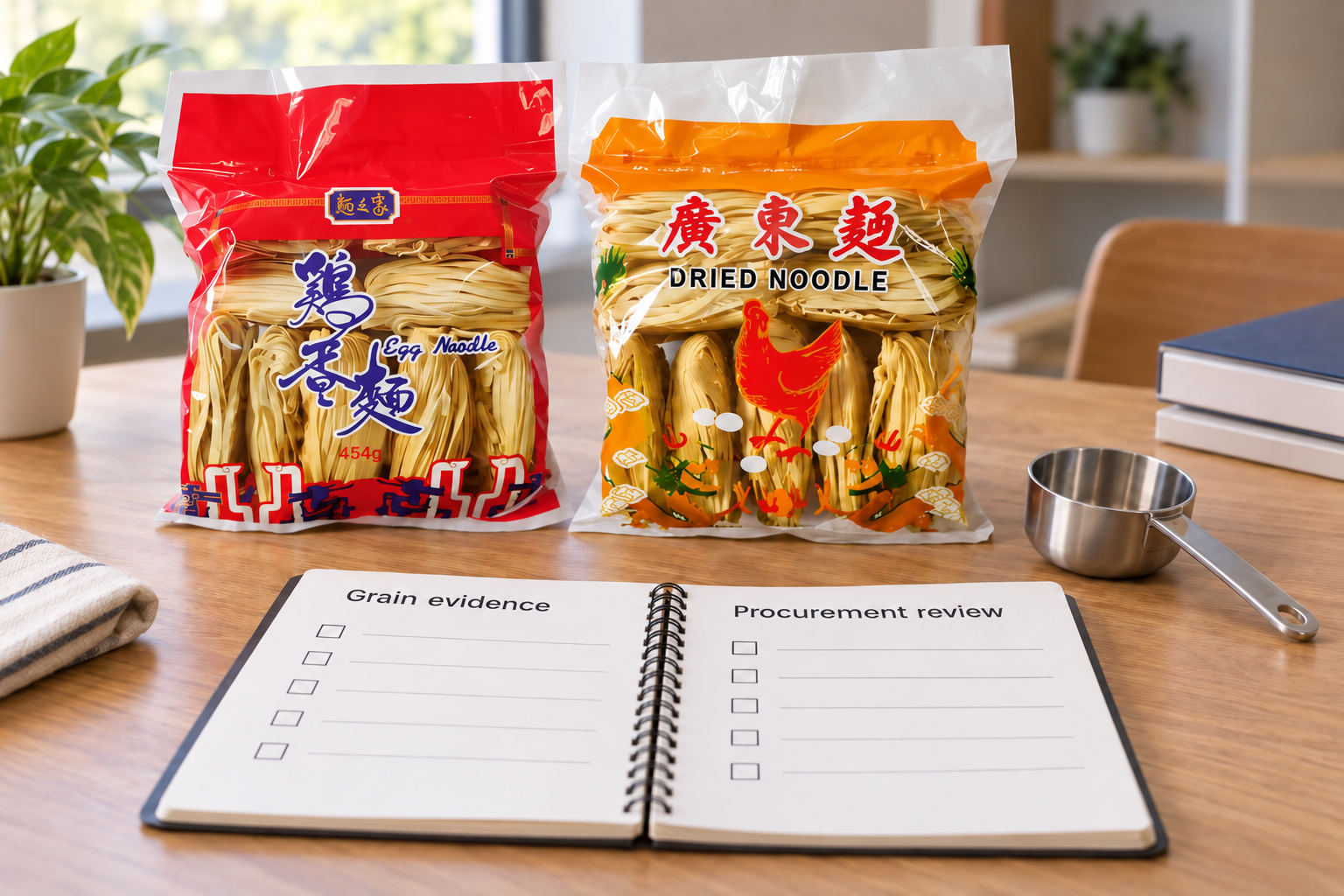
The 2026 catalog lists Egg Noodle with wheat flour, water, egg and salt, in 454g bags with 30 bags per carton. Its photograph shows dried strands in a transparent, red-topped package. These facts identify a product for discussion.
The page does not provide measured strand dimensions, egg-solids results or a complete formulation record. Nor does the photograph establish a particular standardized shape. Soup, dry-tossed and stir-fry serving pictures show suggested applications; they are not a determination of US retail identity.
Keep that distinction in the selection file: the supplier reference identifies what you are asking about, while the proposed US sales presentation identifies what your reviewer needs to assess.
Review the standardized identity on its own terms
21 CFR 139.150 defines standardized noodle products using composition, solids and physical form. Its egg requirement is at least 5.5% egg or egg-yolk solids by weight of the product's total solids. This is not a requirement stated as the percentage of wet egg added to a recipe.
The section also distinguishes names by shape and size. Satisfying one percentage would not, by itself, establish conformity with the full standard. A reviewer needs the relevant product information before deciding whether the intended identity is supported.
Understand the separate Chinese-style noodle policy
FDA's CPG 505.400 addresses Chinese and other specified Asian-style noodles that are not represented as the standardized article. This published policy guide also addresses placement and visual consistency of the qualifying descriptor with the word noodles.
Chinese manufacture alone does not settle that representation. Neither does adding a small descriptor somewhere on a pack. Have the reviewer assess the actual proposed wording and presentation against the policy. This is a conditional review route, not a blanket exemption from food labeling requirements or an instruction to rename this product.
Prepare a focused selection brief
Send the reviewer one brief linking the product to the intended retail presentation:
- Product reference: catalog item, pack size and the current supplier specification requested for that exact selection.
- Technical evidence: complete current ingredient/formulation information and physical-form description, with missing information clearly identified.
- Proposed presentation: intended sales name and a readable draft showing where and how it appears. Keep the catalog reference separate from the proposed market wording.
- Decision record: the identity being assessed, supporting evidence, unresolved questions and the reviewer responsible for the conclusion.
Ask technical parties how confidential formulation details can be supplied for the review. Do not invent a percentage or reverse-engineer one from a product photograph to complete the brief.
Confirm the route before finalizing the retail brief
Our egg noodle wholesale guide covers broader product and ordering questions. For this narrower decision, contact Noodle House Food with the selected catalog item, intended US presentation and the specific information your reviewer needs.
The outcome may remain pending until additional evidence is available. This guide assigns no US category or compliance status to the catalog SKU and proposes no change to its existing packaging.