Oct 12, 2026Buying Guides
Choosing Wheat Noodles for US School Meals: Check Grain Crediting Before Portion Counts
Compare the catalog evidence for Egg Noodle and Dried Noodles before assuming school-meal grain credit, portion counts or procurement eligibility.
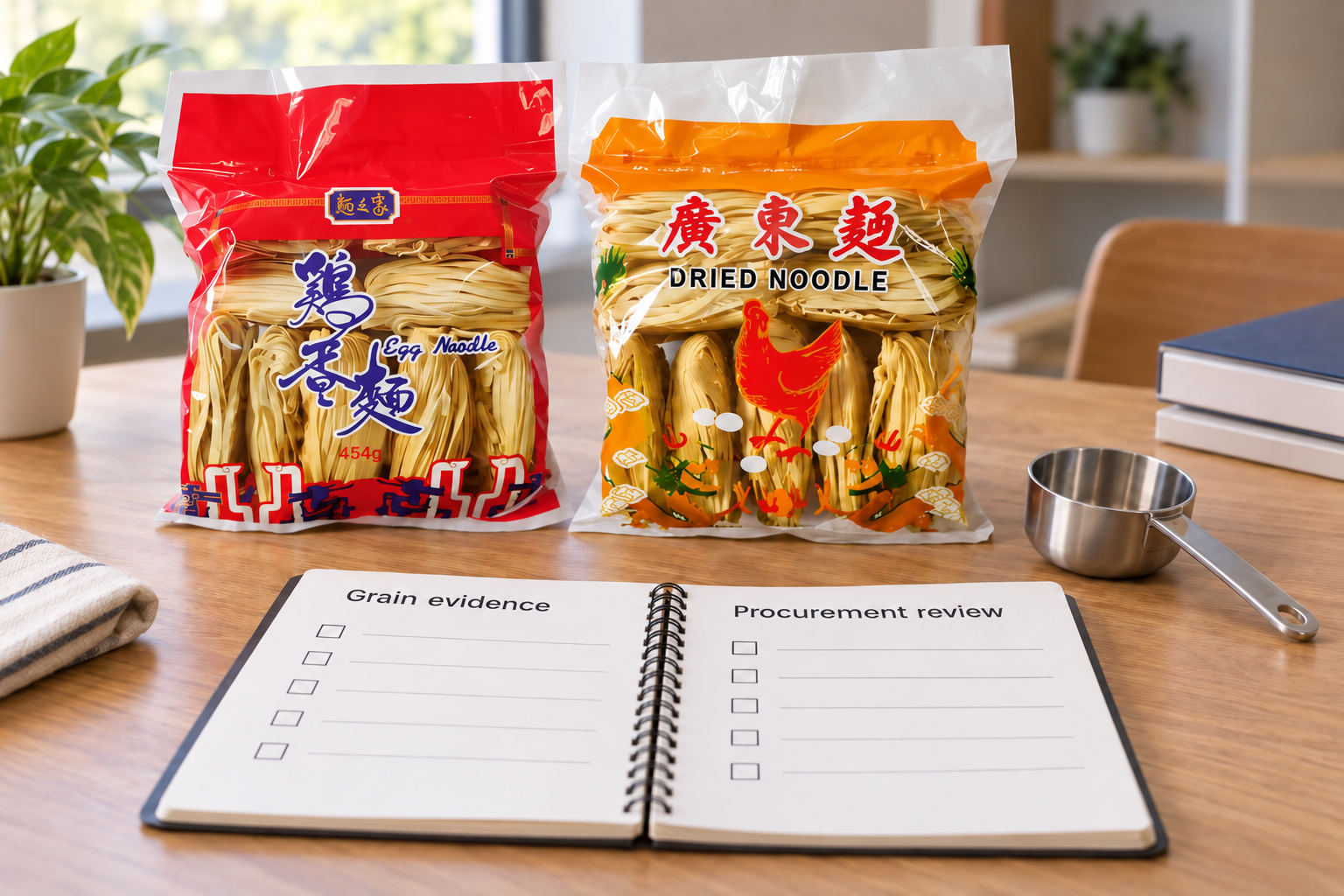
AI-generated editorial illustration. Packaging details shown are illustrative and must not be used as product specifications, grain-crediting documentation or evidence of school-meal eligibility or USDA approval.
A 454g bag can be divided into kitchen portions, but that calculation does not establish its contribution to a reimbursable school meal. Before comparing Noodle House Food's Egg Noodle and Dried Noodles for this channel, ask the school nutrition reviewer to assess the exact product's grain basis. Both catalog entries say wheat flour; neither entry alone establishes grain crediting.
What the two catalog entries actually show
The 2026 catalog provides these starting points:
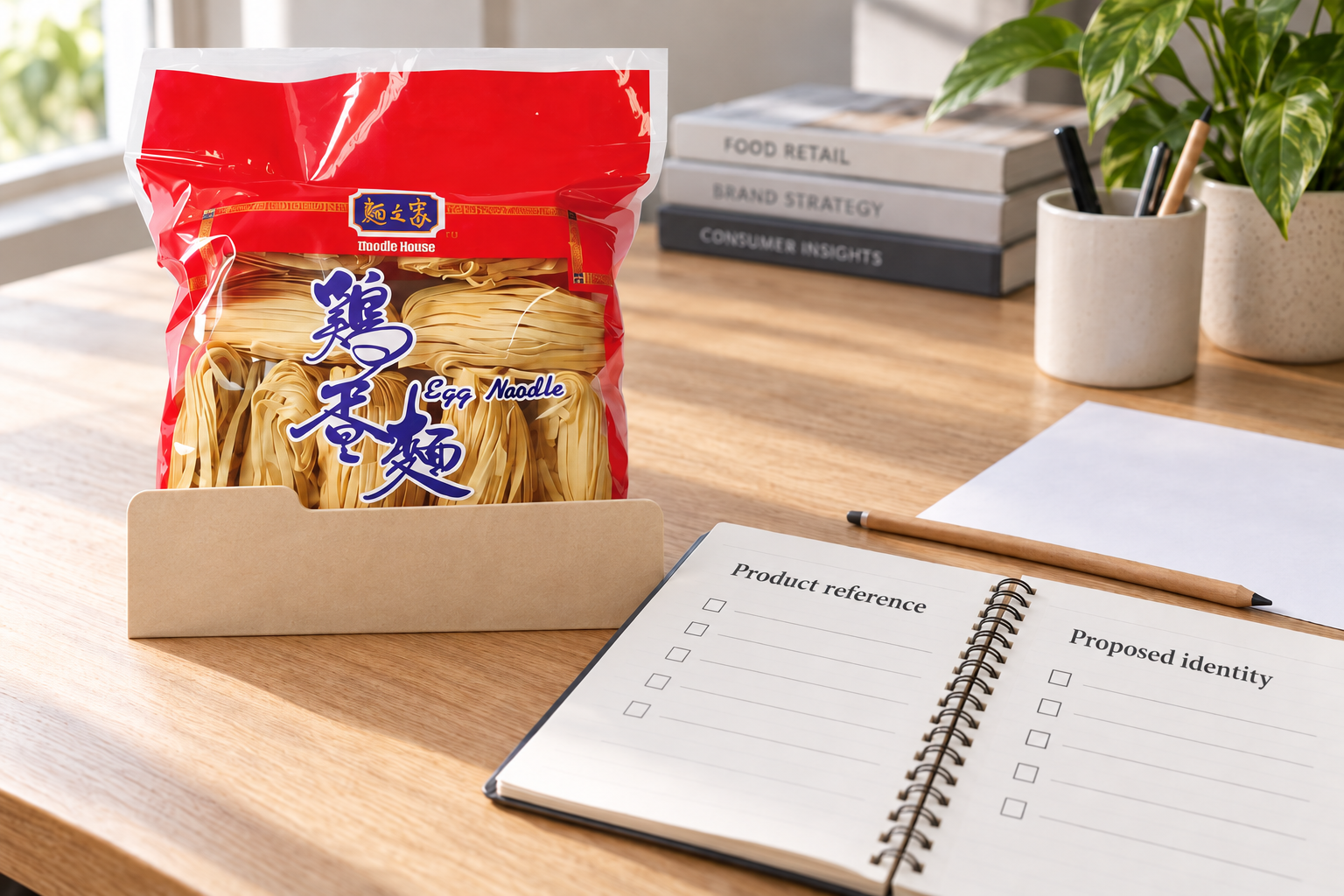
- Egg Noodle: wheat flour, water, egg and salt; 454g per bag, 30 bags per carton. The entry identifies egg as an ingredient. It does not identify enriched flour or establish whole grain-rich status.
- Dried Noodles: wheat flour, water and salt; 454g per bag, 30 bags per carton. The shared pack size makes the bags comparable for ordering, but the flour description leaves the same school-meal question unresolved.
These are catalog observations, not a finding that either product qualifies or fails. Switching between the two names does not close the evidence gap. Egg in the ingredient list does not itself establish grain credit.
Separate qualification from portion calculations
USDA's Food Buying Guide distinguishes creditable grain ingredients and enriched products from a generic wheat description. It directs users to establish that a product is creditable before determining its ounce-equivalent contribution. See the USDA grains guidance.
Under the USDA school-meal requirements, for the National School Lunch and School Breakfast Programs, at least 80% of grains offered weekly must be whole grain-rich; the remaining grain items must be enriched. That is not a rule that every individual noodle serving must be whole grain-rich. Check the intended menu role with the operator, including any stricter state requirements. These program distinctions matter when choosing a candidate product.
Give the reviewer a product-specific evidence request
Keep a separate response for each shortlisted noodle. A useful request identifies:
- The exact product and pack, with the current ingredient statement and document date.
- The flour or finished-product description supporting the claimed grain basis, rather than repeating only wheat flour.
- The school program and intended menu role the buyer needs reviewed.
- The supporting contribution documentation the operator needs, and which items remain unavailable or unresolved.
A manufacturer's Product Formulation Statement can describe meal-pattern contribution; USDA provides PFS guidance and grain templates. Do not assume every plain noodle requires the same document. Where a PFS is used, the program operator must check its calculations and contribution statement, as explained in USDA's documentation review tips. Receiving a manufacturer statement is not the same as receiving USDA product approval.
For these two catalog products, leave the grain-basis decision open until the reviewer has sufficient evidence. Avoid filling a comparison sheet with an assumed credited-serving count just because the bag weight is known.
Check Buy American separately
Noodle House Food describes manufacturing in Shenzhen, China. For NSLP/SBP purchasing, that origin raises a separate Buy American review even if nutrition crediting can be documented. USDA's implementation guidance covers limited exceptions, non-domestic purchasing limits and documentation. The school food authority must assess the applicable purchasing route; this article establishes no exception or eligibility for either product.
What to send with an enquiry
Send the selected noodle name, required pack, school program and the reviewer's specific grain-documentation questions through our contact page. Ask what current product evidence is available for that exact selection.
Keep nutritional qualification and procurement eligibility as separate decisions. If both can be resolved, proceed to the operator's contribution calculation and practical portion planning. This is a product-screening guide, not a complete school-menu or procurement approval.