Sep 2, 2026
Private Label Chinese Noodles: MOQ, Packaging and Lead Time
Understand the inputs behind private-label noodle MOQ, packaging and lead time, with catalog references that must be confirmed by SKU.
Private-label noodle projects are easier to quote when the buyer separates three questions: which product is being packed, which packaging is required, and how many cartons of each version are planned.
Choose a defined noodle SKU
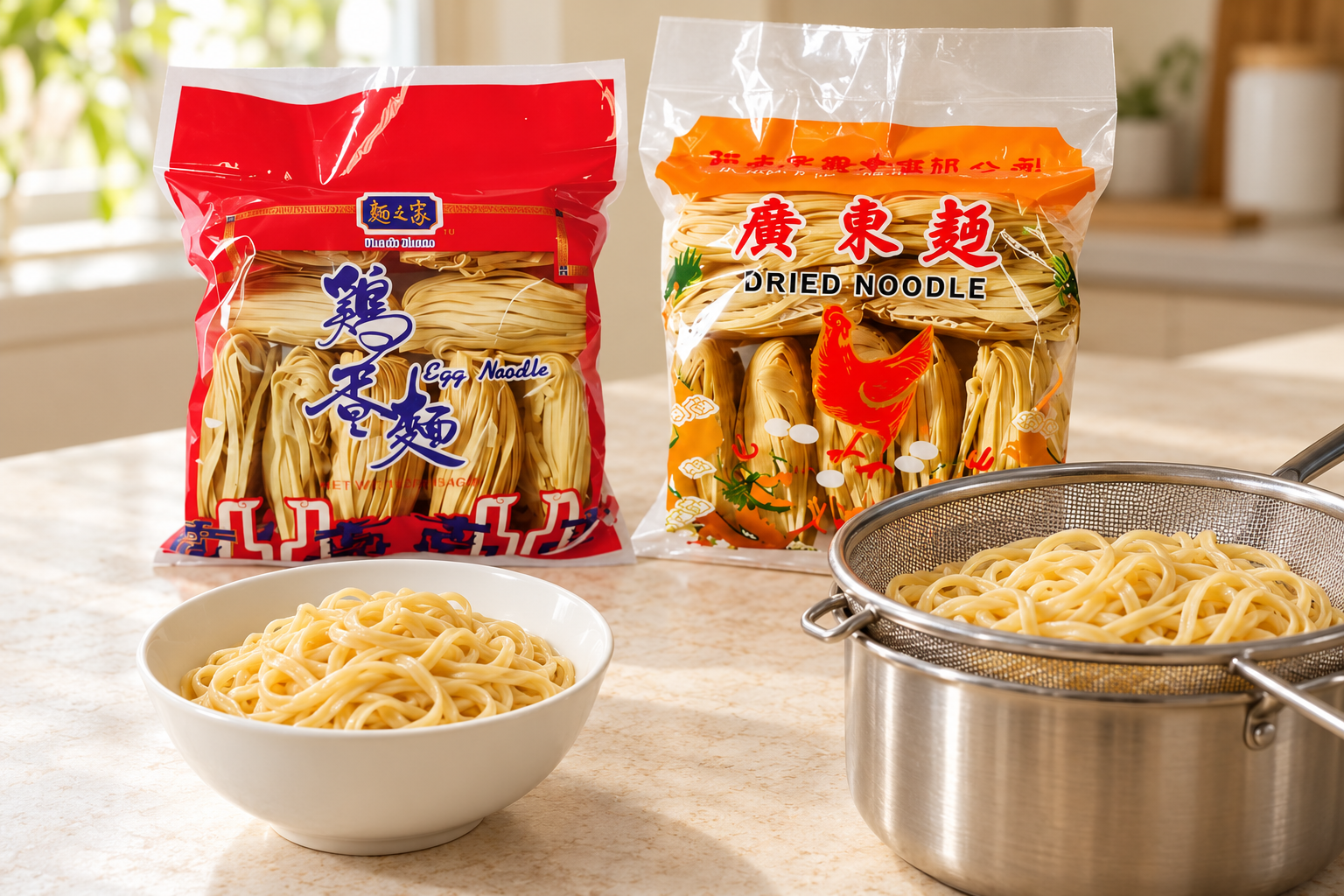
The current range includes Egg Noodle, Dried Noodles, Shrimp Noodle, Scallops Noodle, Shanghai Noodles and Amoy Flour Vermicelli. Amoy Flour Vermicelli is wheat based, not rice vermicelli.
Begin with a catalog SKU where possible. Formula changes create additional work in sampling, labeling and commercial confirmation.
Use standard packing as a starting point
Examples from the catalog include:
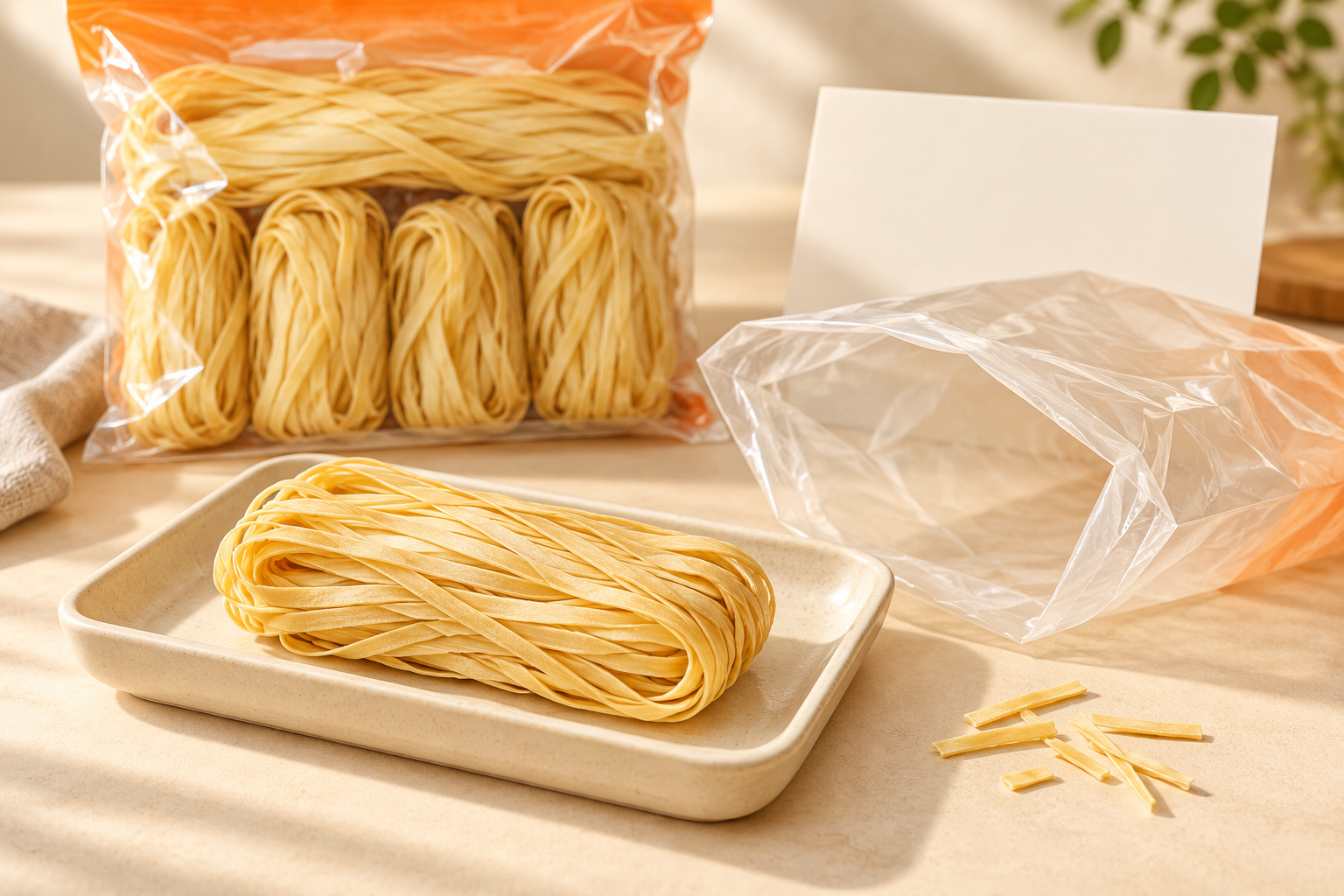
- Egg Noodle and Dried Noodles: 454 g per bag and 30 bags per carton.
- Shanghai Noodle: 340 g per bag and 30 bags per carton, or a separate 227 g format packed 60 per carton.
- Amoy Flour Vermicelli: 300 g per bag and 40 bags per carton.
These are reference formats, not a promise that every private-label design can use the same carton.
Understand what drives MOQ
The catalog lists a typical MOQ of 100 cartons. Final MOQ depends on SKU, formula, unit weight, printed-film or box quantity, number of artwork versions and production arrangement.
Ask for the minimum per SKU and per packaging design. A total order of 100 cartons does not automatically permit many small artwork runs.
Understand what drives lead time
The catalog gives a 15–20 day lead-time reference. Private-label timing may also include formula or sample confirmation, artwork review, printing, material arrival and production scheduling.
Request a written timeline with a clear starting event, such as receipt of deposit and final artwork approval. Reconfirm the schedule for every order.
Prepare the buyer inputs
Provide destination market, target pack size, cartons per SKU, ingredients or allergen restrictions, artwork status, languages, barcode, carton marks, required documents, trade term and requested shipment date.
Approve the final specification
The purchase order should identify product, formula reference, unit and carton packing, shelf life, artwork version, date coding, required documents and inspection arrangement. Avoid relying only on email descriptions.
Can a buyer start with standard packaging?
Yes. It can be a useful way to validate product-market fit before investing in printed private-label materials.
Is the catalog lead time guaranteed?
No. It is a planning reference. Final timing must be confirmed against the actual product, packaging and order.