Oct 16, 2026Buying Guides
300 g Box or 284 g Bag? Amoy Flour Vermicelli vs Fine and White Plain Noodle
Match a fixed retail pack brief to two catalog formats: Amoy Flour Vermicelli in a 300 g box or Fine and White Plain Noodle in a 284 g bag. Confirm current labels before ordering.
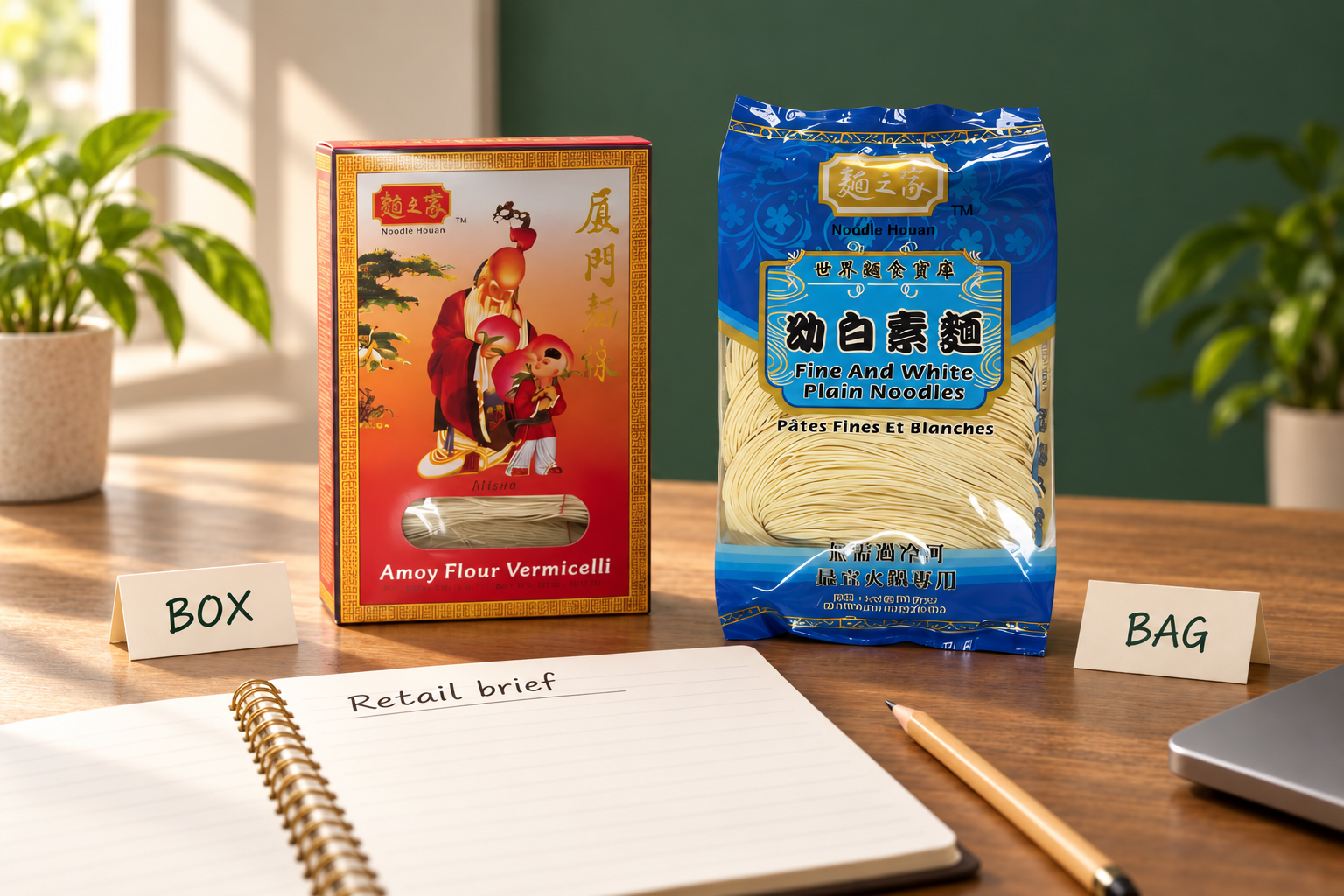
AI-generated conceptual illustration of a box-versus-bag retail selection. Packaging lettering and relative sizes are illustrative, not approved current artwork, labels or product sizing.
If your retail brief already specifies a 300 g box, start with Noodle House Food's Amoy Flour Vermicelli. If it specifies a 284 g (10 oz) bag, start with Fine and White Plain Noodle. These are the formats listed in our product catalog; confirm the current specification and label before ordering.
This comparison helps narrow a packaging-led shortlist. It does not establish that the two noodles are interchangeable in a recipe.
Match the retail unit first
Product | Catalog retail pack and case |
|---|---|
300 g (10.6 oz) per box; 40 boxes per carton | |
284 g (10 oz) per bag; 40 bags per carton |
For a box-based brief: discuss the listed Amoy format. Do not substitute Fine and White Plain Noodle simply because both cartons contain 40 units: its listed consumer unit is a bag, with a different net weight.
For a 10 oz bag brief: discuss Fine and White Plain Noodle. The Amoy listing is 300 g in a box, so it does not match that brief as documented. Any different packaging arrangement needs separate confirmation.
If either format is acceptable: compare the current retail samples against your shelf and labeling requirements before choosing. The catalog's outer-carton dimensions do not establish the dimensions of an individual box or bag, or how it will fit your display.
What the shared case count does—and does not—tell you
Both catalog cases contain 40 retail units. Multiplying the listed net weight by that count gives 12 kg of noodles for Amoy and 11.36 kg for Fine and White Plain Noodle per case. These are calculations from catalog specifications, not measured shipment weights; they exclude packaging.
The same unit count therefore does not mean the same quantity of noodles. It also does not tell you which option has a lower delivered cost or better protection in transit.
Keep packaging fit separate from cooking fit
Both catalog entries list wheat flour, water and salt. That shared ingredient list does not establish identical strands, texture or preparation instructions. If your buyer also requires a particular eating result, evaluate the exact SKU sample using its confirmed preparation instructions before approving a substitution.
Confirm the pack you will actually receive
The figures above come from the catalog specification tables. They are not a verification of the current package artwork or label. Before approving an order, obtain the current SKU specification, front-and-back pack photographs and retail-unit dimensions. Reconcile any difference between the specification and the proposed label before approving artwork.
Send us your retail pack brief: name the SKU, state whether the box/bag format and net weight are fixed requirements, and include your intended market. That gives the discussion a specific starting point without assuming an unconfirmed pack change is available.