Oct 15, 2026Buying Guides
Egg or Plain Dried Noodles for the EU? Check the Entry Route Before Shortlisting
Compare egg-containing and plain dried noodles for an EU shortlist. Confirm formulation and processing before assuming shelf stability gives a border-check exemption.
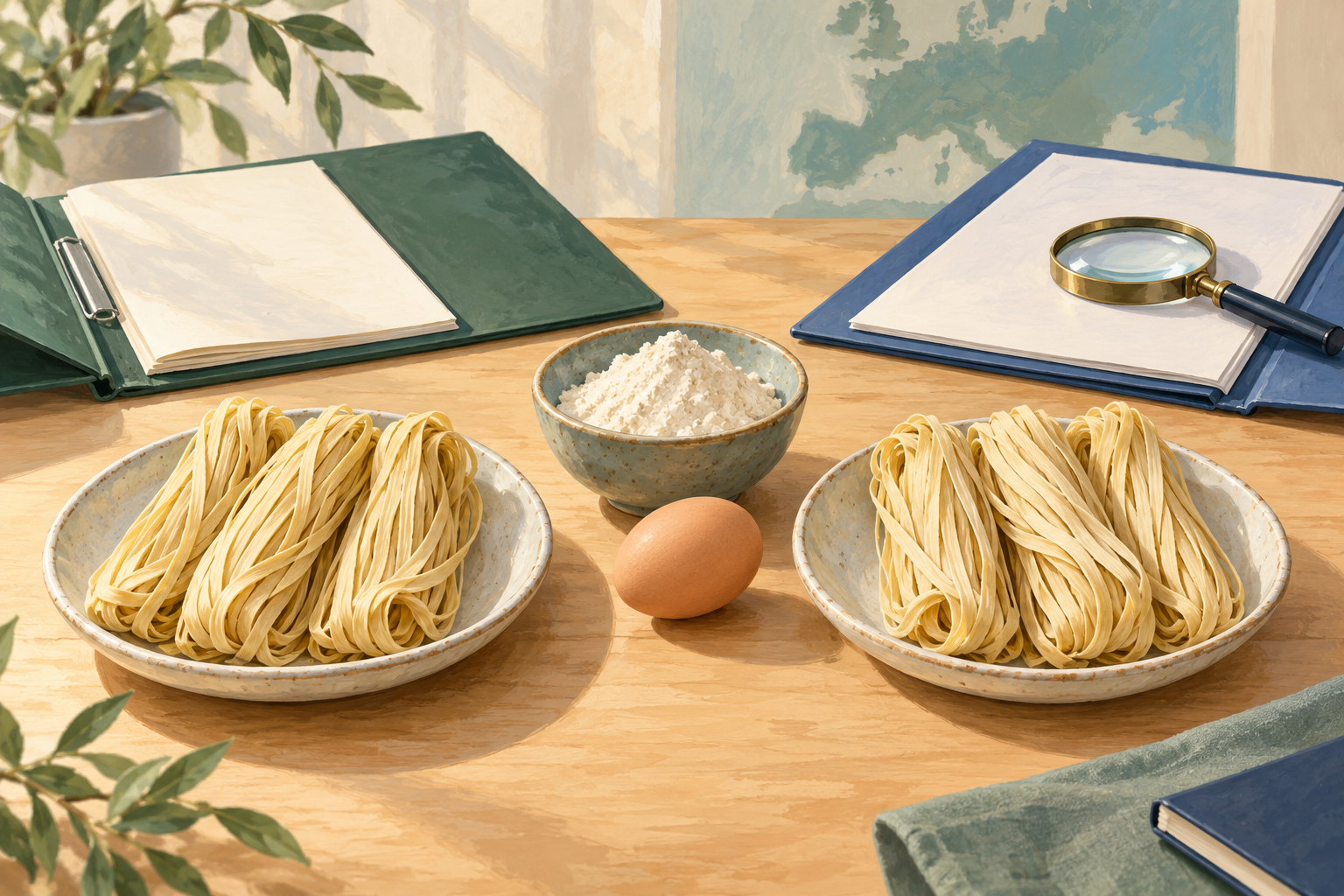
AI-generated conceptual illustration of noodle selection. It is not a product photograph, formulation record or evidence of EU entry eligibility.
When choosing between egg-containing noodles and plain dried noodles for an EU assortment, check the formulation and processing information before assuming the same import route applies. Shelf stability alone does not establish an exemption from checks at a border control post (BCP).
For a buyer comparing Noodle House Food's two catalog products, the useful starting distinction is simple: one ingredient entry includes egg; the other does not. The next decision needs more detail than the product names provide.
Start with the two actual ingredient entries
The 2026 company catalog lists:
- Egg Noodle: wheat flour, water, egg and salt.
- Dried Noodles: wheat flour, water and salt.
These entries help identify the candidates. They do not establish the complete current formulation, the form in which egg is supplied, its treatment, or the finished product's customs classification.
If your retail brief specifically calls for an egg-containing noodle, keep that requirement visible during sourcing. If it allows a plain wheat noodle, evaluate that candidate separately. Choosing the simpler catalog ingredient entry does not, by itself, prove that the product is eligible for EU entry.
Establish what the animal-origin ingredient actually is
The European Commission's composite-product guidance describes foods combining plant ingredients with processed products of animal origin. The processing distinction matters.
Ask for the egg ingredient's specification and how it is incorporated and treated during manufacture. A catalog entry reading “egg” does not answer those questions. The information must support the importer's assessment of the actual product; it should not be completed by guessing from a dried-noodle photograph.
For the plain candidate, confirm the complete current recipe rather than transferring conclusions from another item. Keep each answer attached to the exact noodle being shortlisted.
Compare the control list with the conditional exemption
The current BCP control list, replaced by Regulation (EU) 2026/551 and applicable from 1 October 2026, includes ex 1902 11 00: egg-containing pasta that is uncooked and neither stuffed nor otherwise prepared, where it contains products of animal origin.
The pasta/noodle row in the exemption Annex introduced by Regulation (EU) 2026/908 instead lists ex 1902 19, ex 1902 30 and ex 1902 40, subject to Article 3(1)(a). It does not list 1902 11 in that row. “Ex” limits the products covered; it is not a blanket exemption for the whole code.
These are legal categories for the importer to assess, not codes assigned here to either Noodle House product.
Under Regulation (EU) 2021/630, shelf stability is only one part of the conditional exemption. Other entry and treatment conditions still matter. Qualifying products under Article 3(1)(a) remain subject to the applicable private-attestation requirements, and risk-based controls can occur away from the BCP.
Let the unresolved question guide the shortlist
For an importer building an ambient noodle range, a useful comparison is:
- Egg candidate: does the intended egg-noodle positioning justify pursuing the additional ingredient and processing information needed to establish its route?
- Plain candidate: does it meet the commercial brief, and has its own formulation and entry route been assessed?
Keep a candidate provisional while that route is unresolved. A change from one noodle to the other should trigger a fresh assessment, even when the planned shelf and distribution channel stay the same.
Contact Noodle House Food with the selected product, EU destination and the specific formulation or processing information your importer needs. Resolve those product questions before finalizing the assortment; neither catalog entry is an EU admission decision.