Oct 14, 2026Buying Guides
Choosing Firm Wheat Noodles: Beyond the Protein Number
Use flour-protein research to guide a wheat-noodle shortlist without treating finished-food nutrition labels as a firmness ranking. Compare the right evidence for each sample.
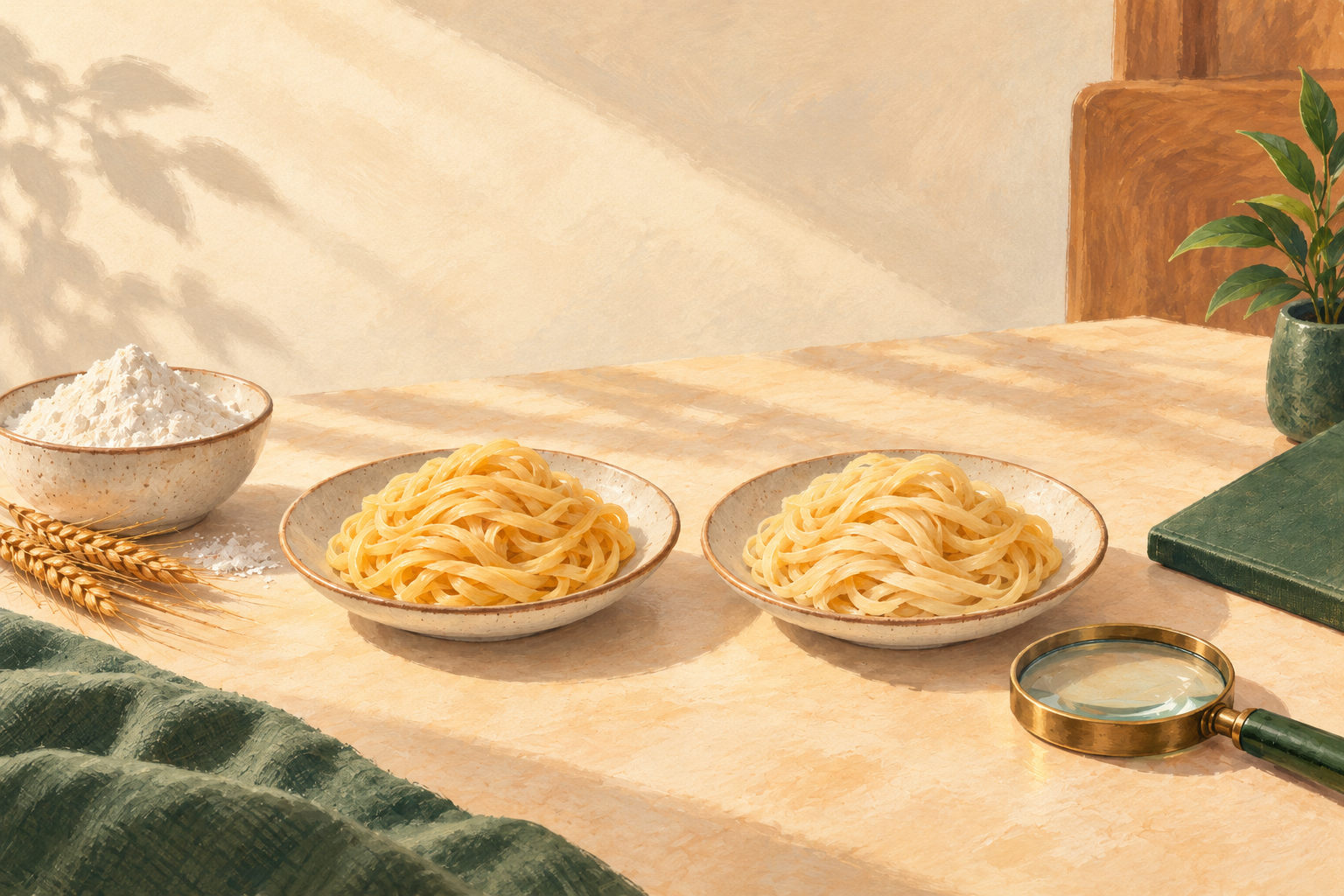
AI-generated editorial illustration. The two wheat-noodle portions are conceptual, not actual company SKU cooking tests, protein measurements or evidence of comparative firmness.
A higher protein figure on a finished-noodle nutrition panel does not establish which sample will have the firmer cooked bite. If you are using flour research to guide a purchase, first distinguish the flour ingredient being studied from the finished food you are buying.
For a Noodle House Food shortlist, the catalog identifies Egg Noodle with wheat flour, water, egg and salt, and Dried Noodles with wheat flour, water and salt. These entries identify two products to discuss. They do not supply a protein analysis or a comparative firmness result.
What the flour research actually found
In a 2013 study, Hou, Saini and Ng examined 39 selected wheat flours and instrumental texture in experimental Chinese white salted noodles. Total flour protein was positively associated with hardness, gumminess and chewiness. Its relationship with texture was stronger than that of relative protein-subgroup proportions in the selected set. The analysis also considered protein composition and flour pasting properties.
Protein therefore supplied useful information within that experiment. The abstract does not provide a validated rule for ranking our two catalog products from their nutrition panels. The research summary here is limited to the published abstract.
Keep three kinds of information distinct
- Finished-product nutrition information describes the protein total for the stated quantity of the food. It does not separately identify the wheat flour's protein characteristics. Egg appearing in a recipe does not establish either a higher finished protein total or a firmer result.
- Flour information, when available for the actual formulation, concerns an ingredient used to make the noodles. Ask the supplier what the information describes and whether it applies to the current product. Do not assign a flour grade from the noodle's name.
- Cooked-sample observations address the buyer's target bite in the intended dish. They are the application evidence needed for the texture decision; neither catalog ingredient list supplies them.
Our nutrition-sheet comparison guide explains how to align food state and quantity basis. Even after doing that, a finished-food protein total has not become a measurement of its flour ingredient.
Use the distinction to decide which samples to keep
Consider a hypothetical buyer who receives two comparable nutrition panels and wants a firm noodle for a dry-tossed dish. One panel lists more protein. Eliminating the other sample immediately would make the nutrient comparison decide a texture question it has not resolved.
Keep both identified products under consideration while asking for relevant product information and any available application observations. If the only extra document is another nutrition panel, the missing texture comparison remains missing. If flour information is available, treat it as context for a technical discussion rather than converting it into a promised ranking.
The next selection should follow evidence from the actual candidates in the intended dish. Use the existing cooking-test record for preparation details instead of treating the research paper as a test certificate for the supplied samples.
Make the request about the bite you need
Contact Noodle House Food with the selected products, intended dish and the texture you want to compare. Identify whether the material you already hold is a nutrition panel, flour information or an observation from a prepared sample.
Ask what current product information and sample options are available. No protein value, preferred SKU, laboratory service or firmness advantage is established for these products by this guide.