Oct 13, 2026Buying Guides
Choosing Noodles for a Cold Dish: Does a Firmer Chilled Sample Mean Undercooking?
A firmer chilled noodle sample does not by itself diagnose undercooking. Compare Egg Noodle and Dried Noodles at the initial preparation and intended eating stages before changing the cook.
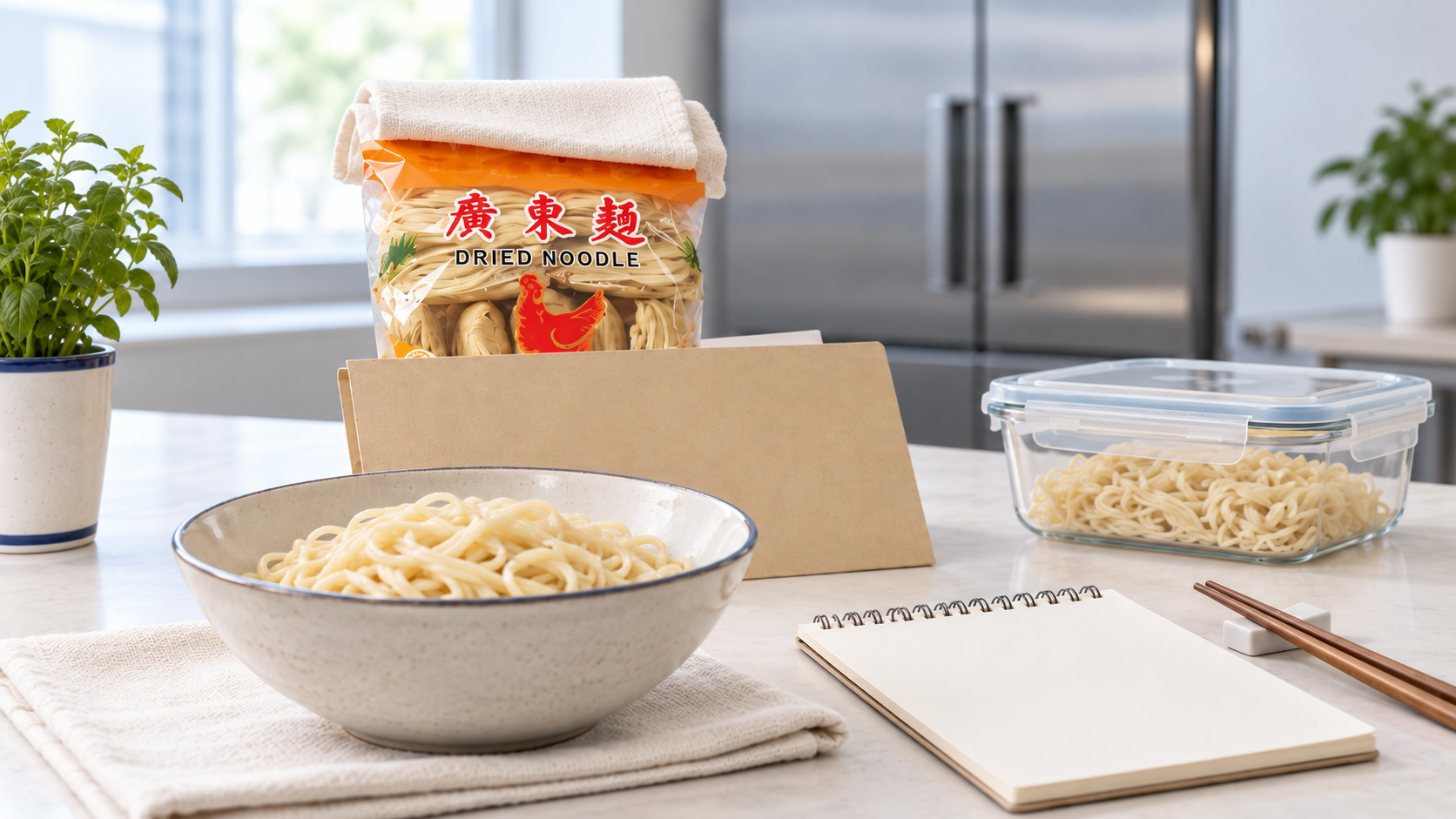
AI-generated editorial illustration. This conceptual sample-review scene is not a company test result, proof of chilled-noodle performance or an approved cooling, storage or food-safety procedure.
A noodle that feels firmer after refrigeration was not necessarily undercooked at the start. For a buyer comparing samples for a cold dish, the useful question is when the unwanted texture first appeared. Do not lengthen the initial cook solely because a later chilled sample feels too hard.
Keep the company shortlist separate from the performance claim
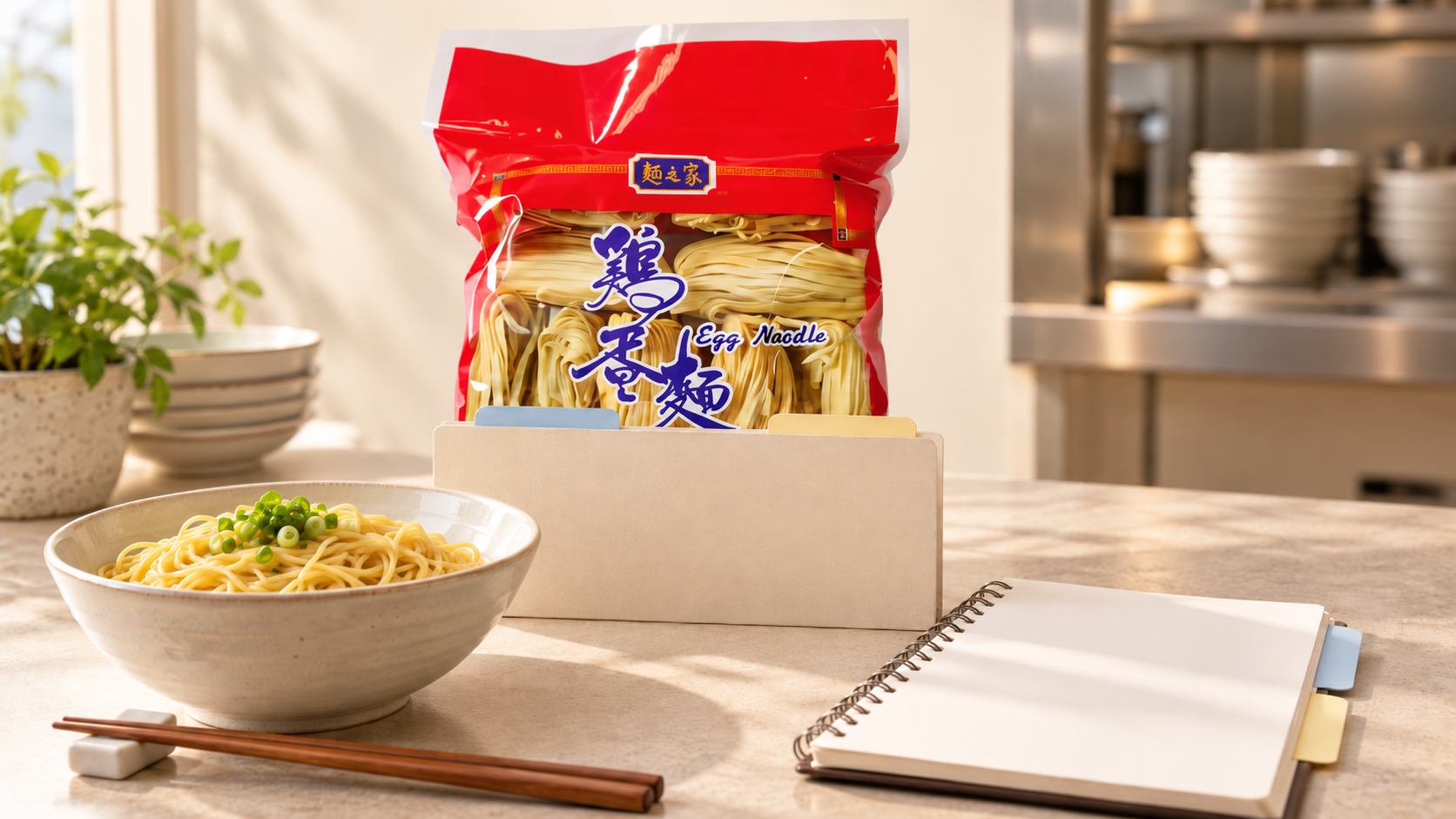
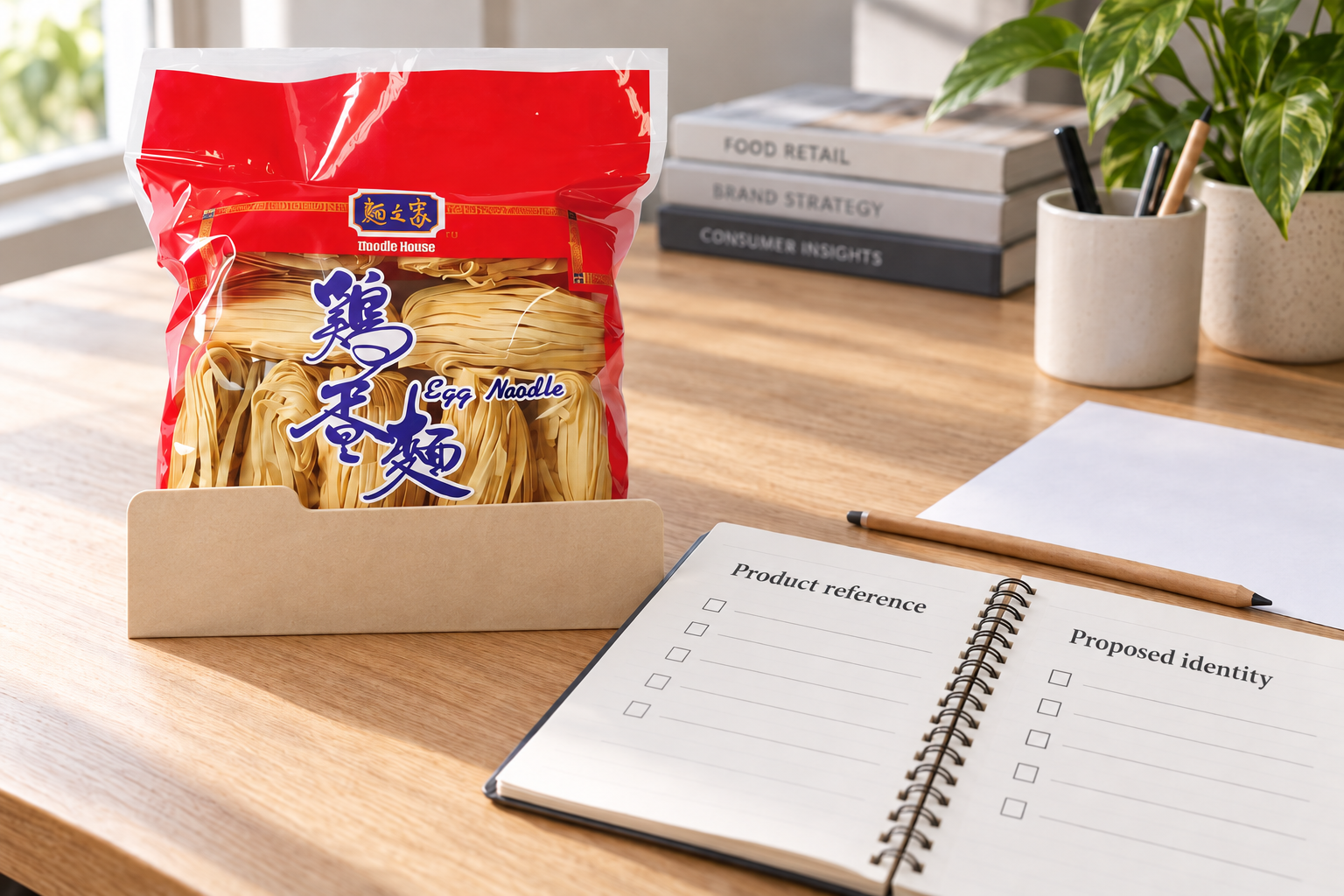
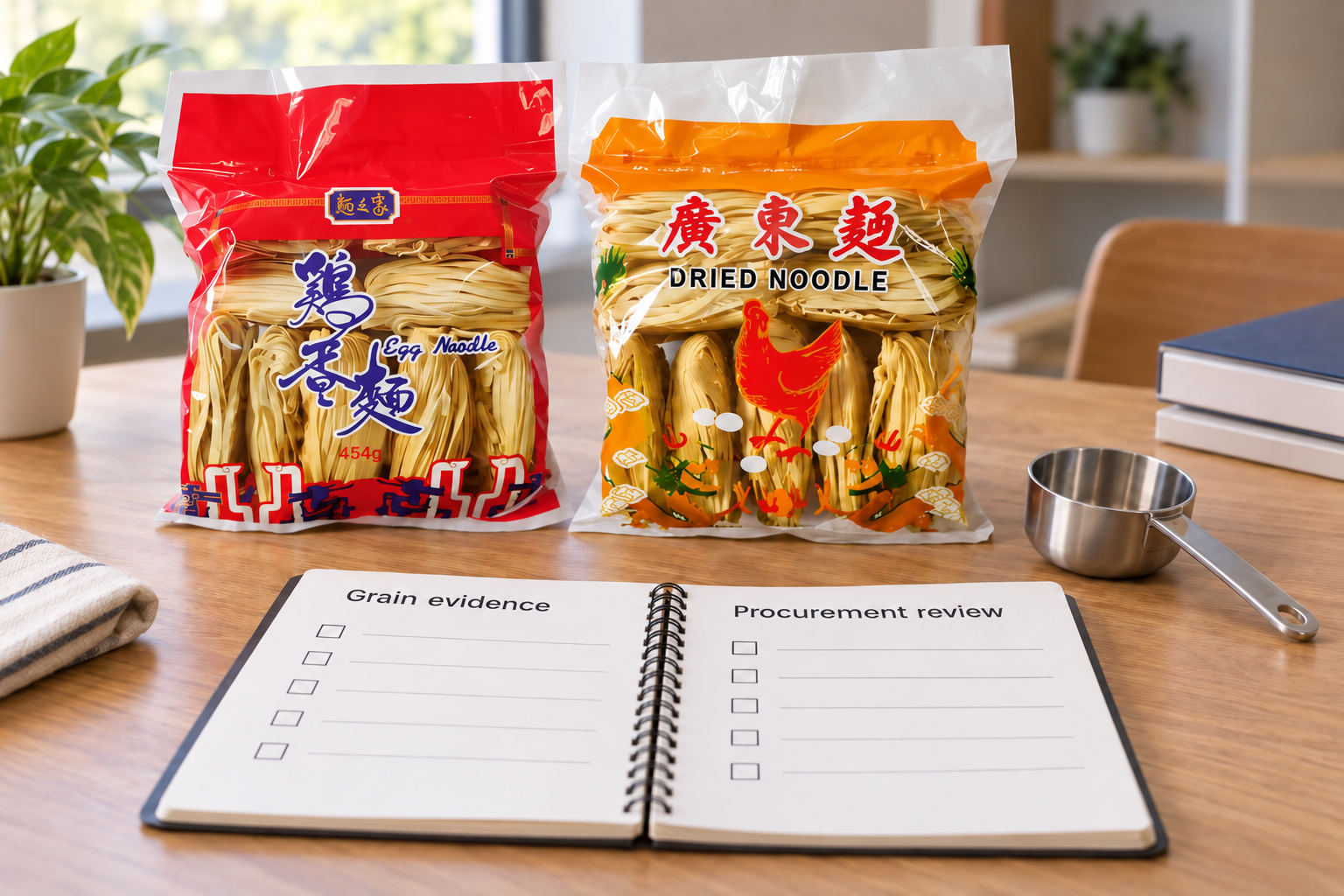
Noodle House Food's catalog identifies two possible products to discuss for a sample review:
- Egg Noodle: wheat flour, water, egg and salt; 454g per bag, 30 bags per carton.
- Dried Noodles: wheat flour, water and salt; the same listed bag weight and carton count.
Their catalog serving suggestions include soup, dry-tossed and stir-fried dishes. Those suggestions do not establish cold-dish suitability. Neither the egg ingredient nor the shared pack size tells you which sample will give the preferred chilled bite. A cold-service requirement needs its own product discussion and evaluation.
Why the later bite is not a diagnosis of the first cook
The abstract of Kwon and colleagues' 2024 study reports that the precooked noodles studied became more rigid during refrigerated storage, with the change attributed to starch recrystallization. This is a reason to consider changes after cooking when interpreting a chilled sample.
It is not evidence that either Noodle House product behaves the same way, or that starch recrystallization caused a particular buyer's result. This discussion uses the published abstract; it does not claim a review of the full experimental methods.
Compare the starting result with the intended eating state
The following is a suggested comparison, not a company test result or a validated storage procedure. Use the kitchen's approved food-safety process for any cooling, refrigeration and tasting.
For each selected SKU, retain two separate judgments: its texture after the initial preparation, and its texture in the intended chilled dish. Identify the preparation stage for each judgment so that “firm” does not lose its context.
Imagine a trial in which the first-stage sample meets the buyer's target but the chilled serving does not. That observation locates the concern later in the process; it does not identify its cause. Keep the initial result in the sample record instead of replacing it with the single verdict “undercooked.”
If a longer initial cook is then proposed, compare it with the original preparation through both stages. The purchasing question is whether the change improves the intended final dish while retaining an acceptable starting result. Do not call the change successful merely because the freshly prepared sample becomes softer.
Compare Egg Noodle and Dried Noodles at corresponding stages under the stated process. Comparing one immediately after preparation with the other after chilling would leave the buyer unable to separate product choice from evaluation stage.
Ask for a sample review tied to the cold dish
Send the selected product, intended chilled dish and the two stage-specific observations through our contact page. Explain whether you need help identifying a candidate to test or investigating a result already observed.
Keep any decision limited to the tested sample and process. This guide provides no preferred SKU, cooking extension, refrigerated holding time or claim about our noodles' cold-service performance.