Oct 13, 2026Buying Guides
Choosing Yellow Wheat Noodles: Egg and Alkaline Salts Are Separate Specifications
Separate egg ingredients, alkaline salts and visual targets when choosing yellow wheat noodles. Use the company catalog to identify samples without assuming formulation equivalence.
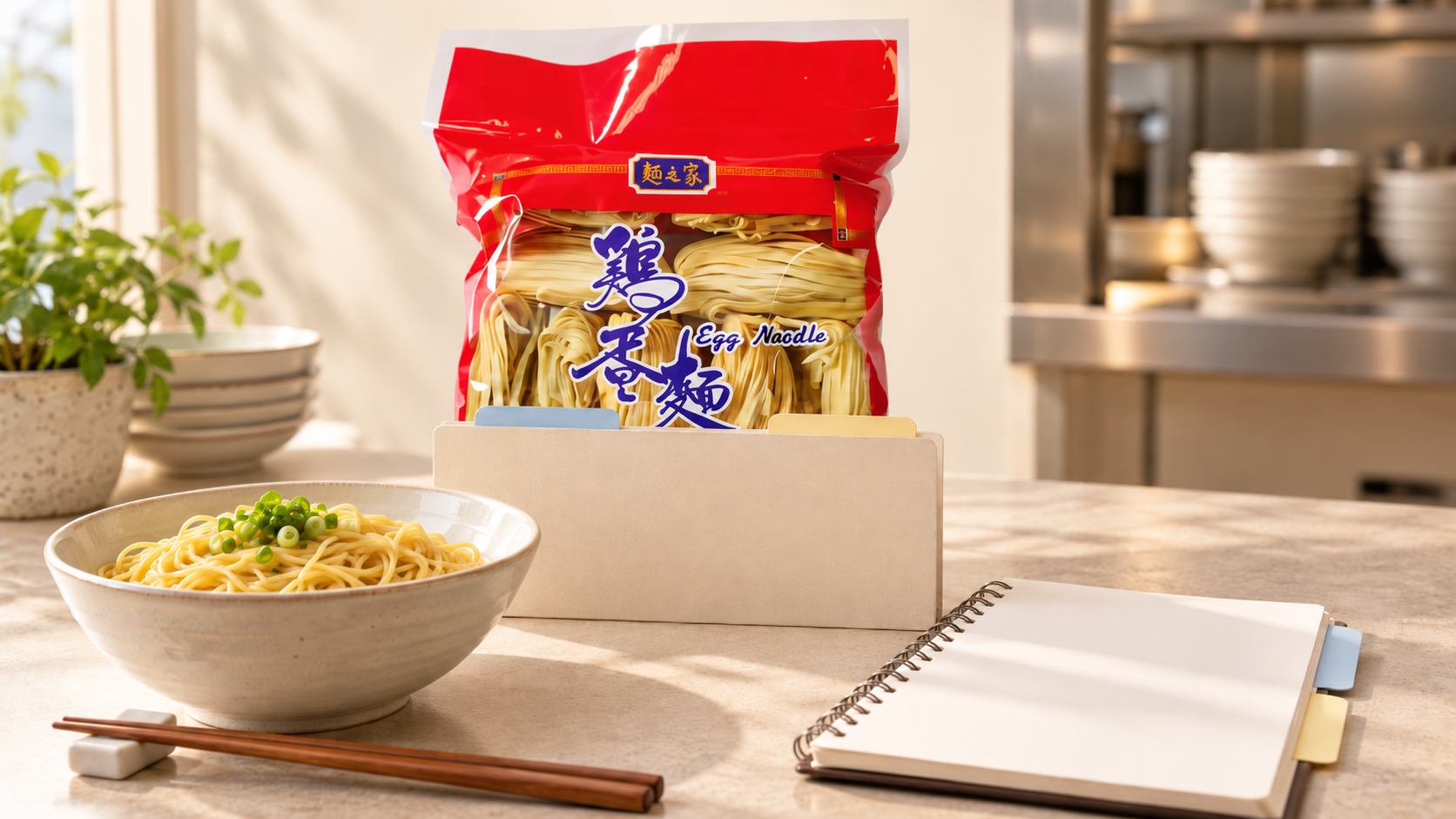
AI-generated editorial illustration. The package and serving scene are illustrative, not product specifications, evidence of alkaline ingredients or demonstrated cooking performance.
When a buyer sends a photograph of yellow noodles and asks for an equivalent product, the first decision is what needs to match: an egg ingredient, an alkaline formulation, or the appearance of the finished dish. Those requirements are not interchangeable. A useful shortlist records them separately before comparing samples.
This matters when considering Noodle House Food's Egg Noodle alongside a buyer's existing yellow-noodle benchmark. The catalog identifies an egg-containing product; it does not establish an alkaline formulation or prove equivalence to a ramen, wonton or other benchmark noodle.
Egg and alkaline describe different things
The AACC International technical committee's report on laboratory preparation of Japanese ramen noodles distinguishes white salted noodles from yellow alkaline noodles by the salts used in their formulation. It identifies sodium and potassium carbonates among commonly used alkaline salts and describes some alkaline noodle types that also contain egg.
The useful buying distinction is therefore two-dimensional: whether egg is included and whether alkaline salts are included. A noodle can have both. Asking “egg noodle or alkaline noodle?” as though the options always exclude each other can produce the wrong sample request.
The report concerns noodle classification and a laboratory method. It is not a specification for Noodle House Food's products, and its laboratory formulation is not a recipe buyers should assign to a catalog SKU.
What the company catalog actually supports
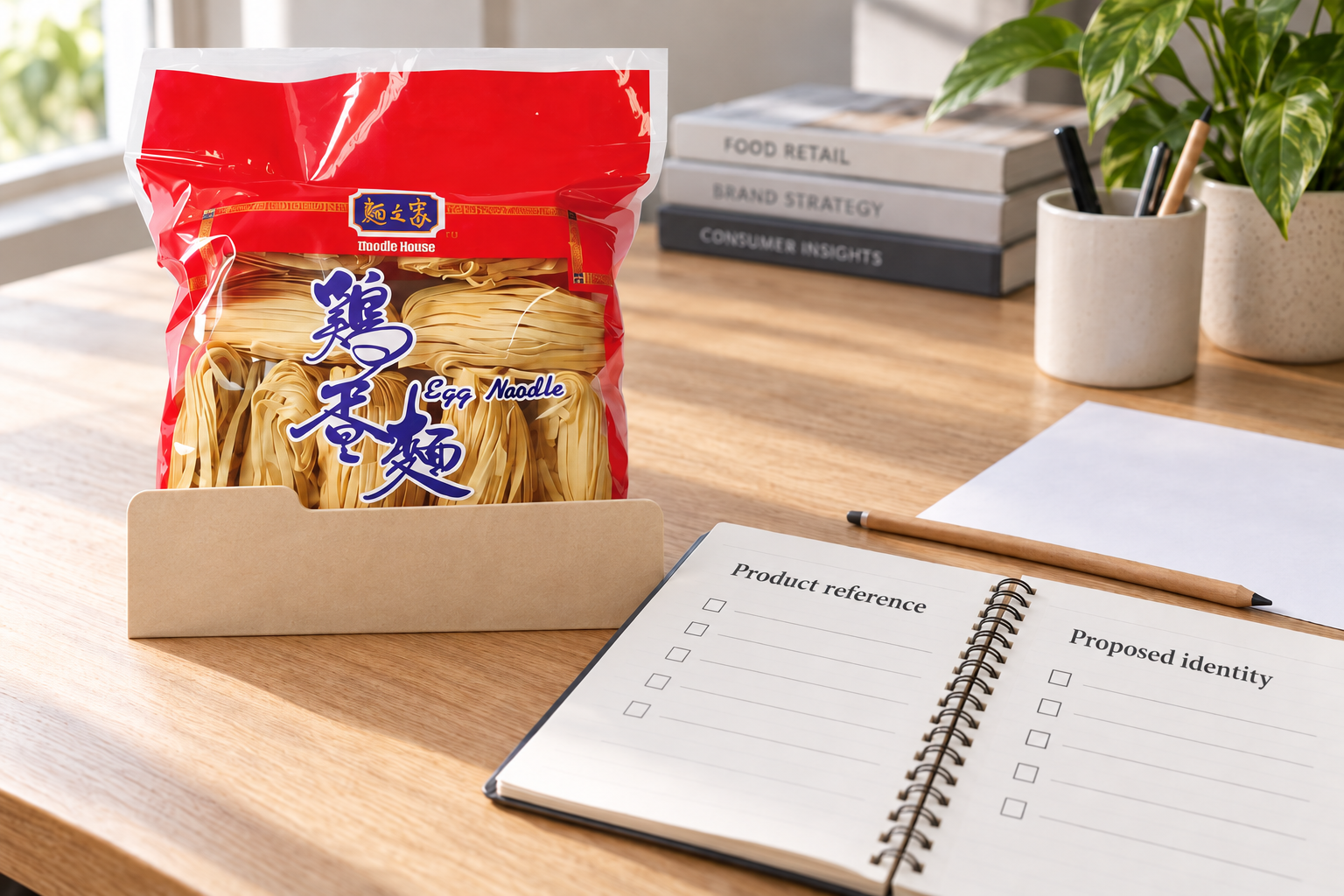
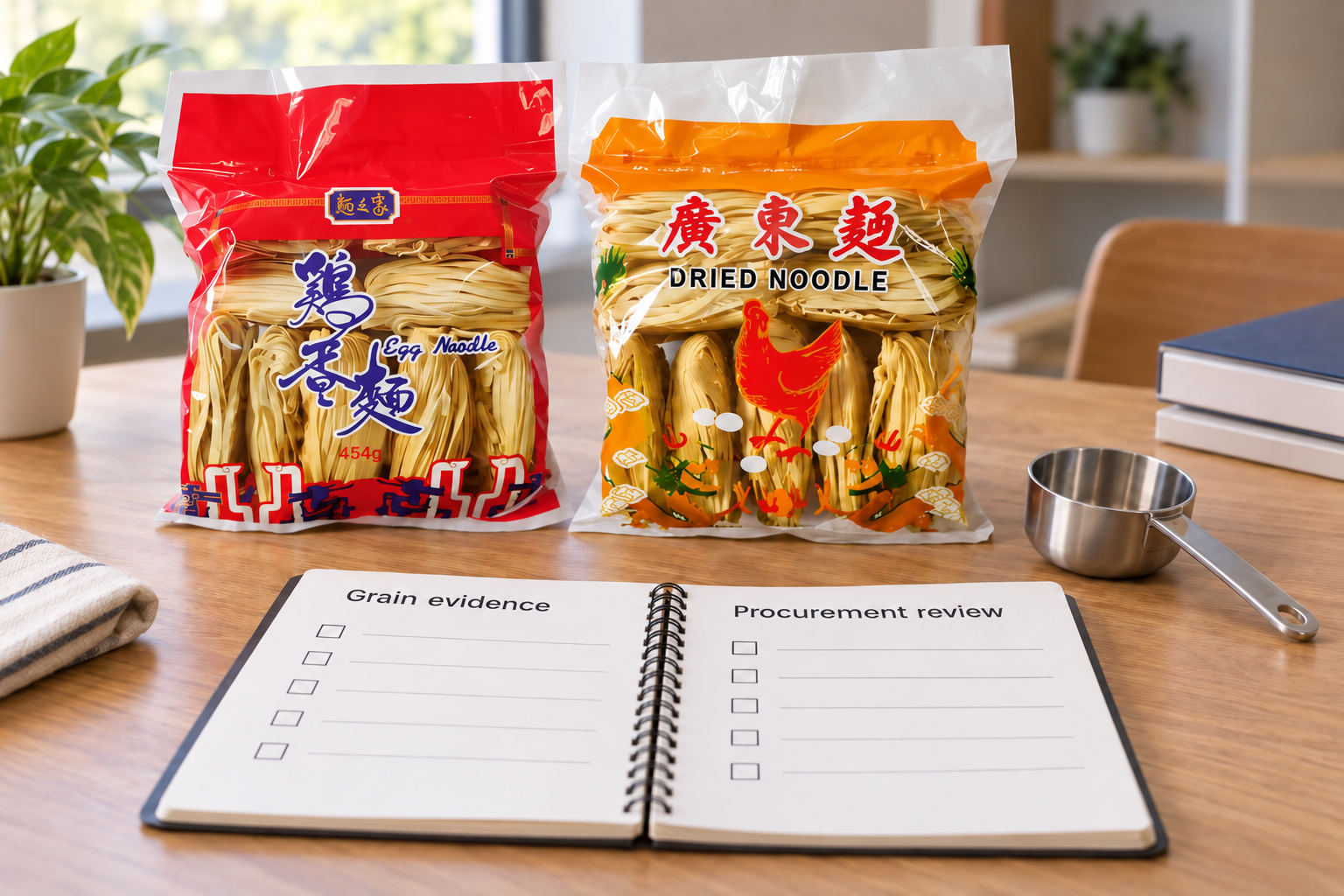
The 2026 catalog lists wheat flour, water, egg and salt for Egg Noodle, in a 454 g bag. Its separate Dried Noodles entry lists wheat flour, water and salt, also in a 454 g bag. Both entries show 30 bags per carton.
These are catalog references for identifying the samples. Neither entry identifies sodium carbonate or potassium carbonate. That absence in a catalog summary does not establish the complete current formulation, an alkali-free claim or allergen suitability. Obtain the dated product information for the exact item before making those claims.
An egg requirement can make the catalog Egg Noodle the relevant starting point for a supplier discussion. An explicitly alkaline benchmark requires a separate formulation question; the product name and pack photograph do not answer it.
Turn a visual benchmark into a usable request
Keep a photograph for the appearance you want, but attach a short written brief with three separate requirements:
- Ingredient requirement: say whether egg is required, permitted or excluded from the intended formulation. A dietary or allergen exclusion needs its own current evidence review.
- Alkaline requirement: say whether the existing benchmark explicitly specifies alkaline salts, or whether that information is unknown. Do not translate the generic word “salt” into a particular carbonate.
- Application requirement: describe the dish and the bite or flavor characteristic you want to compare. These remain sample-evaluation criteria, not performance claims about an untested candidate.
For example, a buyer may want an egg-containing noodle for a soup dish while being uncertain whether the current benchmark is alkaline. The next step is to identify both formulations before asking the supplier for an equivalent. Choosing the nearest yellow photograph first would leave the central specification unanswered.
Make the shortlist decision on the requirement that matters
If egg inclusion is the essential requirement, start with the catalog Egg Noodle and request its current specification. If alkaline composition is essential, ask whether a documented suitable option is available before approving any catalog item. If only the finished appearance is being matched, keep that visual target separate from ingredient declarations and evaluate the actual samples in the intended dish.
This guide does not classify either catalog SKU as alkaline or rank their cooking performance. It helps prevent one visible characteristic from standing in for several different product requirements.
To discuss a noodle sample shortlist, send the product reference, benchmark information you are permitted to share, intended dish and the specific egg or alkaline requirement. Missing benchmark information can remain unknown while the supplier clarifies the available options.