Sep 30, 2026Buying Guides
Comparing Noodle Nutrition Sheets: As Sold or As Prepared?
Before ranking two noodle products by their nutrition figures, align the food state, preparation method and quantity basis. A per-100-g heading alone is not enough.
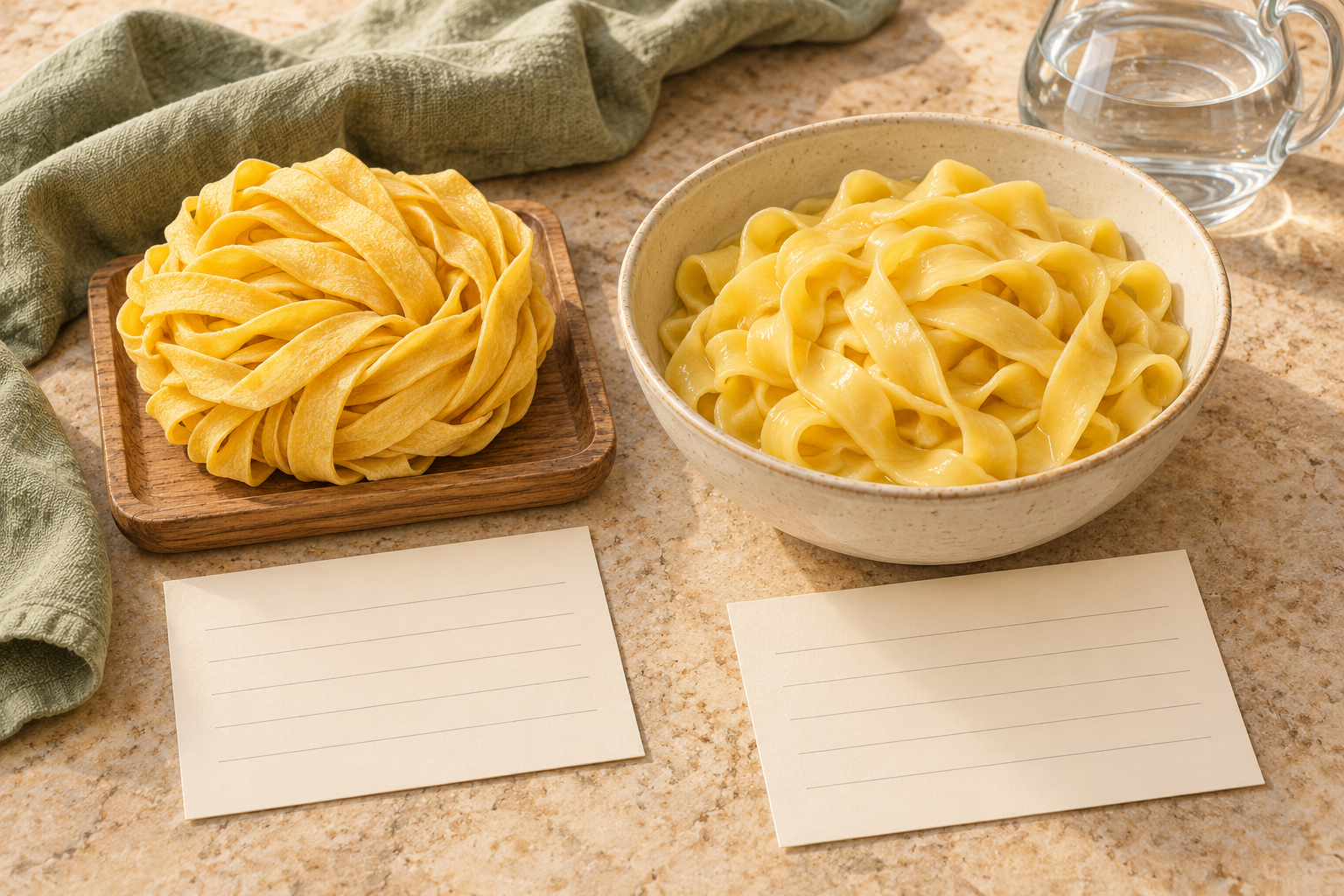
AI-generated editorial illustration of comparing food states; not actual nutrition data, a portion specification or a product claim.
Compare nutrition values only after confirming that they describe the same food state and quantity basis. A figure per 100 g of dry noodles and one per 100 g of prepared noodles do not describe the same amount of original product. A lower number in the prepared column is not, by itself, evidence of a different formulation or a superior product.
For a retail buyer, this matters before a nutrition figure enters a supplier-comparison sheet, product listing or packaging brief. Keep the source heading and preparation notes attached to the values.
Read the basis before reading the largest number
Ask whether the data applies to the product as sold, noodles cooked and drained, noodles with cooking liquid, or a complete dish with added ingredients. “Prepared” is incomplete without the referenced preparation method.
The Food Safety Authority of Ireland explains that EU nutrition values generally concern the food as sold, while appropriate prepared-food information requires sufficiently detailed preparation instructions. The European Commission also distinguishes the per-100-g or per-100-ml declaration from additional portion information. These are EU examples of why the basis must remain visible; label requirements for the intended market still need review. FSAI nutrition labelling · European Commission nutrition labelling
A product photo that shows the nutrition table but crops out a nearby “as prepared” statement is an incomplete source for this comparison. Request the full panel and its preparation reference.
Two sheets can look comparable while describing different foods
Imagine two unbranded sample submissions for dried wheat noodles. Sheet A presents values per 100 g as sold. Sheet B presents values per 100 g after cooking according to its instructions. No actual Noodle House nutrient values are assumed in this example.
A buyer copies both sets into a spreadsheet under one heading: “Nutrition per 100 g.” The spreadsheet has preserved the unit but lost the state of the food. Ranking the products at this point can confuse a preparation difference with a formulation difference.
The correction is not to rename Sheet B's column “dry.” Ask its data owner for a comparable basis or the validated supporting information needed by the qualified reviewer. Until then, retain the two original headings and mark the ranking unresolved.
Now imagine Sheet B's preparation includes a sauce or oil supplied separately. Establish whether those additions are included in its nutrition values. Comparing the complete prepared recipe with plain noodles would answer a different question again.
A cooking-yield record is not automatically a nutrition conversion
Weighing noodles before and after cooking can help plan portions. It does not by itself provide every input needed to create a new nutrition declaration. The applicable calculation or analysis, preparation conditions, included ingredients and supporting data need the data owner's or qualified reviewer's assessment.
Do not take a cooked-weight multiplier from an unrelated noodle and use it to convert every nutrient in the submitted panel. Do not use a quick comparison calculation as approved label text.
Our foodservice portion guide addresses how much product an operation uses. This review addresses whether the nutrition information being compared describes equivalent foods. Those decisions use related information but have different outputs.
Keep three decisions separate in the product file
First, determine whether the source is identifiable: exact SKU or formulation, document revision and data provider. Second, decide whether the values are comparable for the buyer's stated question. Third, have the intended label or marketing presentation reviewed for the destination market.
A clear source can still be unsuitable for a particular comparison. A useful internal comparison also does not automatically authorize a “low,” “high,” “reduced” or other nutrition claim. Keep that later decision with the qualified reviewer.
For a product shortlist, a useful outcome may simply be “comparison pending prepared-food basis confirmation.” That is more accurate than selecting a winner from mismatched columns.
Request the missing basis with the product information
For an OEM noodle project, send the selected SKU, intended market and preparation method alongside the nutrition files already available. Contact Noodle House Food to confirm the relevant product information and identify any missing data for review.
This guide does not supply nutrition values or authorize converting a panel. It helps buyers preserve the meaning of the evidence before comparing products or commissioning artwork.