Udon for Meal Kits: Frozen Does Not Tell You Whether It Was Cooked
Frozen udon can begin as fresh or boiled noodles. Confirm the received processing state before selecting a meal-kit ingredient or comparing it with dried wheat noodles.
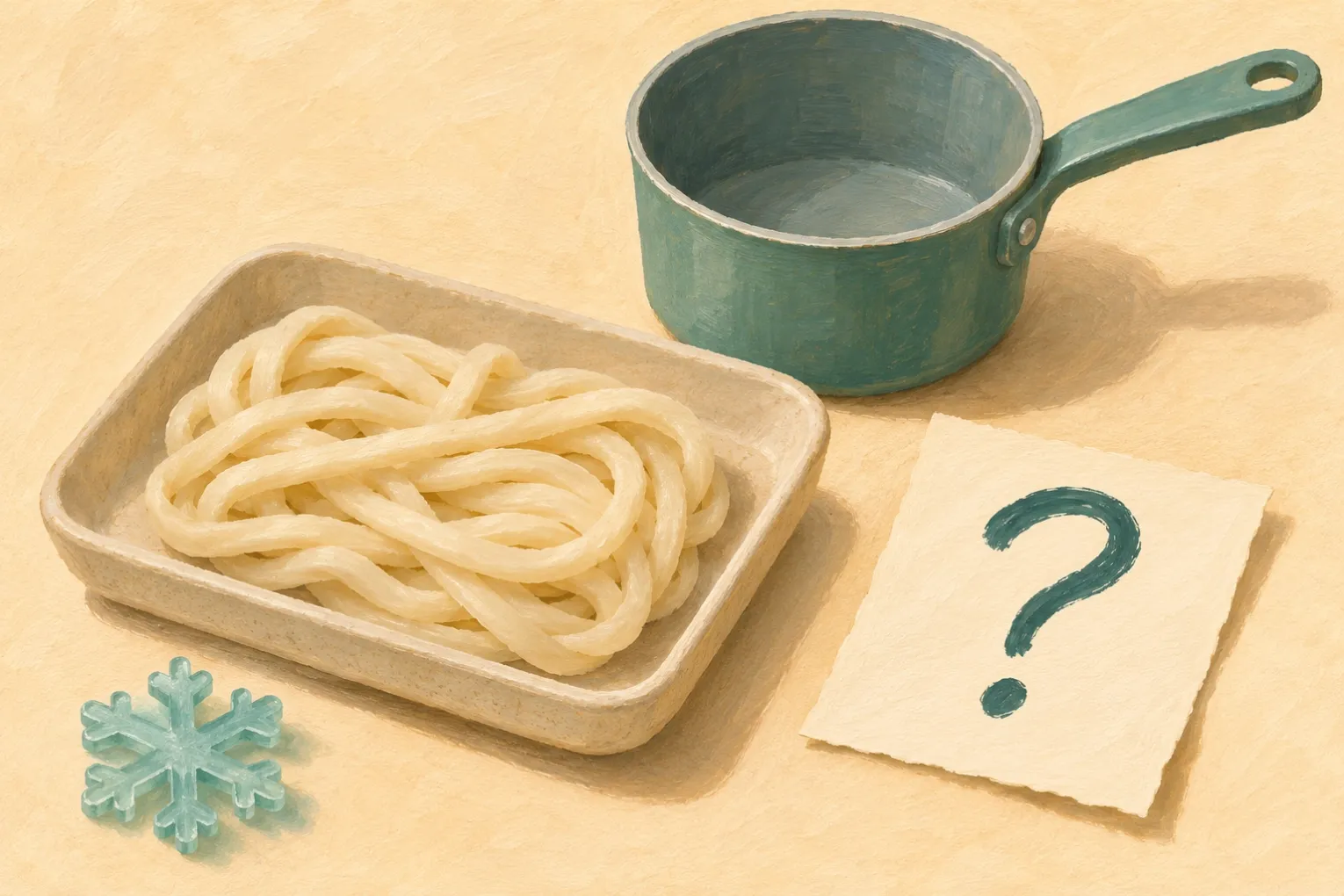
AI-generated editorial illustration of a frozen-noodle processing question; not a product photograph, cooking instruction, company test or evidence of udon/frozen-noodle supply.
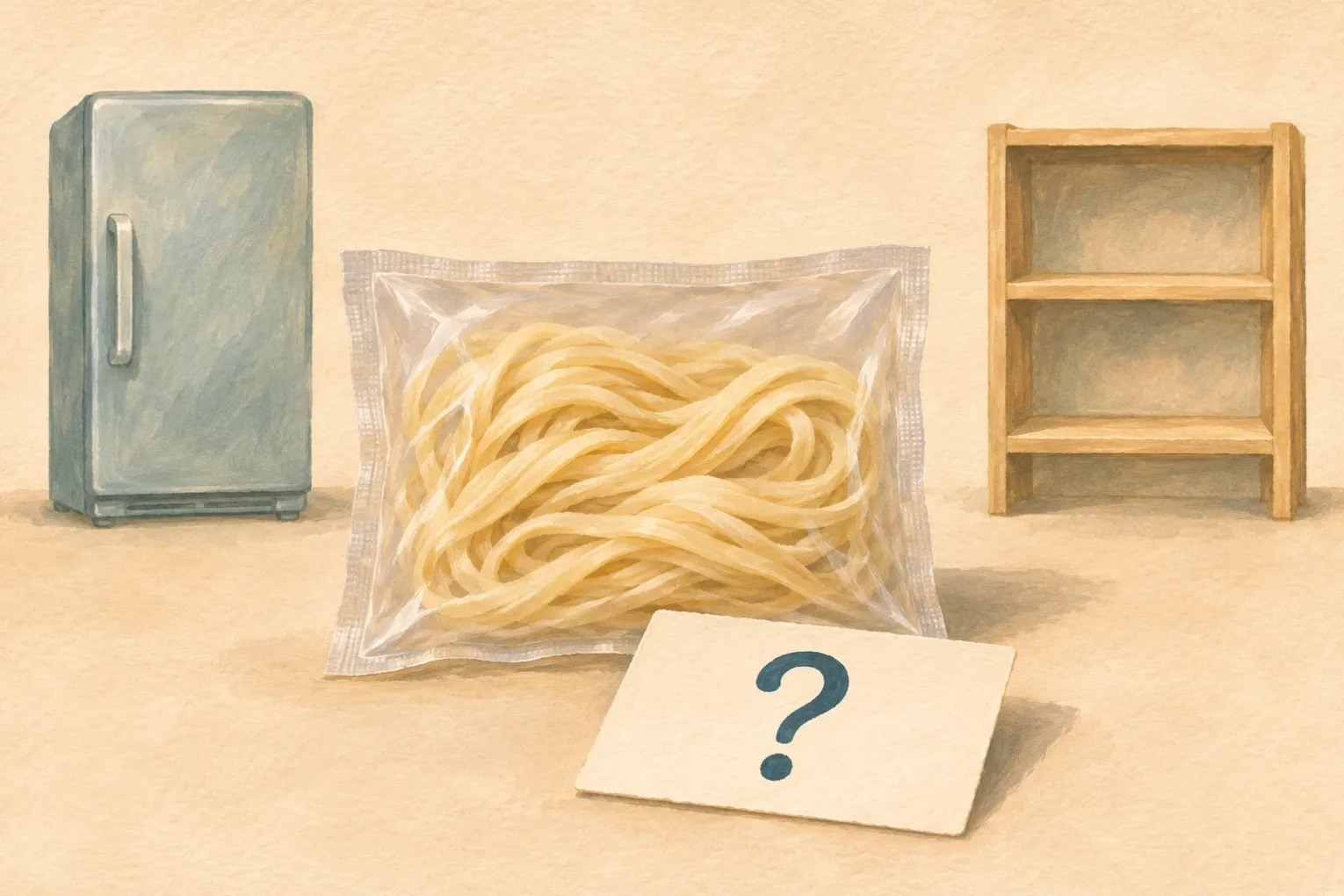
For a meal-kit purchasing team, frozen udon is an incomplete description of the ingredient. It identifies a storage state but does not settle whether the noodles were boiled before freezing. Establish that earlier processing step before deciding whether an offered product fits a kit in which the customer cooks the noodles or one built around previously cooked components.
Two frozen offers can start at different stages
Japan's Ministry of Agriculture, Forestry and Fisheries describes frozen udon as fresh or boiled udon that has been frozen. Its classification also distinguishes fresh, boiled and dried forms. These descriptions overlap in process: freezing can follow either fresh-noodle production or boiling.
That is the missing question in a brief that says only “bulk frozen udon for meal kits.” Ask which starting material was frozen. Do not infer it from a photograph of a frozen noodle block or from the word frozen in the quotation.
| Information on the offer | Question still needed for selection |
|---|---|
| Frozen udon | Were the noodles boiled before freezing? |
| Fresh udon frozen without prior boiling | What cooking preparation does this exact product require? |
| Previously boiled udon, then frozen | What finishing or reheating directions apply to this exact product? |
| Dried noodles | How will cooking a dry ingredient fit the meal's preparation sequence? |
This is a purchasing comparison, not a set of cooking instructions. Previously boiled does not, by itself, establish ready-to-eat status. The actual product directions and the finished meal's validated process remain necessary.
Choose the received form before approving the kit sequence
Consider a hypothetical buyer whose kit instructions assume that all noodle cooking has already happened upstream. An offer described only as frozen leaves a material gap: the purchased noodles might still require their initial cooking. Approving the offer on storage format alone could therefore approve a different ingredient from the one the kit was designed around.
Resolve that gap in the product description: identify the noodle SKU, whether boiling occurred before freezing, and the preparation directions supplied for it. Then have the meal-development team check that those directions fit the intended kit. If they do not, change the ingredient selection or revise and validate the meal process. A shared frozen format is not enough to make two offers interchangeable.
For a kit designed around a dry ingredient, ask a different question: who cooks the noodles, and at what point in assembly or consumer preparation? Do not borrow directions from a frozen product simply because both products are wheat noodles.
Where our dried-noodle catalog fits
Noodle House Food lists Dried Noodles, PF-002, with wheat flour, water and salt. Its catalog format is a 454 g bag, with 30 bags per carton. That is a dry-noodle reference to discuss when your brief permits a dried wheat ingredient; it is not confirmation of a frozen-udon product or an equivalent substitute.
If your business will cook dry noodles and later freeze the assembled meal, our separate frozen-meal selection guide addresses that downstream trial. It does not answer whether an incoming frozen-udon SKU was already boiled.
Send us the intended meal and received noodle form when requesting current dry-product details or sample availability. Keep a requirement for frozen udon explicit: the current PF-002 listing does not establish that supply capability.