Oct 21, 2026Buying Guides
Choosing Dried Noodles for Your Frozen Meal: Record the Product, Not Just the Freezer Setting
Discuss Egg Noodle and Dried Noodles as candidates for your own frozen-meal trial. Separate freezer settings from the noodle temperature history and reheated result.
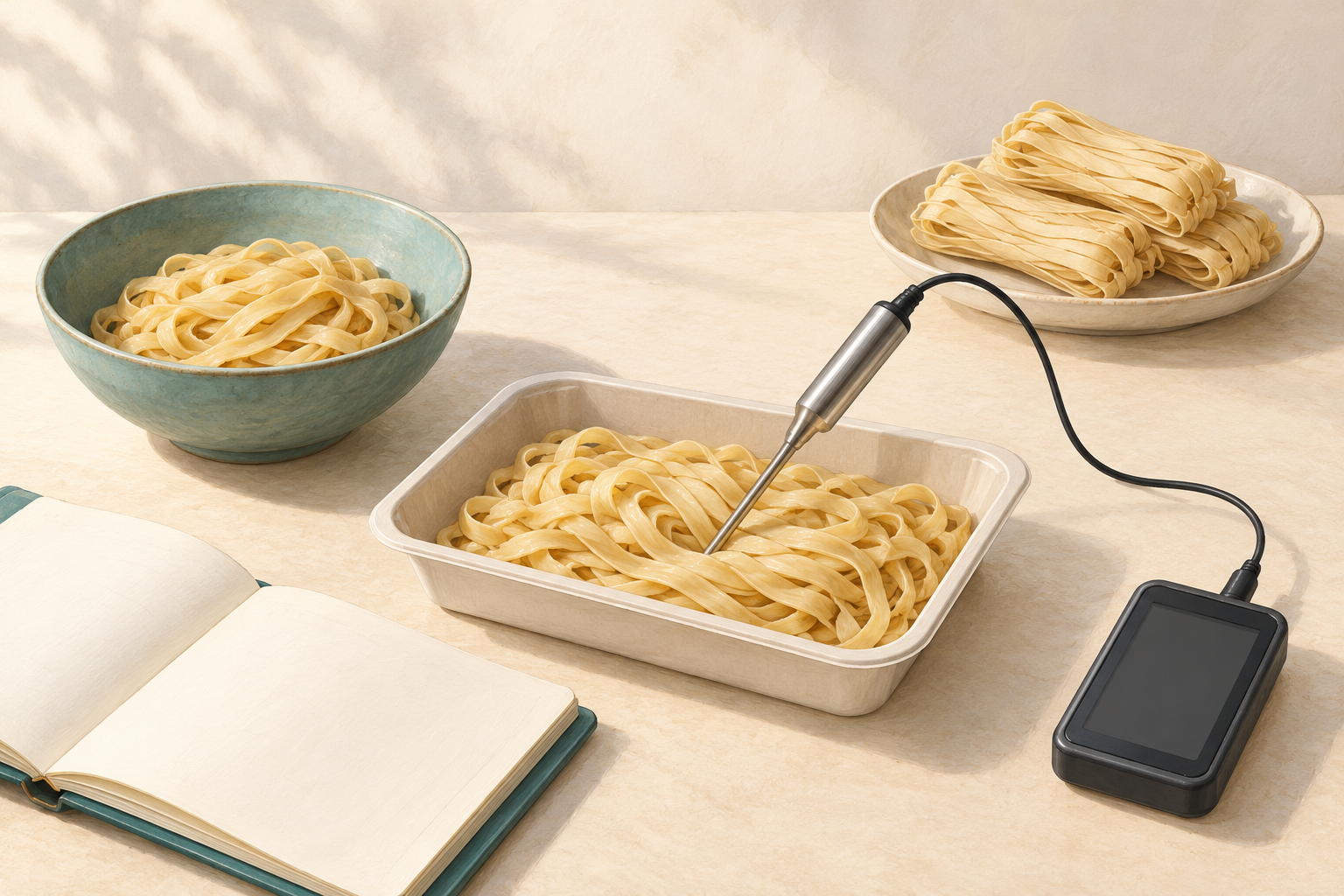
AI-generated conceptual illustration of a proposed noodle sample review; not a company test, evidence of suitability for frozen meals, or a validated food-safety procedure.
If you intend to cook dried noodles and incorporate them into a frozen prepared meal, judge the candidate after your complete preparation and reheating process. A pleasant freshly cooked bite does not establish suitability for that later use. For a useful comparison, record what happened to the noodles themselves during freezing, not just the temperature selected on the freezer.
Start with the dry noodle we actually list
Noodle House Food's catalog lists Egg Noodle with wheat flour, water, egg and salt, and Dried Noodles with wheat flour, water and salt. Both entries specify 454 g bags and 30 bags per carton. These are two dry-noodle candidates to discuss, not two validated frozen-meal ingredients.
The catalog's soup, dry-tossed and stir-fried serving suggestions do not establish performance after freezing and reheating. This guide does not offer ready-cooked frozen noodles or rank either dry SKU as the better frozen-meal choice. Tell us that the frozen meal is your intended downstream application when asking about samples.
What a freezing study measured that a freezer setting misses
Pan and colleagues' study of frozen cooked noodles used freshly made wheat noodles, cooked them, and monitored temperature at the centre of the noodle sample during freezing. Its methods distinguished the freezer conditions from the product's measured temperature history. The noodles were reheated before texture evaluation. The researchers reported texture differences under their experimental freezing treatments.
Those were laboratory-made noodles, not our commercial dried products. The study supplies a useful distinction between an equipment setting and a measured product process; it does not provide a freezing recipe, shelf-life claim or preferred SKU for this catalog.
Compare candidates through one defined meal process
The following is a suggested product-selection exercise. Your food technologist should define the safe preparation, freezing, storage and reheating procedure for the meal before any tasting. This is a quality comparison, not a substitute for that validation.
For each candidate, keep the dry-product identity attached to the resulting cooked sample. Record the initial cooking method, the noodle amount and arrangement in the meal, the meal container, and the approved reheating route. A change in these conditions needs to be visible in the comparison rather than hidden behind the same product name.
Then separate two records:
- Equipment conditions: the freezer setting, loading arrangement and other conditions specified for the run.
- Product observations: the temperature history measured in the defined noodle portion, with the sensor position identified, and the texture observed after the agreed reheating procedure.
Use your technical team's measurement method consistently. A note saying “same freezer temperature” is not evidence that two noodle portions followed the same freezing history. Equally, a recorded temperature curve does not by itself approve the finished meal: the reheated noodles still need to meet the agreed eating and handling requirements.
Decide what the comparison can support
Imagine that Egg Noodle meets your reheated bite target while Dried Noodles does not. Before treating that as a product ranking, check whether both observations came from the same defined meal process. If one candidate was tested in a shallow noodle-only portion and the other in a deeper assembled meal, the result leaves product and process mixed together. This is an illustrative decision problem, not a test we have performed.
A successful noodle-only screening can justify moving a candidate into an assembled-meal trial. Keep its conclusion limited to that screening. If your commercial meal will contain sauce and other components, approve the noodle in that meal and its intended reheating route before committing to the selection.
Send a frozen-meal brief with the sample request
Use our contact page to identify the dry SKU you want to discuss, describe the intended meal and explain who will carry out the downstream preparation trial. Ask for the current product specification and sample availability. If you already have results, include the process and the reheated-noodle observations together.
The purchasing decision is a dry-noodle choice supported by your intended application. Neither the egg ingredient nor a freezer setting alone establishes that choice.