Oct 21, 2026Buying Guides
A Texture-Modified Meal Brief: What a Thin-Noodle Catalog Cannot Confirm
For a clinician-defined foodservice brief, distinguish an ordinary noodle ingredient from a finished food with supporting texture-level evidence before shortlisting.

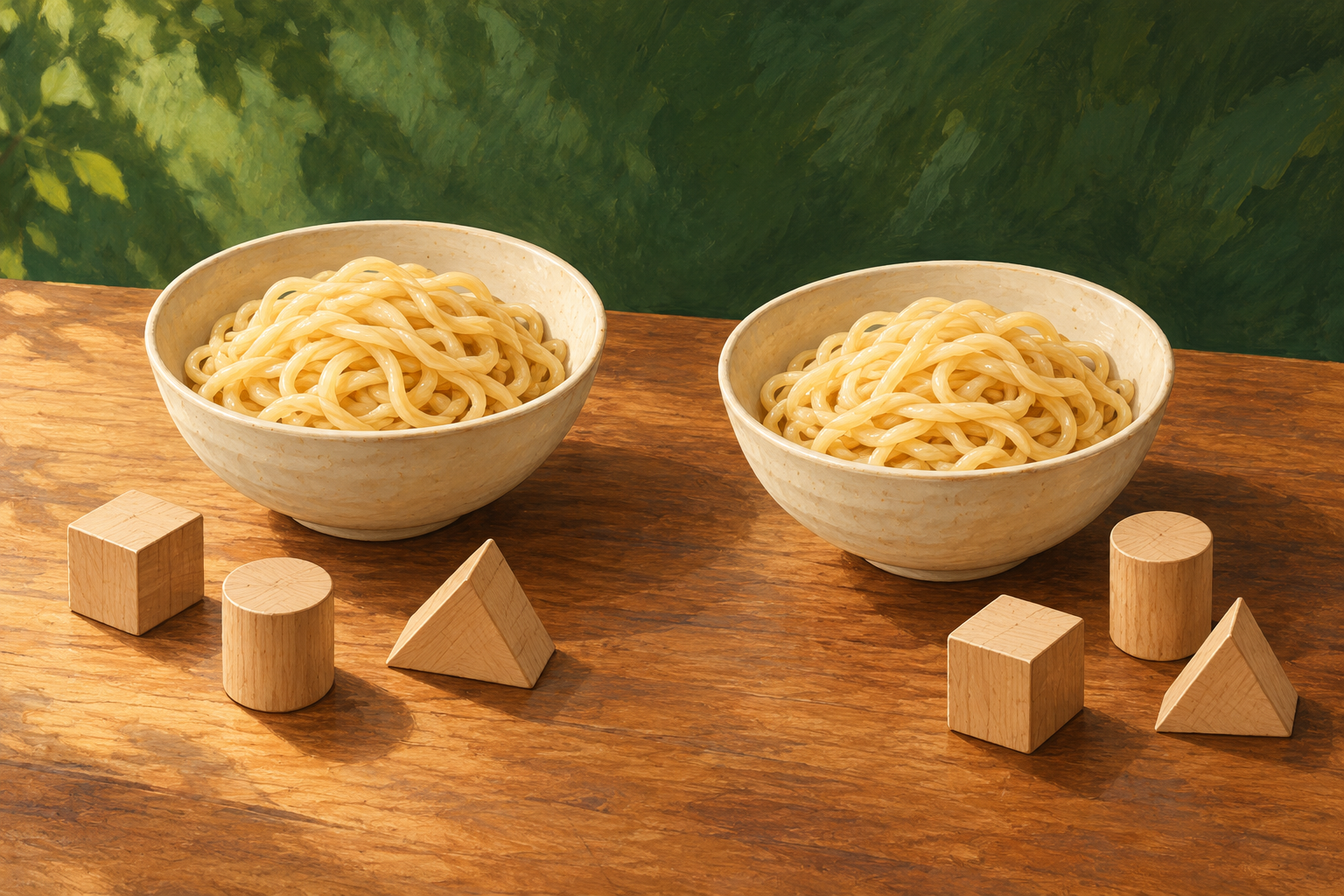
AI-generated conceptual illustration of an ingredient and procurement evidence review; not an actual product specification, clinical suitability assessment or IDDSI classification.
If your foodservice brief already specifies a clinician-defined food texture level, first establish what you are buying: an ordinary noodle ingredient for professional recipe assessment, or a finished food with evidence for the required level. A catalog description such as “fine” does not establish that either requirement has been met.
This distinction matters before choosing between Noodle House Food's Amoy Flour Vermicelli and Fine and White Plain Noodle. Their product names identify catalog items; they are not swallowing-suitability statements.
Identify the ingredient without assigning a food level
The 2026 catalog lists Amoy Flour Vermicelli in a 300 g box and Fine and White Plain Noodle in a 284 g bag. Both ingredient entries list wheat flour, water and salt.
The pages show ordinary serving suggestions, including soup. They do not provide an IDDSI assessment, prepared-particle measurements or evidence that a particular finished recipe meets a prescribed food level.
Keep these facts separate in the shortlist. The catalog can identify which sample or specification you are discussing. It cannot establish that this supplier offers an assessed texture-modified meal, or that either noodle is appropriate for a person with swallowing difficulties.
Fine width does not settle the prepared food's dimensions
The IDDSI Framework and Detailed Definitions, version 2.2, describes more than softness. For example, its adult Level 5 criteria address both particle width and length, alongside moisture and texture characteristics. It also requires the relevant tests rather than classification from a description alone.
That introduces a specific question for a fine-noodle shortlist: what evidence describes the prepared food, rather than just the narrow appearance of an uncooked strand? A long, narrow strand and a small prepared particle are different descriptions.
The company catalog does not answer that question. Do not turn the word “fine,” a package photograph or an ordinary cooked tasting into a level designation.
A soup suggestion is a separate presentation question
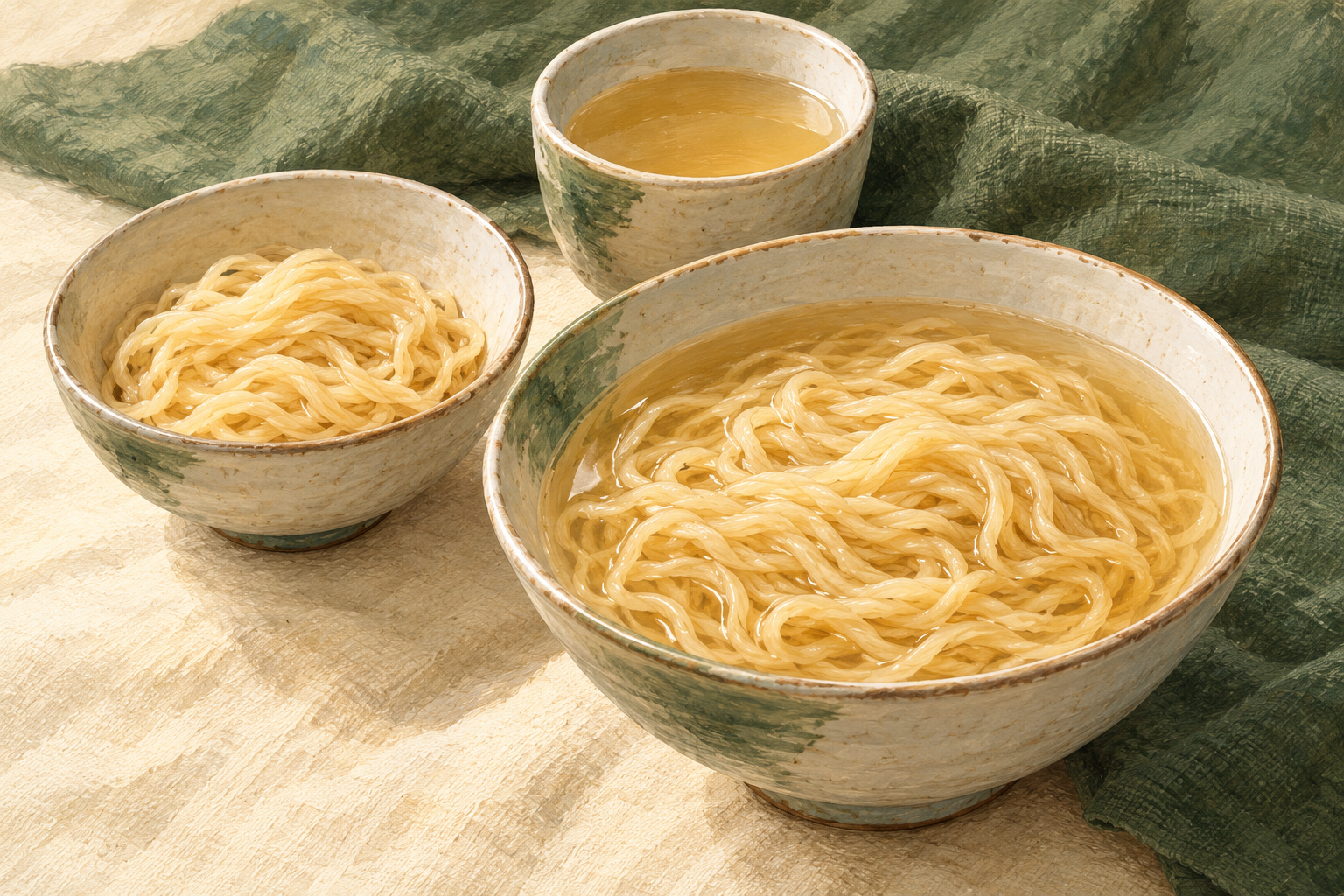
The same framework describes Level 5 food without separate thin liquid. Consequently, seeing a noodle pictured in soup does not establish that the complete serving meets that level. Assessing a strand alone would leave the liquid-and-solid presentation unresolved.
This is an application of the framework to a purchasing question, not an IDDSI finding about these noodles. It does not provide instructions for modifying either product into a suitable meal.
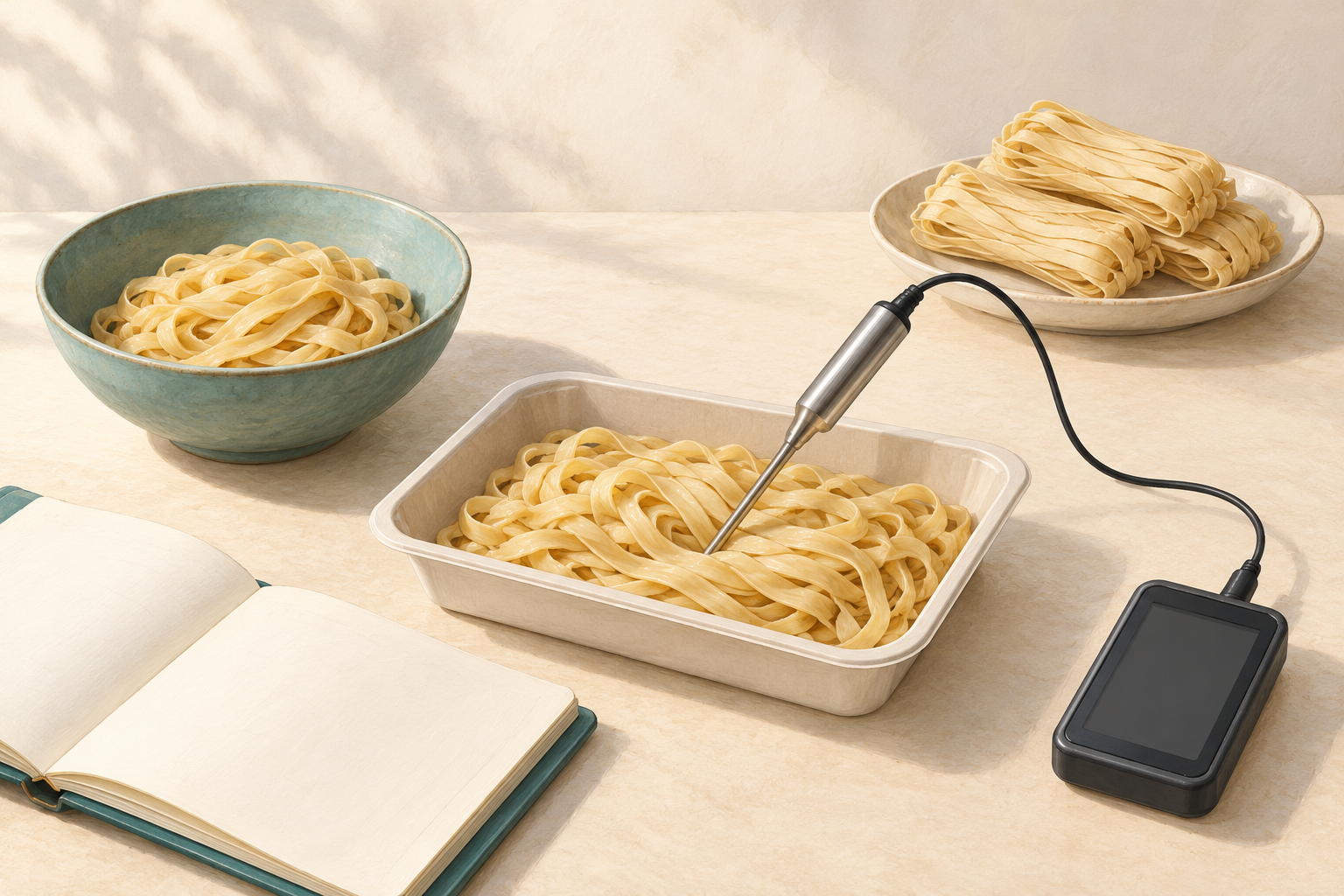
IDDSI's Testing Methods places testing in the intended serving conditions. Individual food recommendations remain the clinician's responsibility. The buyer's role is to obtain the evidence requested by the responsible clinical and foodservice team.
Keep two procurement routes distinct
- Your brief requires a finished food with supporting level evidence: ask whether that exact product and evidence are available. An ordinary dry-noodle catalog listing is not a substitute. Keep the item outside the approved shortlist while this requirement remains unmet.
- Your qualified team is evaluating ordinary ingredients for a proposed recipe: identify the exact noodle and request current product information. The team's evaluation concerns the prepared dish; obtaining a sample does not authorize patient service or establish a product-wide rating.
For a product-information inquiry, state which of these routes your brief requires and identify the catalog item. Ask what current specifications and relevant evidence can actually be supplied. This allows the supplier to answer a defined request without presenting an unassessed noodle as a validated texture-modified food.