Oct 21, 2026Buying Guides
Choosing Noodles: Does the Same Chewiness Value Mean the Same Texture Profile?
Equal calculated chewiness can conceal different hardness, cohesiveness and springiness values. Review the components before approving a noodle substitution.
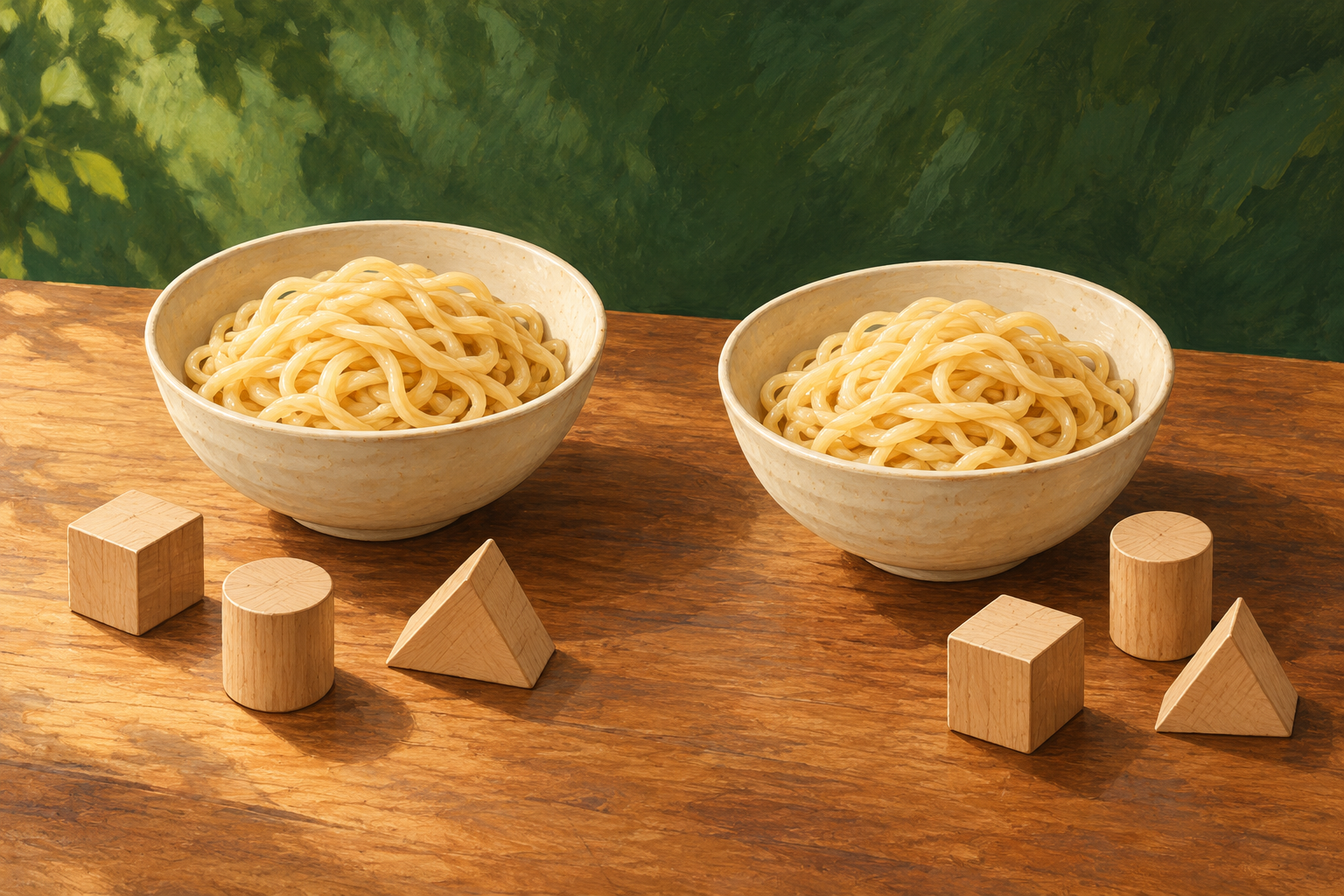
AI-generated editorial illustration of noodle samples and abstract component shapes; not company measurements or evidence of equivalent texture or a proven difference between products.
Two noodle samples can have the same calculated chewiness value without having the same instrumental texture profile. If a proposed replacement is described as equivalent because one number matches, ask which measurements produced that number before using it to approve the change.
This question comes after establishing that the reports use compatible methods and sample conditions. Even then, a combined result can conceal differences among its components. It also does not, by itself, establish that consumers will experience the noodles as identical.
Start with the products, then define the texture requirement
Noodle House's catalog identifies Egg Noodle with wheat flour, water, egg and salt, and Dried Noodles with wheat flour, water and salt. These are identifiable candidates for a sample discussion. Their ingredient lists do not supply comparative texture measurements.
If your purchasing brief says “match the current noodle's chewiness,” clarify what needs to remain consistent. Does the kitchen mean resistance during the initial bite, the way the prepared noodle recovers after deformation, or its overall eating experience? Those requests should not automatically become one interchangeable laboratory number.
Understand what the calculated value combines
Stable Micro Systems' Texture Profile Analysis explanation describes a double-compression method. In its calculation, chewiness equals hardness multiplied by cohesiveness and springiness. Hardness comes from the first compression's peak force; the other two parameters describe different features of the response.
The manufacturer also cautions that not every parameter is meaningful for every product. Ask the report author to confirm the method's suitability and the definitions used. An instrumental springiness result should not automatically be treated as a guarantee of the sensory elasticity your menu team wants.
Equal products can hide unequal factors
Consider this arithmetic illustration, using the same agreed force unit for hardness and ratio values for the other factors:
- Hypothetical profile A: hardness 10 × cohesiveness 0.5 × springiness 0.8 = chewiness 4.
- Hypothetical profile B: hardness 12.5 × cohesiveness 0.5 × springiness 0.64 = chewiness 4.
These are invented numbers to demonstrate the calculation, not measurements of food, company products or acceptable limits. The higher hardness factor in B offsets its lower springiness factor. The matching product of 4 therefore cannot identify which component pattern produced it.
The example does not establish whether a real consumer could detect a difference. That would require appropriate evidence from real samples. Its narrower point is that matching a composite value cannot establish matching components.
Make the replacement decision more precise
Before requesting another sample, identify which aspects of the approved reference matter to the dish. If the bite resistance is already acceptable but the team wants a different recovery characteristic, record those as separate requirements. Do not simply ask for “more chewiness” and assume that every way of increasing the combined value would meet the brief.
When comparable reports are available, retain the component results alongside the calculated total. If only the total is provided, ask for its underlying values rather than reconstructing them: one product does not uniquely determine three factors. Keep any final eating-quality decision tied to the actual prepared samples.
For a new noodle or replacement discussion, send the selected products and the texture characteristics you need to preserve or change. Confirm available sample information; no particular test service or texture advantage is assumed. A matching chewiness total can be part of the review, but it is not sufficient evidence for an “equivalent texture” substitution approval.