Oct 21, 2026Buying Guides
Choosing a Plain Wheat Noodle for a Delicate Broth: Check Its Own Aroma
A plain ingredient list does not establish an aroma-neutral noodle. Define the noodle's role in a delicate broth before choosing a sample.
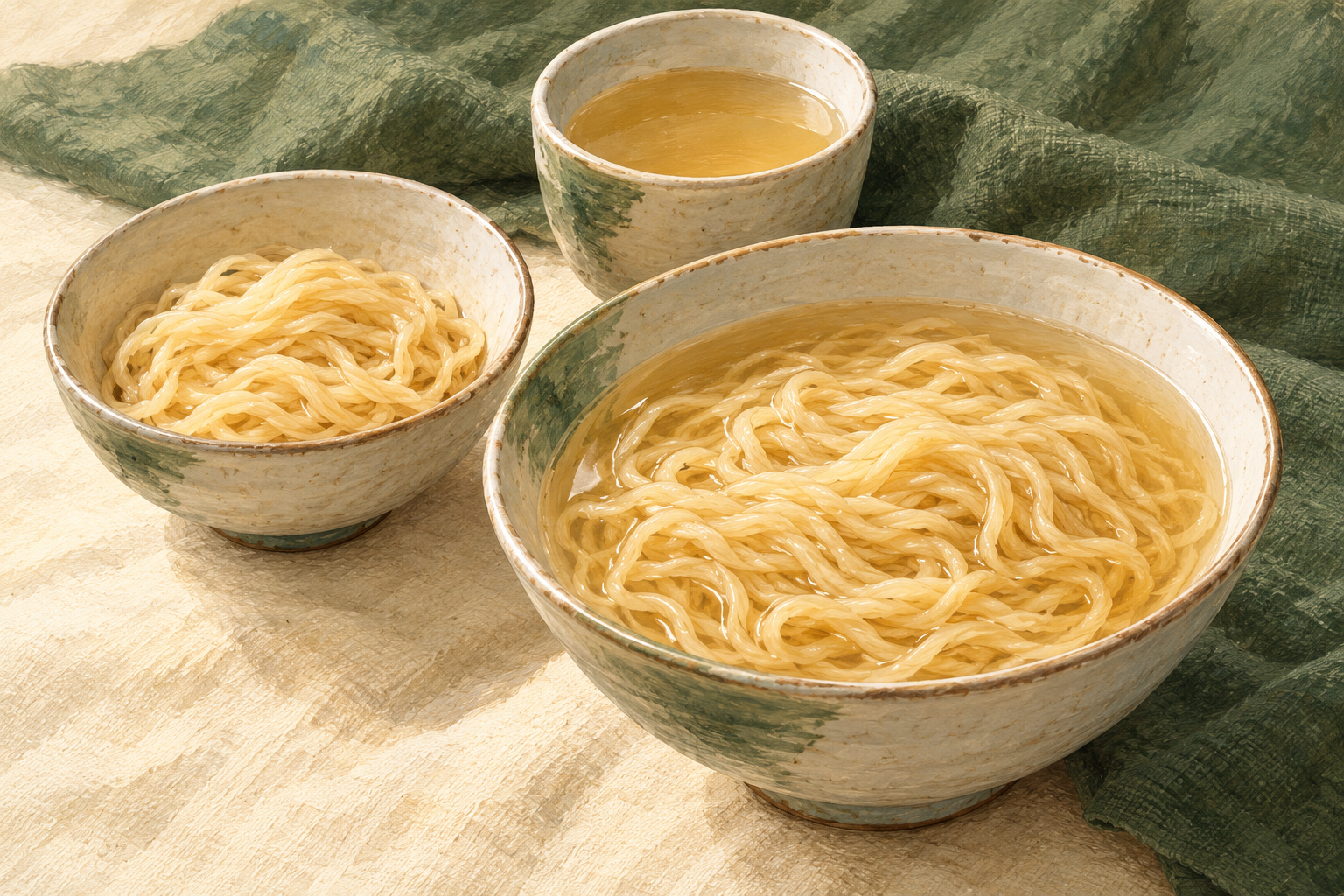
AI-generated editorial illustration of a noodle-and-broth comparison; not a company product test or a measured result.
For a light soup, shortlist the noodle against the aroma you want in the finished bowl. A simple wheat-flour, water and salt ingredient list helps identify a plain formulation; it does not establish that the cooked noodle will contribute no aroma. The buying decision is whether that contribution fits your broth, not whether the noodle smells strongest in isolation.
Noodle House's catalog lists Dried Noodles with those three ingredients and includes a classic noodle soup serving suggestion. That makes it a candidate to discuss for a plain wheat-noodle brief. The catalog does not provide a measured aroma profile or a result for your soup recipe.
Decide what the noodle should contribute
“Neutral” needs a clearer description before it becomes a purchasing requirement. Does the menu team want the broth's aroma to remain dominant, or would it welcome a noticeable cereal note alongside it? Neither target is automatically better.
Write that choice into the sample request. For example, “We want the prepared noodle to support a light broth without becoming its dominant aroma” is more useful than “Send your best soup noodle.” This is an example of a buyer brief, not a description of a tested company product.
Keep aroma separate from broth clarity and noodle firmness. A sample could meet the texture target while missing the intended aroma balance; one overall quality score would hide the reason for the decision.
What drying research can explain
In a 2022 study by Lin and colleagues, experimental noodles made from flour, water and salt developed different volatile profiles under different drying treatments. The researchers used instruments to examine the samples' aroma-related compounds. Their methods analysed fresh or dried noodle material, rather than finished bowls of soup.
This supports considering processing as well as the ingredient list. It does not establish Noodle House's drying method, predict its cooked aroma, or identify the best noodle for a particular broth. A profile containing more detected compounds is not, by itself, a recommendation for your menu.
Match the evidence to the claim
Keep three questions distinct when reviewing a proposed noodle:
- What is listed in its formulation? The ingredient information answers this. A plain formulation can meet an ingredient brief without proving a sensory description such as “aroma-neutral.”
- What material did the instrument examine? If a supplier provides a volatile-profile report, establish whether it concerns flour, uncooked dried noodles or a prepared sample. A report on one state should not quietly become evidence about another.
- Does the prepared noodle fit this broth? That requires evidence from the intended application. Neither a short ingredient list nor a dry-sample chemical profile supplies the missing finished-bowl observation.
This distinction changes the shortlist decision. A candidate can proceed because its documented ingredients fit the recipe brief, while the aroma requirement remains open. It need not be rejected simply because the catalog lacks an aroma report; equally, it should not receive an untested “neutral” description in a buyer's product specification.
If a technical report is available, ask the author which sensory conclusion its method actually supports. Do not convert an instrument's compound names into predicted flavour notes for the cooked company product. Laboratory findings and menu observations should retain their own sample identities and preparation states.
For organising a broader application assessment, use the existing noodle sample scorecard. The additional question here is narrower: what evidence supports the aroma role assigned to this noodle?
Request a sample for this bowl
Send the selected product, broth description, intended aroma role and preparation approach through the contact page. Ask for the current ingredient information and available sample options. If a sample is unsuitable, describe what the finished bowl needs to change; do not translate “too dominant in this broth” into a claim that the noodle is inferior for every dish.