Buying Fresh Noodles: Does Your Channel Need Refrigerated or Shelf-Stable Stock?
Fresh noodle storage depends on the exact product and treatment. Match refrigerated or shelf-stable stock to your wholesale channel before comparing samples.

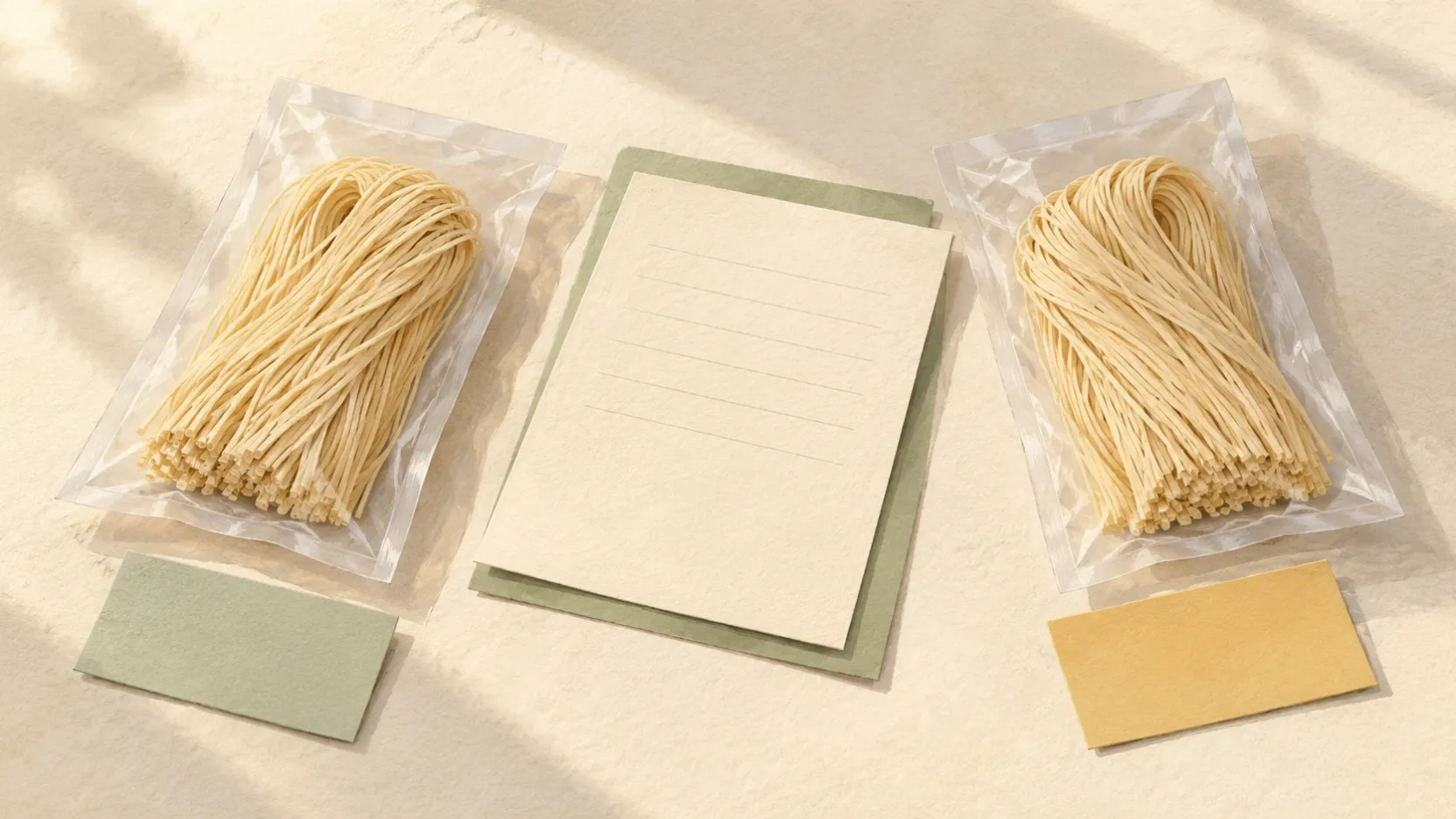
AI-generated editorial illustration of an unopened-noodle storage question. The pouch is generic; it does not establish a company fresh-noodle product, approved storage conditions or shelf-life performance.
Before shortlisting fresh noodles for wholesale, establish whether your distribution and retail route can maintain the product's required storage conditions. The word “fresh” alone does not settle the unopened pack's storage requirement. Some products need continuous refrigeration; some specially treated, vacuum-packed fresh noodles can be kept on the shelf. Vacuum packaging by itself is not enough to select the second category.
The distinction is treatment plus storage evidence
The NSW Food Authority's fresh-noodle guidance warns that some fresh Asian-style noodles require refrigeration from manufacture until preparation. It also identifies an exception: certain fresh noodles have been specially treated and vacuum packaged for shelf storage. The guidance tells buyers to follow the product's storage instructions.
Read those two points together. The exception is not permission to put any sealed fresh noodle on an ambient shelf. A vacuum pouch describes packaging; it does not tell you whether the necessary treatment and product-specific storage basis exist.
The Authority's manufacturer guidance places shelf-life determination and verification with the manufacturer and requires revalidation when the product changes. A buyer should therefore obtain the storage statement and supporting shelf-life information for the offered product, rather than borrow the claim from another noodle in similar packaging. These sources describe NSW guidance; they do not certify an individual product or replace destination-market review.
An ambient-only channel has three purchasing outcomes
If your intended warehouse, delivery route or retail display cannot provide refrigeration, resolve that constraint before comparing sample texture or carton price.
The offered fresh SKU requires refrigeration. It does not fit the proposed ambient route. Keep it out of that shortlist unless the route is changed to meet its requirements. Leaving a chilled product out to make handling easier is not an alternative product specification.
The supplier offers a treated fresh SKU for ambient storage. Request the exact unopened storage directions and the product-specific basis for that claim. Check that the proposed pack and formulation are the ones covered. “Vacuum packed” without this information leaves the central selection question unanswered.
The menu can use a dried wheat noodle instead. Review that as a different ingredient category, including its preparation and eating result. It may suit an ambient-stock brief, but a dried product is not evidence that the supplier makes a fresh equivalent.
This decision concerns unopened incoming stock. Once a pack is opened or noodles are cooked, separate handling instructions apply; our opened-pack guide addresses that later stage.
What our current catalog can support
Noodle House Food's Dried Noodles, PF-002, are listed as a shelf-stable dried wheat product with wheat flour, water and salt. The catalog reference is a 454 g bag, 30 bags per carton. Ask for the current specification and storage instructions for the item being offered.
That listing supports a discussion about dried wheat noodles. It does not establish refrigerated fresh-noodle supply or a specially treated ambient fresh-noodle range. If fresh texture and product form are essential, keep that requirement explicit instead of accepting a dry product under the same category name.
Send your required noodle form and storage route with the intended dish when asking about catalog products and sample availability. This makes the first selection decision clear: whether a supported product belongs in your channel at all, before comparing its commercial details.