Oct 2, 2026Buying Guides
Opened Noodle Packs Need Their Own Storage Instructions
Before approving a multi-portion noodle pack, separate unopened storage, opened dry-product handling and prepared-food instructions without inventing an after-opening life.
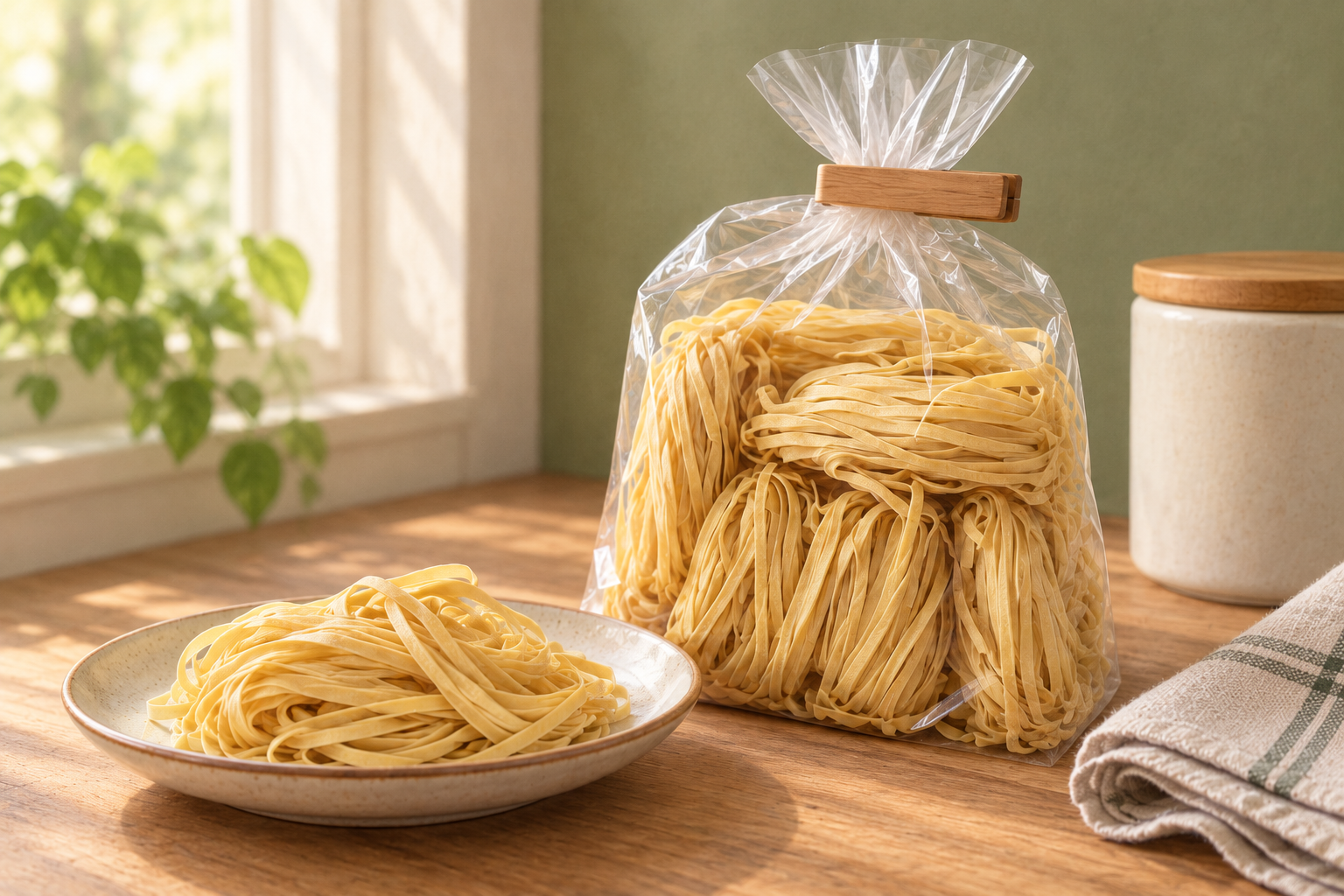
AI-generated editorial illustration of an opened pack; the clip and setting do not establish an approved reclosure method, storage conditions or after-opening shelf life.
A long unopened shelf life does not answer what the user should do after opening a multi-portion noodle pack. Before approving that format, request the instructions and supporting product assessment for the opened pack. Do not invent a number of days from the unopened best-before period.
The buyer’s practical question is whether the final packaging gives the intended user a clear, appropriate instruction at each stage. A retail bag opened over several meals and an individually sealed portion removed from a carton are different situations to describe.
Identify which package is actually opened
Start with the pack drawing or a physical sample. Is the user opening a shipping carton, a retail outer bag, an individual sealed wrapper or the package that directly protects the noodles? Record which remaining portions stay sealed after the first use.
In a hypothetical multipack, the outer carton is opened but every inner portion remains in its original intact wrapper. In another format, the user opens one shared bag and removes part of its contents. These invented examples are not descriptions of a particular Noodle House pack. They show why “opened” needs a precise meaning before anyone drafts a storage sentence.
Ask the supplier which packaging condition its instruction covers. Avoid transferring wording from the individually wrapped example to the shared bag just because both contain the same total weight.
Separate three product states in the brief
Create three headings: unopened product, opened but uncooked product, and prepared product. For each, identify the applicable instruction source and the person responsible for checking it. A blank heading is an information gap to resolve, not permission to copy a duration from another state.
The UK Food Standards Agency’s product-description guidance separately considers storage before opening, storage once opened and preparation instructions. Its illustrative temperatures and times concern examples, not a ready-made noodle specification. FSA product-description guidance.
For food placed on the EU market, Article 25 of Regulation 1169/2011 addresses special storage or use conditions and, where appropriate, after-opening conditions or a consumption time limit. Have the responsible reviewer determine what applies to the intended product. EU storage provisions.
Do not let a reclosure feature supply the missing evidence
A zipper, clip or fold-over instruction can be part of the proposed user experience. It does not, by its appearance alone, establish a specific after-opening life. Ask how the suggested handling instruction relates to the actual material, closure, product and intended use.
For example, a buyer might want a pack that is opened repeatedly in a restaurant storeroom. Put that use scenario into the brief before treating consumer-pack wording as sufficient. Describe what the operator does, rather than prescribing an unverified temperature or duration.
If there is no confirmed instruction for that scenario, record “after-opening guidance pending assessment.” Keep the question visible during packaging approval. Do not solve the gap by adding a generic “use within” statement chosen for convenience.
Review the complete artwork as the user will read it
Place the unopened storage text, date-code explanation and after-opening wording together for review. Check whether the references are understandable without a separate sales email. If an instruction says to reseal, establish what the proposed pack actually allows the user to do.
Have the reviewer examine translated wording alongside the approved source text. A design edit can accidentally omit “after opening” and turn a conditional instruction into one that appears to apply to the unopened product. Keep the translation and final proof tied to the same revision.
Where instructions are printed on an outer sleeve that the user may discard, flag that feature to the packaging team. The team needs to decide how the necessary information remains available in the intended use; do not assume a photo on a product listing solves the physical-pack question.
Close the instruction gap before ordering the format
The useful handoff is a marked pack diagram, the three product-state headings, current instruction sources and unresolved questions. Ask for a written response for the exact SKU and packaging revision. This is more actionable than asking only whether the noodles have a long shelf life.
Our unopened shelf-life buying guide addresses a separate planning question. For private-label packaging discussions, send the intended portioning and reclosure scenario through the contact page. No after-opening duration or prepared-food safety instruction is established by this article.