Sep 16, 2026Buying Guides
What to Record During a Noodle Cooking Test
Run a repeatable noodle cooking test by recording controls, timing, texture, yield, holding performance and photos.
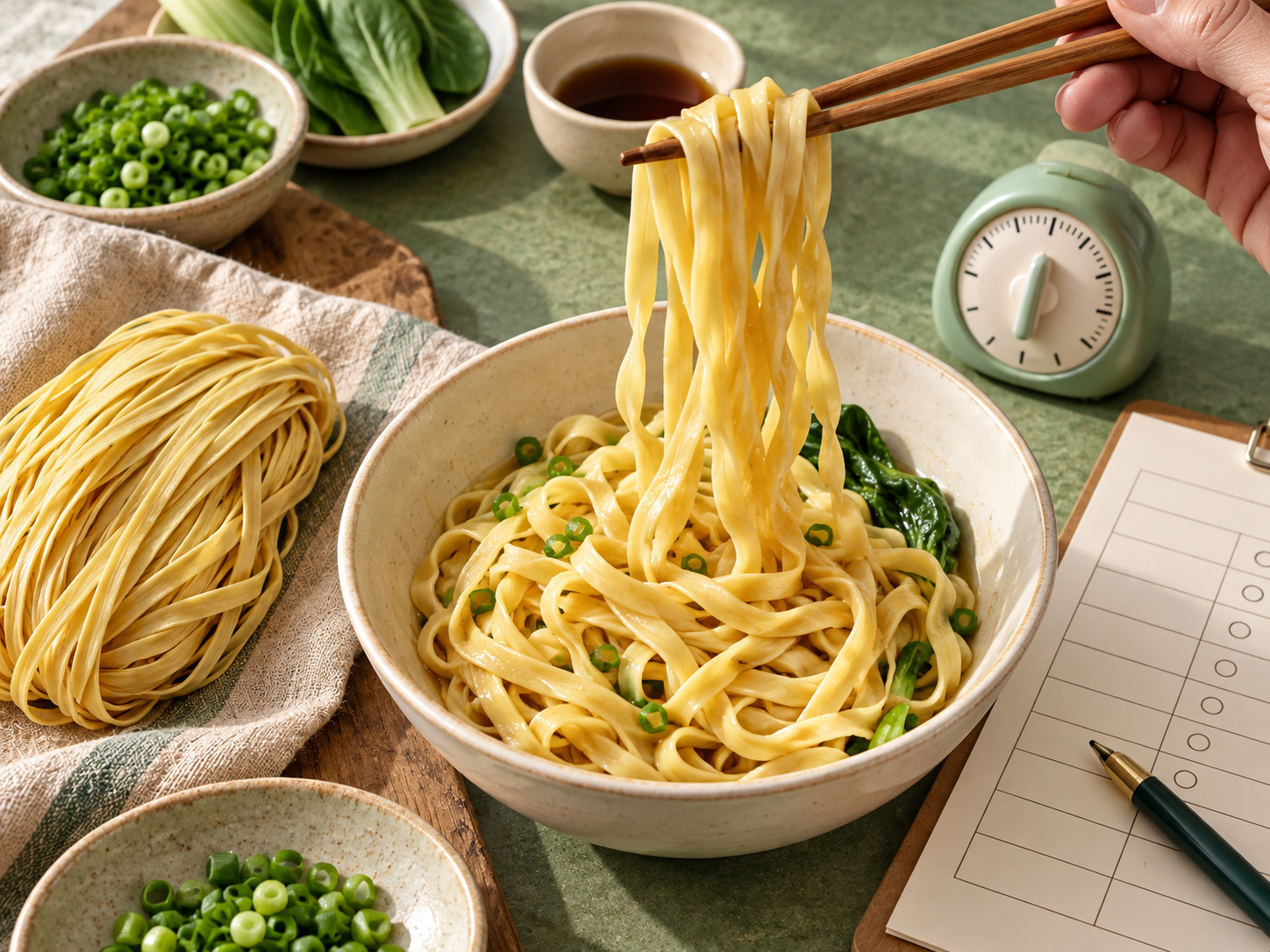
A cooking test is useful only when another person can understand and repeat it. “Cooked for a few minutes and tasted good” does not provide enough evidence to compare samples or approve production.
Record sample identity
Write the supplier code, buyer's blind code, product description, sample date, pack condition and stated cooking instructions. Photograph the uncooked sample beside a scale or ruler where helpful.
Record the test controls
Use the same noodle weight, water volume, pot, heat source and starting condition for comparisons. Note whether timing begins at water boil, noodle addition or return to boil. Record stirring and rinsing steps.
Without these controls, a one-minute difference may reflect the method rather than the product.
Observe at several time points
Check the product before, at and after the preferred point. Record core firmness, elasticity, surface texture, strand separation, breakage, water cloudiness, aroma and appearance.
The preferred cooking window can be more useful than one exact time because consumers and kitchens vary.
Measure yield and portion output
Record uncooked and cooked weight using the same draining method. For foodservice or meal kits, note portions obtained and whether bundles are consistent. Yield should be interpreted with texture; higher water absorption is not automatically better.
Test the real application
Place the noodles in the intended soup, sauce or stir-fry. If the product will be held, delivered or reheated, record observations after the relevant interval. Do not publish an application claim that has not been tested.
Capture useful evidence
Take photos with consistent lighting at the uncooked stage, preferred cook point and end of holding test. Save the test sheet with the sample code and reviewer. Video can show strand handling, but the written record remains important.
Decide the next action
Conclude with approve, reject, retest or request changes. If changes are needed, describe measurable direction: narrower, firmer after holding, less breakage or different portion—not simply “better.”
FAQ
Should I follow the supplier instructions?
Test them first, then also test the buyer's intended process. Record both methods separately.
Is one test enough?
Repeat important tests to check consistency and reduce preparation error.
Can taste alone decide the supplier?
No. Combine application performance with specification, packaging, commercial and verification checks.
CTA
To request a relevant product for testing, send the intended dish, cooking process, pack format and destination through the contact page.