Oct 17, 2026Buying Guides
Choosing Noodles for a Low-GI Brief: Measured GI and Laboratory Estimates Are Different Evidence
A low-GI noodle brief needs product-specific evidence. Keep human GI measurements separate from laboratory estimates when reviewing egg and plain noodles.
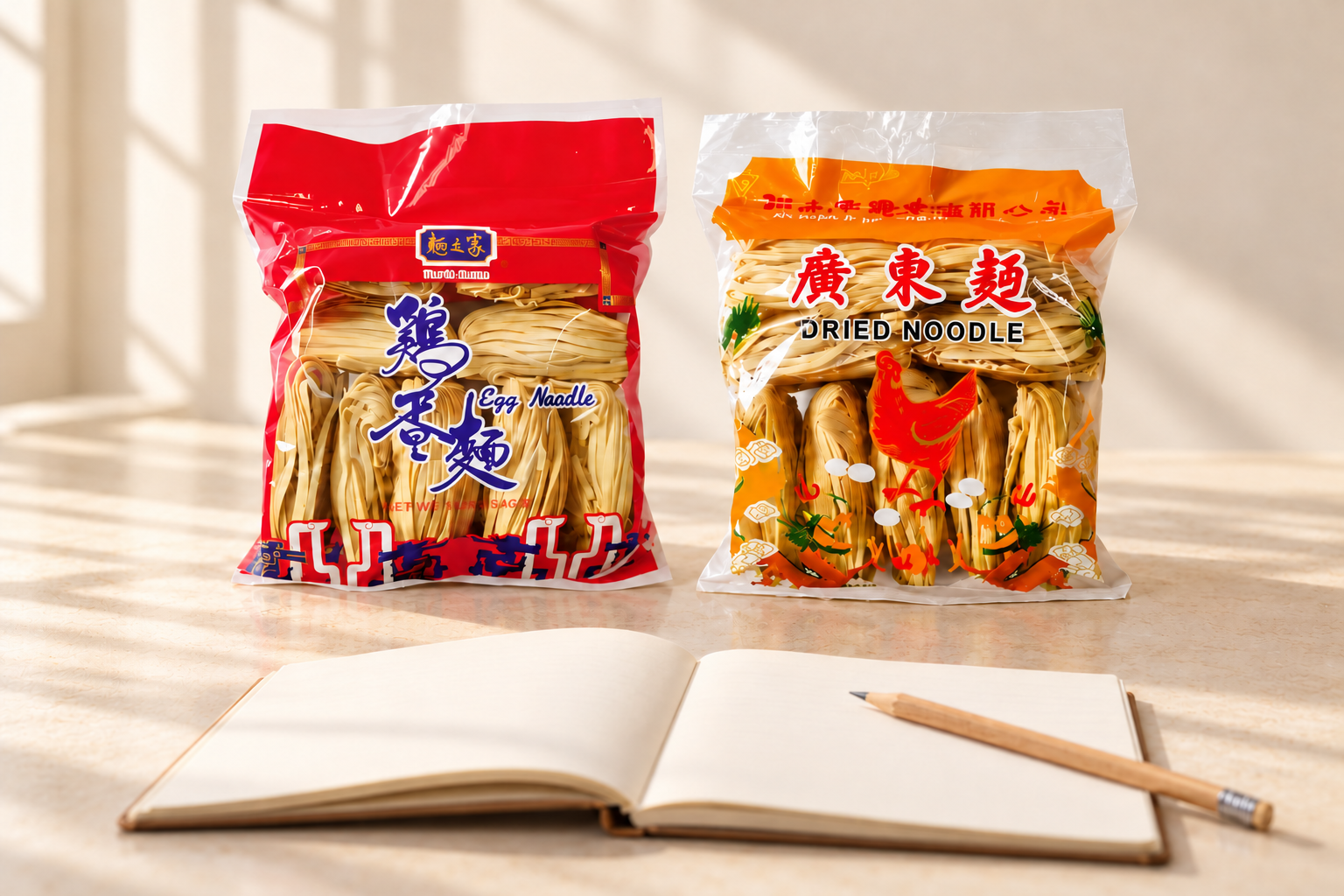
AI-generated conceptual illustration of a noodle evidence review; packaging lettering and relative sizes are illustrative, not approved current labels or sizing. No clinical test or GI result is depicted.
If a buyer's noodle brief requires a demonstrated low glycemic index, neither the presence of egg nor a short wheat-noodle ingredient list settles the choice. The Noodle House Food catalog information reviewed here does not establish a measured GI for Egg Noodle or plain Dried Noodles. Neither product can be selected as meeting that requirement from the catalog alone.
The important distinction is between a GI measured in people and a result estimated from starch digestion in a laboratory. Both can appear in noodle research, but they should not occupy the same field in a purchasing comparison.
What the company product records establish
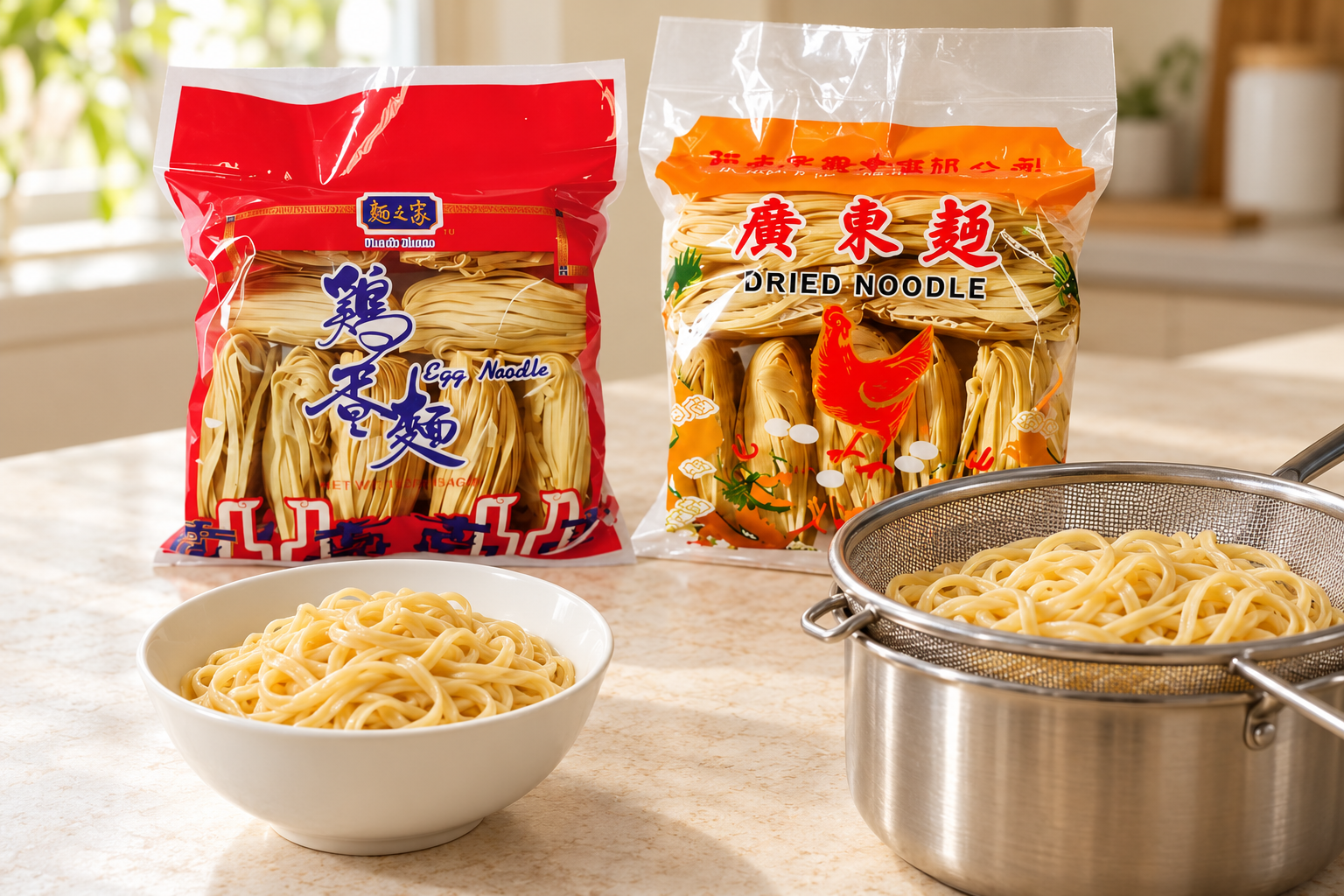
The 2026 catalog identifies Egg Noodle with wheat flour, water, egg and salt. Its Dried Noodles entry lists wheat flour, water and salt. Both entries show a 454 g bag and 30 bags per carton.
These facts identify two products for discussion. They provide no GI result, no comparative blood-glucose response, and no basis for choosing the egg formulation over the plain one for a low-GI brief. “GI not established in the reviewed materials” also does not mean “high GI.” Keep the unanswered requirement visible rather than assigning either product a category.
Separate the measurement from its estimate
Sydney University's Glycemic Index Research Service describes GI testing in healthy volunteers using standardized methods. It separately lists in vitro starch-digestion assays among its other analyses. In vitro means outside the living body; such a laboratory assay does not record a person's blood-glucose response.
ISO 26642:2010 addresses the determination and classification of food GI. Its publicly accessible introduction distinguishes an in vitro digestibility or hydrolysis index from GI values. A laboratory estimate can be useful research information, but a buyer should not silently rename it a measured GI result.
Consider a hypothetical supplier file containing an estimated GI derived from an enzyme-digestion experiment. Even if its number looks suitable for the brief, the file has not thereby supplied a human GI measurement. Record the number under the reported method and leave the measured-GI requirement unresolved. This example contains no result for a Noodle House product.
Read noodle GI tables at the product level
The university's GI database associates entries with food descriptions, manufacturers where identified, and study references. That context matters when a buyer sees a result labelled “egg noodles,” “wheat noodles” or “pasta.” A value for another tested product is not a result for our Egg Noodle simply because both names include egg.
Use an external entry to locate its original study, not to fill a blank company specification. The useful question is whether the evidence actually covers the proposed noodle and preparation. A broad noodle-category average cannot resolve that product-specific question.
Make a clear shortlist decision
For the two catalog candidates, use three separate outcomes:
- Product identified: the catalog name and ingredient reference match the sample being discussed.
- GI evidence identified: any supplied result retains its original method, tested food and preparation details. An in vitro estimate remains labelled as an estimate.
- Low-GI requirement met: this stays unconfirmed until suitable product-specific evidence and the intended market's claim requirements have been reviewed.
This differs from choosing a noodle for taste or a required ingredient composition. An enjoyable sample can satisfy the menu preference while leaving the GI requirement unanswered. If demonstrated low GI is mandatory, keep the product outside the qualified shortlist until that gap is resolved; do not treat a promising taste test as a substitute measurement.
Send Noodle House Food your product reference and the exact evidence requirement. State whether GI is mandatory for selection or simply a research question, and include the intended preparation and market. Ask which relevant records, if any, are available. This guide does not claim that either SKU has been GI-tested, that a low-GI option is available, or that the company provides clinical testing.