Oct 17, 2026Buying Guides
Choosing Noodles for a Sodium-Controlled Menu: The Dry-Product Ranking May Not Survive Cooking
Lower sodium before cooking need not mean lower sodium in the served noodles. Review retention and the intended dish before choosing an egg or plain SKU.
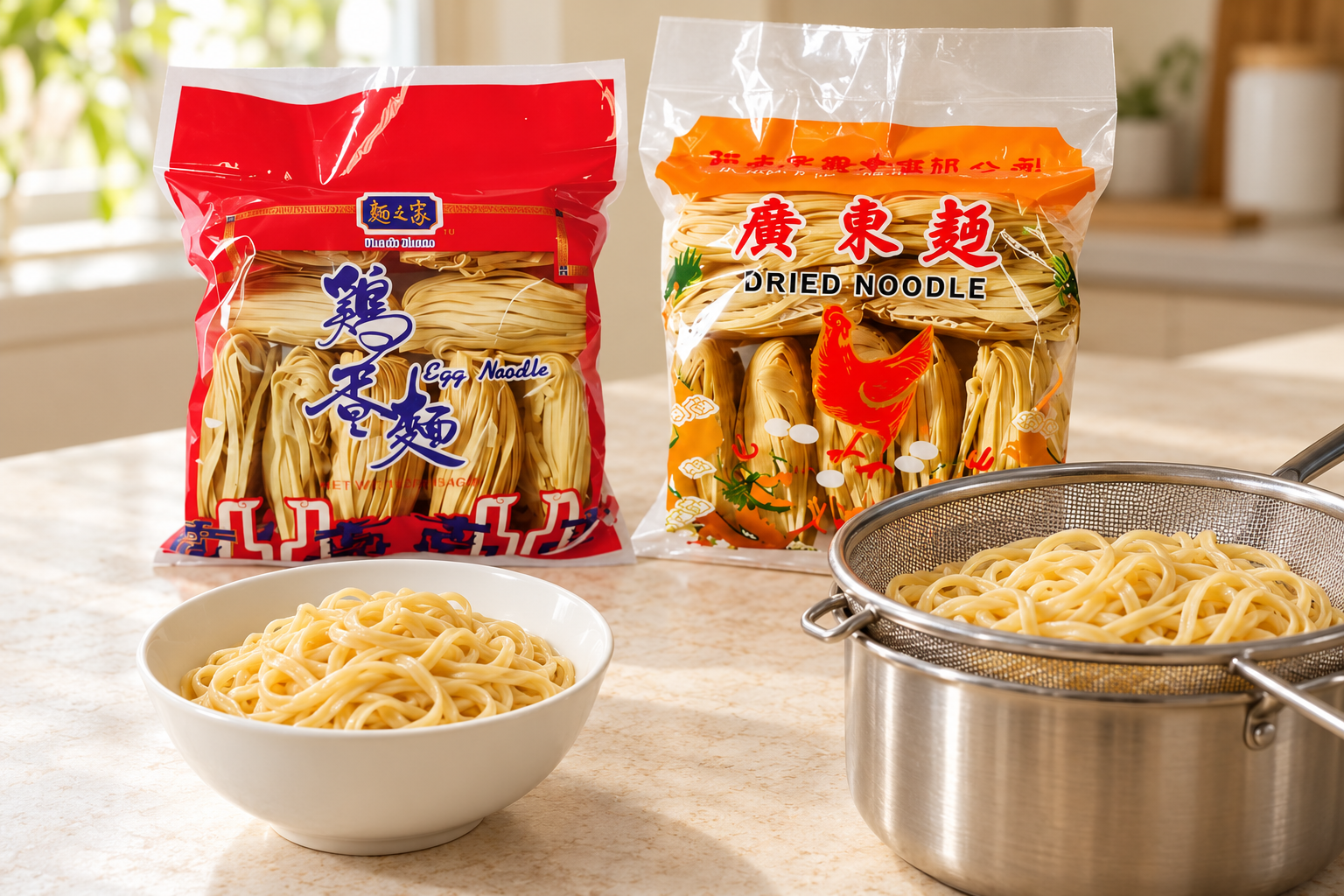
AI-generated conceptual illustration of noodle preparation; packaging lettering and relative sizes are illustrative, not approved current labels or sizing. This is not a company sodium test or measured comparison.
When a foodservice brief sets a sodium target for cooked noodles, a lower sodium value in the uncooked product does not establish the final ranking. Sodium can move from noodles into cooking water, and different products need not retain the same proportion. The selection needs evidence for the cooked food the kitchen will actually serve.
For Noodle House Food's Egg Noodle and plain Dried Noodles, the catalog lists salt in both ingredient entries but provides no comparative cooked-sodium results. It therefore cannot identify a lower-sodium winner for the menu.
Start with two identified products, without assuming equal salt levels
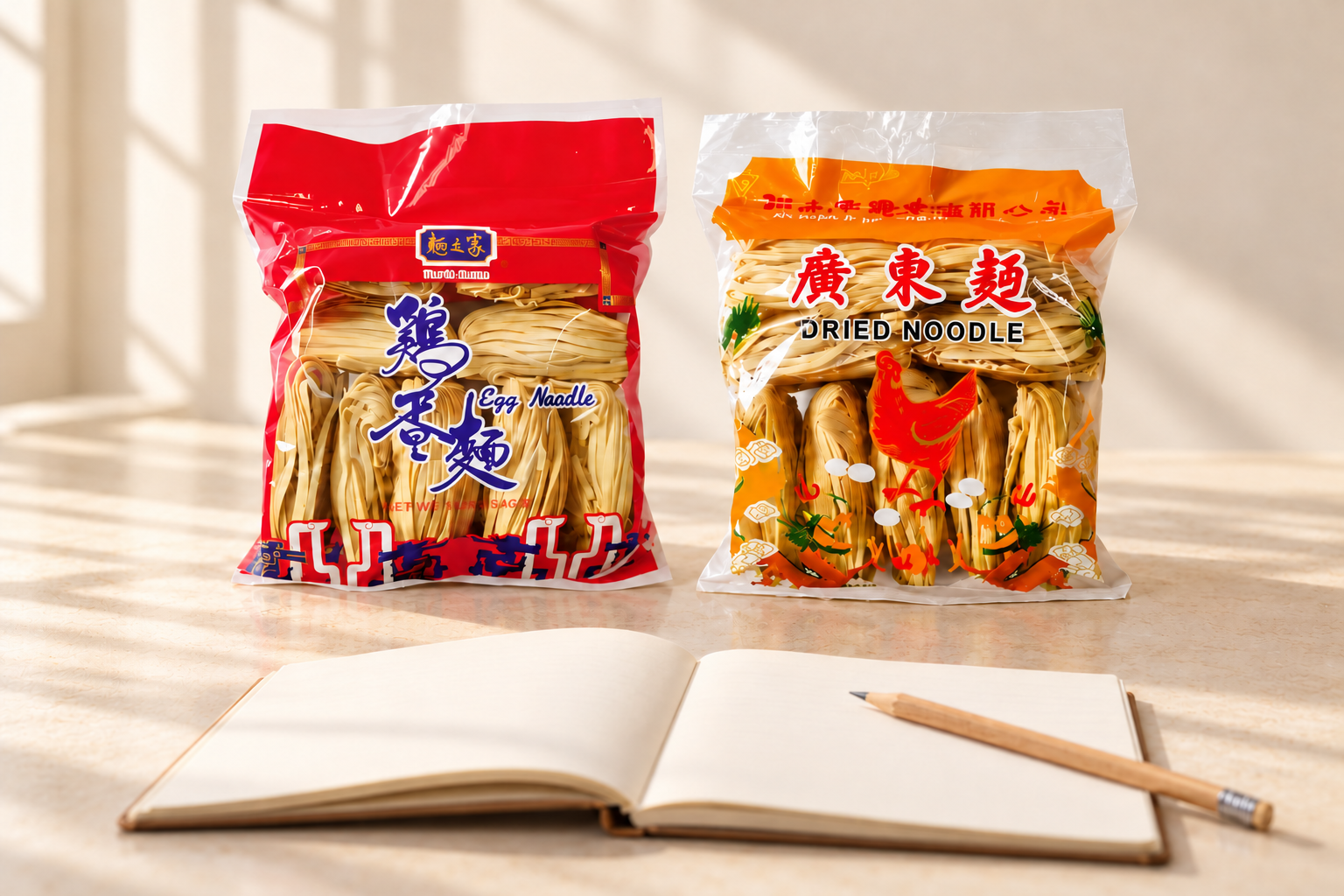
The catalog lists Egg Noodle as wheat flour, water, egg and salt, and Dried Noodles as wheat flour, water and salt. Both are shown as 454 g bags, with 30 bags per carton, and both include soup, dry-tossed and stir-fried serving suggestions.
Matching bag weights do not establish matching sodium quantities. Nor does the shared word “salt” disclose its amount or how much sodium remains after preparation. These catalog entries are enough to specify the samples to discuss; they are not enough to choose between them for a cooked-sodium target.
A published comparison shows why retention matters
A 2024 study by Yeoh and colleagues in LWT compared guar-gum-coated yellow alkaline noodles with and without a salt coating and a commercial noodle sample. The salt-coated experimental noodles started with less sodium than the commercial sample, yet had similar sodium content after cooking. The researchers examined sodium released into cooking water and the proportion lost, as well as the final cooked noodles.
That result shows why a lower starting value need not produce the expected separation after cooking. It does not show that every noodle behaves this way. The experimental coatings, alkaline formulation and preparation conditions are not specifications for Noodle House Food's products. The study supplies a reason to examine retention, not a reduction factor or product ranking that can be borrowed for our SKUs.
Water uptake and sodium transfer are different changes
Our guide to as-sold and as-prepared nutrition information explains why different food states must not be mixed in one comparison. Even after that basic mismatch is removed, a second question remains: how much sodium stayed with each noodle sample during preparation?
Adding absorbed water changes the weight used to express a concentration. Sodium moving into discarded cooking water changes the amount remaining in the noodles. These are different effects. A cooked-weight measurement alone does not tell the kitchen how much sodium left the product, and one noodle's retention result cannot automatically be used for another.
Keep the food being evaluated precise. Cooked, drained noodles are one object; noodles served with their cooking liquid are another. Sodium that has moved into liquid has not been excluded from the dish if that liquid is served. Added broth, sauce and seasonings must also remain separate from the noodle-only comparison.
Decide what evidence would resolve the menu choice
If the target applies to the cooked, drained noodle component, request suitable product-specific data or discuss an appropriate assessment with the kitchen's qualified nutrition or laboratory provider. The stated preparation and drainage must match the comparison. Keep the reported quantity basis visible, and use the same basis for both samples.
If the target instead applies to the finished soup or stir-fried dish, retain that recipe as the decision object. A result for drained plain noodles cannot approve the full dish. The supplier's product information and the kitchen's recipe inputs answer different parts of the question.
The outcome may be that both samples remain suitable for menu testing while their sodium ranking is unresolved. Do not fill that gap with a generic “percentage removed by boiling,” assume the plain noodle contains less sodium than the egg noodle, or call either product low sodium without the required evidence.
Contact Noodle House Food with the selected noodle references and state whether your target concerns drained noodles or the complete dish. Include the intended preparation and any existing sodium specification, and ask which current product data are available. No company sodium value, cooking-reduction percentage or low-sodium supply option is established by this guide.