Oct 2, 2026Buying Guides
Noodle Shipments: Sea Waybill or Original Bill of Lading?
Confirm the document type and carrier release route before changing a noodle shipment from a negotiable original bill of lading to a sea waybill.
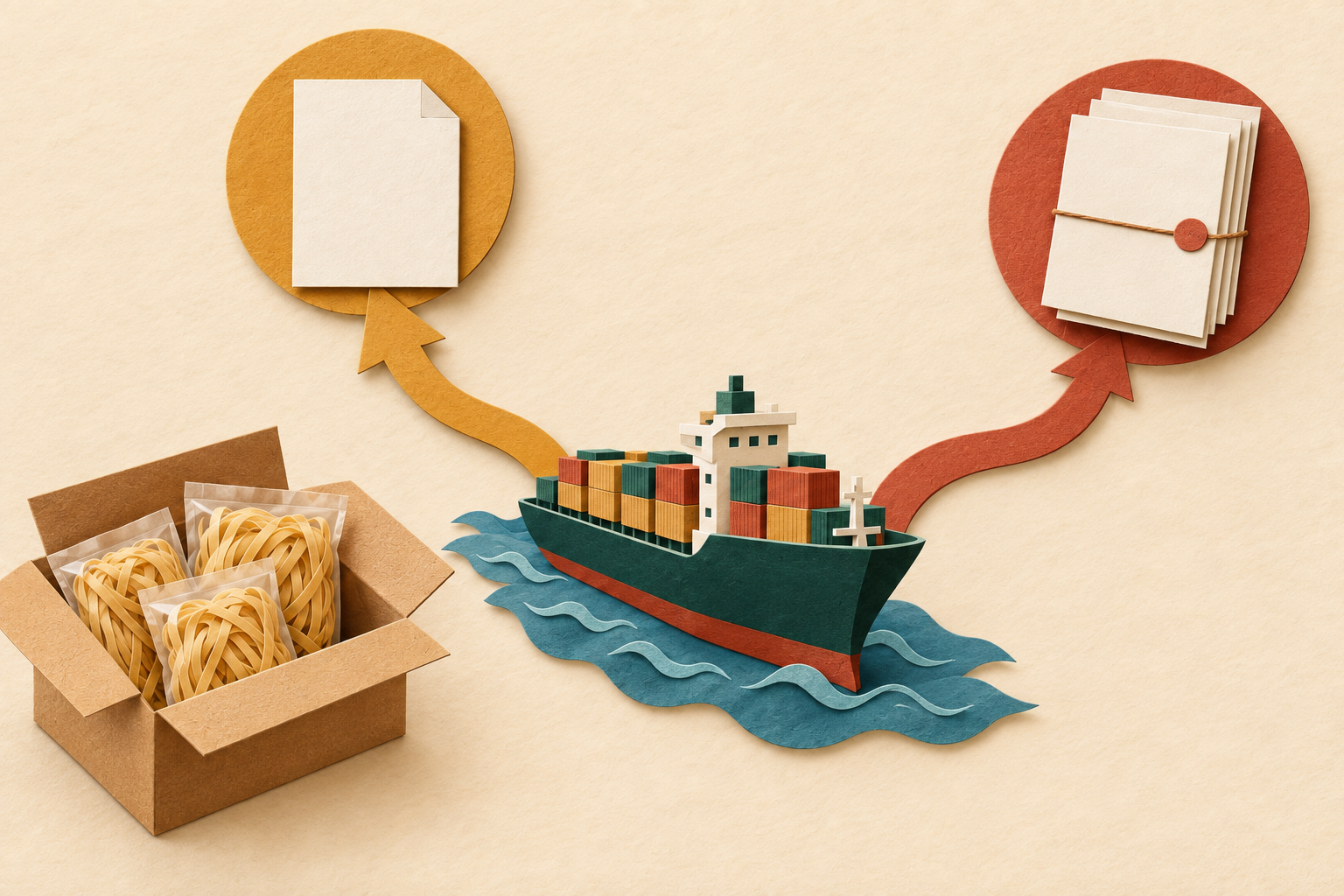
AI-generated editorial illustration of alternative shipping-document routes; not actual shipment paperwork, a required number of originals or confirmation of cargo release.
Can a sea waybill replace an original bill of lading without changing the release plan?
Do not treat that switch as a simple document rename. A sea waybill and a negotiable original bill of lading provide different documentary controls. Before accepting a change for a noodle shipment, ask the carrier and the parties responsible for payment to confirm how cargo release will work under the proposed document.
The purchasing concern is practical: an order schedule may depend on a particular document being presented or surrendered. Changing the document route can invalidate that assumption even when the cartons, vessel and destination remain the same.
Establish what document will actually be issued
Maersk's sea-waybill explanation states that a waybill is not a document of title and that originals are not issued for it. Its comparison with bills of lading distinguishes release under a sea waybill to the named consignee from the original-document presentation associated with a negotiable bill of lading.
That distinction does not mean a sea waybill eliminates customs clearance, identification, charges or other release conditions. Obtain the carrier's instructions for the actual shipment and destination. Avoid generalizing a procedure from a previous carrier or port.
The phrase “bill of lading” alone is not precise enough for this review. Ask for the exact document type and proposed release route. Where originals are involved, establish what presentation or carrier-approved surrender arrangement applies.
Write a cargo-release instruction alongside the shipment file
Before the document is finalized, bring purchasing, the forwarder and the payment owner into one short written confirmation. Record:
- The booking or shipment reference and carrier.
- The proposed transport-document type and the named consignee details.
- Whether original documents will be issued and who will control them.
- The carrier-confirmed route for release, including any surrender step.
- Outstanding conditions, responsible parties and required timing.
- Whether the payment arrangement has been checked against that route.
This is a suggested coordination record. It does not replace the transport contract, banking instructions or destination requirements. Its value is making an assumption visible before someone schedules collection around it.
Keep the confirmation with the approved document version. If the document changes, ask the relevant parties to reconfirm the affected entries rather than merely circulating a new PDF.
Test the proposed switch against the payment arrangement
Consider a hypothetical noodle order where the seller's commercial plan relies on control of original transport documents until a stated event. A forwarder later proposes a sea waybill to simplify handling. That proposal needs review by the authorized commercial and payment parties before implementation.
Do not assume withholding a printout of the sea waybill recreates the control associated with a negotiable original bill. Equally, an original bill is not proof that payment has cleared, that the noodles passed inspection or that all destination conditions have been satisfied.
If a bank is involved, provide the precise proposed document and release change to the bank. Ask whether it fits the agreed instrument and instructions. Do not let a shipping amendment silently change a financing assumption.
Our D/P and D/A guide explains when a collecting bank releases documents. The question here is different: what transport document the carrier issues and how that document relates to cargo release.
Confirm cargo release before arranging collection
Document type, document issuance and cargo release are separate entries. A copy arriving in the buyer's inbox does not establish that the carrier has completed all release steps. Ask the forwarder for the current status and the precise unresolved condition before confirming warehouse receiving arrangements.
When a message says only “released,” ask which release it means and who confirmed it. Preserve the answer with the shipment reference. This avoids confusing a bank document event, customs event or carrier event with permission to collect the goods.
For wholesale noodle order planning, send the selected SKUs, quantity and destination. Agree shipping and payment arrangements in the transaction documents with the responsible parties. This guide neither specifies Noodle House Food's payment policy nor selects a transport document for your contract.
Sources checked: 2 October 2026; Maersk's comparison was updated 10 April 2025. Confirm the current shipment-specific process before document issuance.