Oct 2, 2026Buying Guides
Direct Noodle Shipping Does Not Necessarily Mean Nonstop
Read the routing behind a direct-service quotation. Intermediate port calls, a vessel transfer and the final delivery scope are different planning facts.
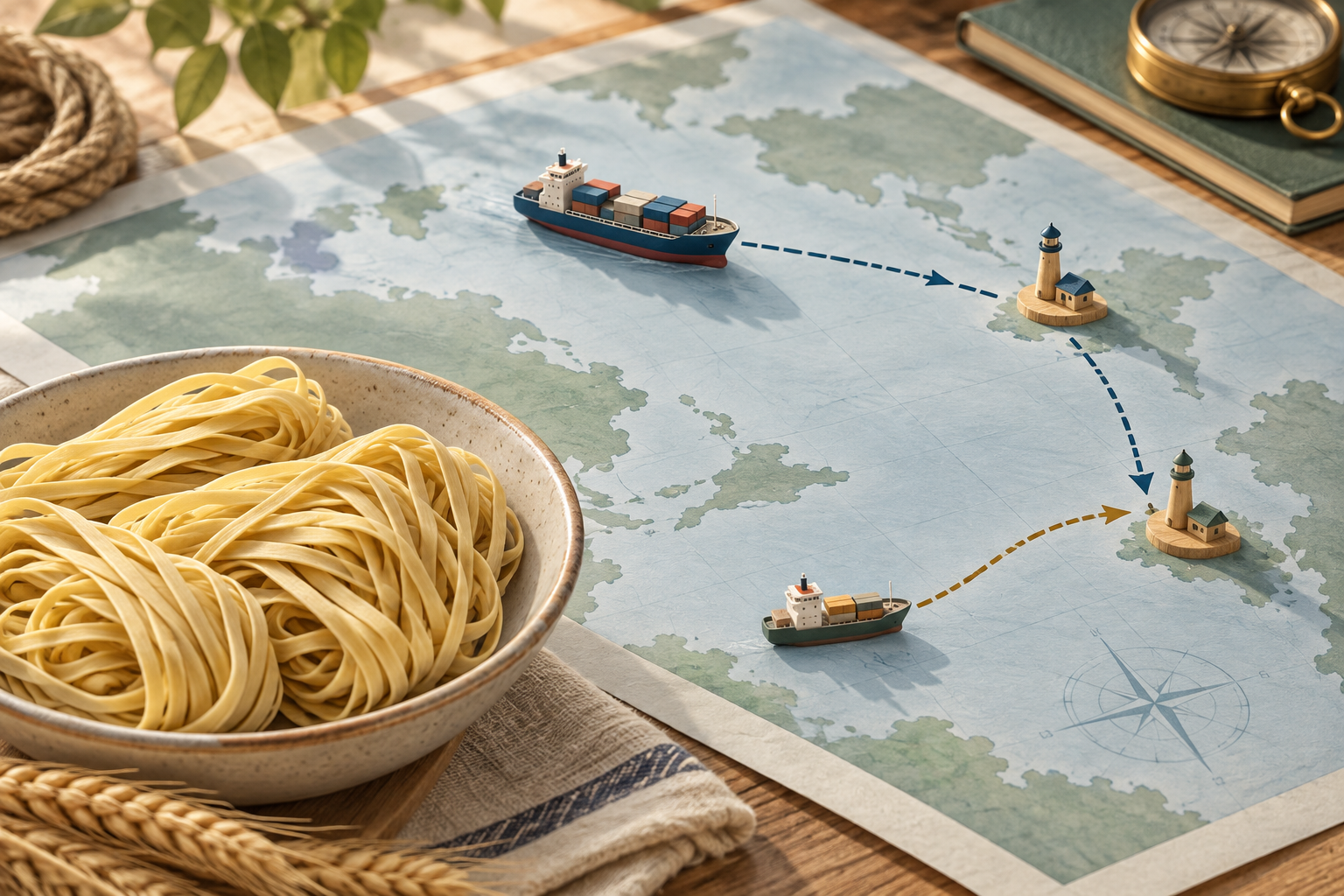
AI-generated editorial illustration of route planning; the map, model ships and arrows do not depict an actual service, a precise direct-versus-transshipment diagram, transit times or confirmed vessel connections.
A direct ocean-service quotation for imported noodles should not automatically be read as a nonstop journey. Ask for the actual routing and distinguish intermediate port calls from a transfer to another vessel. That distinction helps the buyer understand the proposed journey before promising a receiving date to a distributor or warehouse.
The word “direct” is useful only with the carrier’s stated meaning and the booking details. It is not, by itself, a transit-time guarantee or confirmation of delivery to the buyer’s door.
Distinguish a port call from a vessel transfer
Hapag-Lloyd’s booking guide describes its Direct routing option as having no transshipments. Its Via Options field allows selection of specific transshipment ports. Carrier booking guide, routing details.
A service rotation can still include intermediate calls. For example, a May 2026 Maersk advisory describes a direct Europe–Santa Catarina connection while listing several ports in the service rotation. This is a dated illustration of the distinction, not a current routing recommendation for a noodle shipment. Maersk service advisory.
In practical terms, ask whether the container remains with the same vessel through the relevant ocean leg or must be transferred to a connecting vessel. Do not infer that answer merely from how many place names appear in a quotation.
Sketch the two proposals before comparing their dates
Consider two invented routings for the same noodle order. Proposal A uses one vessel that calls at an intermediate port before reaching the destination port. Proposal B uses a first vessel to a hub, followed by a connecting vessel to the destination.
The first sketch includes an intermediate call; the second includes a vessel connection. Neither sketch supplies a duration, freight price or reliability ranking. They simply make clear what the logistics provider needs to confirm.
For Proposal B, ask for the planned connecting service and the source of the final arrival estimate. For Proposal A, ask which calls are included in the quoted routing and whether the displayed schedule is for the complete port pair. Avoid declaring one proposal faster based only on the words “direct” and “via.”
Check which journey the quotation actually covers
Write down the origin and destination locations used in each quote. A port-to-port proposal and one including inland delivery do not have identical endpoints. Keep the named discharge port separate from the warehouse receiving location and the party arranging the final movement.
Also identify the departure being quoted. Comparing an earlier available sailing with a later sailing solely by advertised transit duration can obscure the arrival question the buyer actually cares about. Request the proposed departure and arrival dates together, clearly marked as estimates.
Our production and shipping milestone guide helps connect the chosen freight plan with cargo readiness. This route review provides the extra detail needed inside the ocean-transport part of that plan.
Give a transshipment update its own meaning
For a route with a connection, a message saying the container has reached the hub is not the same event as confirmation that it has departed on the onward vessel. Ask the provider to name the event being reported and supply the corresponding onward forecast.
Keep four fields in the buyer’s route note: the booked routing, latest reported location or event, next planned movement, and updated destination estimate. Add the update source and time. These are suggested coordination fields, not a carrier tracking standard.
If the planned connection changes, retain the original routing beside the revised one. Ask what the change does to the receiving plan before updating a customer commitment. Do not transform a tracking screenshot into a confirmed warehouse appointment without the destination team’s acknowledgement.
Request comparable freight options for the actual order
Send the same SKU quantities, carton information and destination scope when asking for alternative routings. Request a written explanation of vessel connections and the basis of each estimate. Keep availability, price validity and commercial conditions with the relevant option rather than mixing details from different quotes.
For a wholesale noodle enquiry, provide the product quantities and required receiving window through the contact page. Shipping arrangements must be confirmed for the actual transaction. This article offers a way to read the proposals; it does not endorse a carrier or promise a particular route.