Sep 20, 2026Buying Guides
Production Lead Time vs Shipping Time: What Importers Should Confirm
Connect production, cargo readiness and warehouse delivery with named owners, completion evidence and dates that distinguish forecasts from actual events.
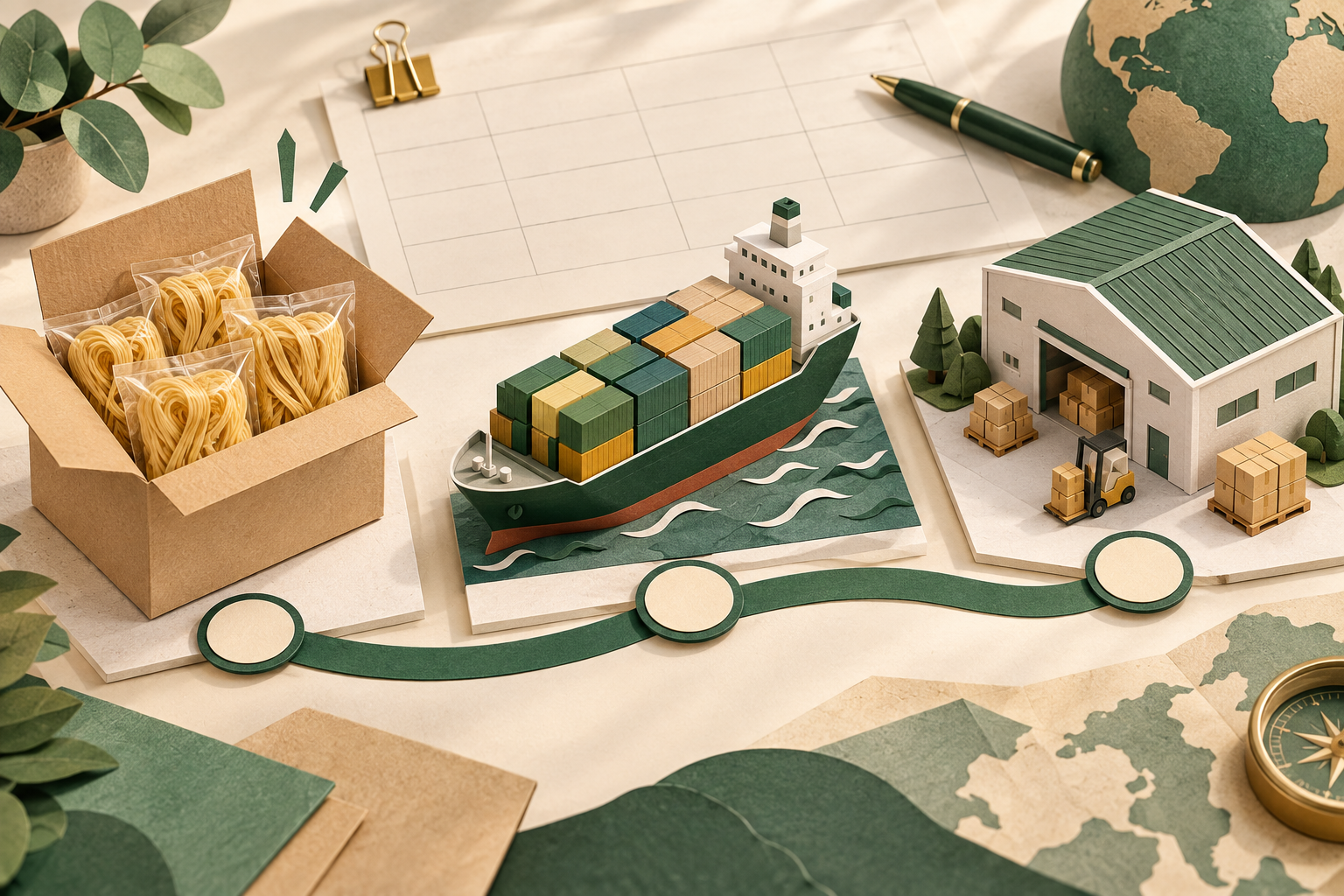
AI-generated illustration for explanation; not an actual factory, shipment or confirmed delivery schedule.
To turn a noodle order into a usable delivery plan, identify the start and finish of each quoted period, then ask the next responsible party to confirm the handover. A production estimate alone does not tell the receiving warehouse when the stock will arrive.
Use a milestone record that separates a requested date, the latest forecast and an event that has actually happened. The framework below is a buyer planning tool to agree with the supplier and logistics providers; it does not set a standard production or shipping duration.
Define the production clock before entering a date
Ask the supplier to complete one sentence: “The quoted production period starts when ___ is confirmed and ends when ___ is complete.” Record whether the period uses calendar or working days and which activities it includes.
Possible prerequisites to discuss include the agreed order and payment arrangements, the product specification, packaging readiness and any required approvals. Identify which are complete and which remain open. An order date should not silently become the production start date when the parties agreed a different starting condition.
Keep the supplier's written confirmation with the schedule. If a date is conditional on an open item, write the condition next to it instead of presenting the date as settled.
Give each handover an owner and evidence
Start with this blank framework and adjust it to the actual order. Assign the responsible-person field by agreement; the table does not establish who is contractually responsible.
Milestone | Completion evidence to request | Next handover to confirm |
|---|---|---|
Order ready for production scheduling | Confirmation that the agreed starting conditions are met | Supplier confirms the production planning basis |
Production finished | Order-specific completion update and any outstanding work | Packing, checks or documents still needed before collection |
Cargo ready for collection | Confirmed collection location, ready quantity and unresolved release conditions | Logistics coordinator confirms pickup and booking compatibility |
Shipment departure | Current shipment reference and departure status from the transport provider | Updated arrival estimate for the named location |
Destination delivery ready to arrange | Status update from the relevant destination parties | Receiver confirms delivery access, appointment and unloading arrangements |
Warehouse receipt | Actual receiving record | Buyer reconciles received quantities and exceptions |
For every row, add: responsible person; predecessor still open; requested date; latest forecast; actual completion date; evidence reference; and next update due. Leave unknown fields blank and assign a follow-up rather than copying a date from another row.
The distinction between estimated and actual events matters. For example, Maersk's vessel-information guidance lists estimated departure, terminal opening/closing information and actual departure separately. Use the provider's current information for the particular shipment, not the dated example schedule or another route.
Check that adjacent dates fit together
When cargo readiness changes, send the revised date to the logistics coordinator and ask whether the existing plan still works. Do not simply move every later milestone by the same number of days.
Ask which collection arrangements, booking deadlines and document handovers need to be checked. Then ask the destination team whether its receiving plan needs revision. A forecast update is only useful if the next person in the chain has received it and stated what it changes.
Before the first freight enquiry, use the destination-information guide to establish the port or delivery address and quotation scope. This milestone record is for managing the agreed plan after those inputs are defined.
Handle a changed date without losing the original plan
Consider this hypothetical situation: packaging approval remains open when the buyer expected production to start. No duration is assumed, and this is not a Noodle House order example.
The buyer records the unresolved approval and its owner. The supplier is asked whether the previously discussed production date still applies. Once that answer is available, the logistics coordinator checks the proposed collection and departure plan. The receiver is then given the revised delivery forecast and any unresolved dependencies.
Keep the original requested date visible. Add the new forecast, the reason for the change, who supplied the update and which downstream parties acknowledged it. This makes the gap between the commercial target and the current plan explicit.
Close the loop with actual dates
After each event, record when it happened and retain the supporting update. Do not overwrite the original forecast with the actual date: both are useful when reviewing where the plan changed.
Over repeated orders, those records can inform the buyer's reorder-point planning. They do not establish a guaranteed duration for the next SKU, packaging version or route.
For a wholesale noodle enquiry, send the SKU quantities, pack format, destination and required receiving window through the contact page. Ask for the starting conditions and milestone assumptions that apply to that order.