Sep 16, 2026Buying Guides
What Destination Information a Noodle Manufacturer Needs Before Quoting Freight
Learn which destination port, postal code, trade term, quantity and carton details a noodle supplier needs before checking freight.
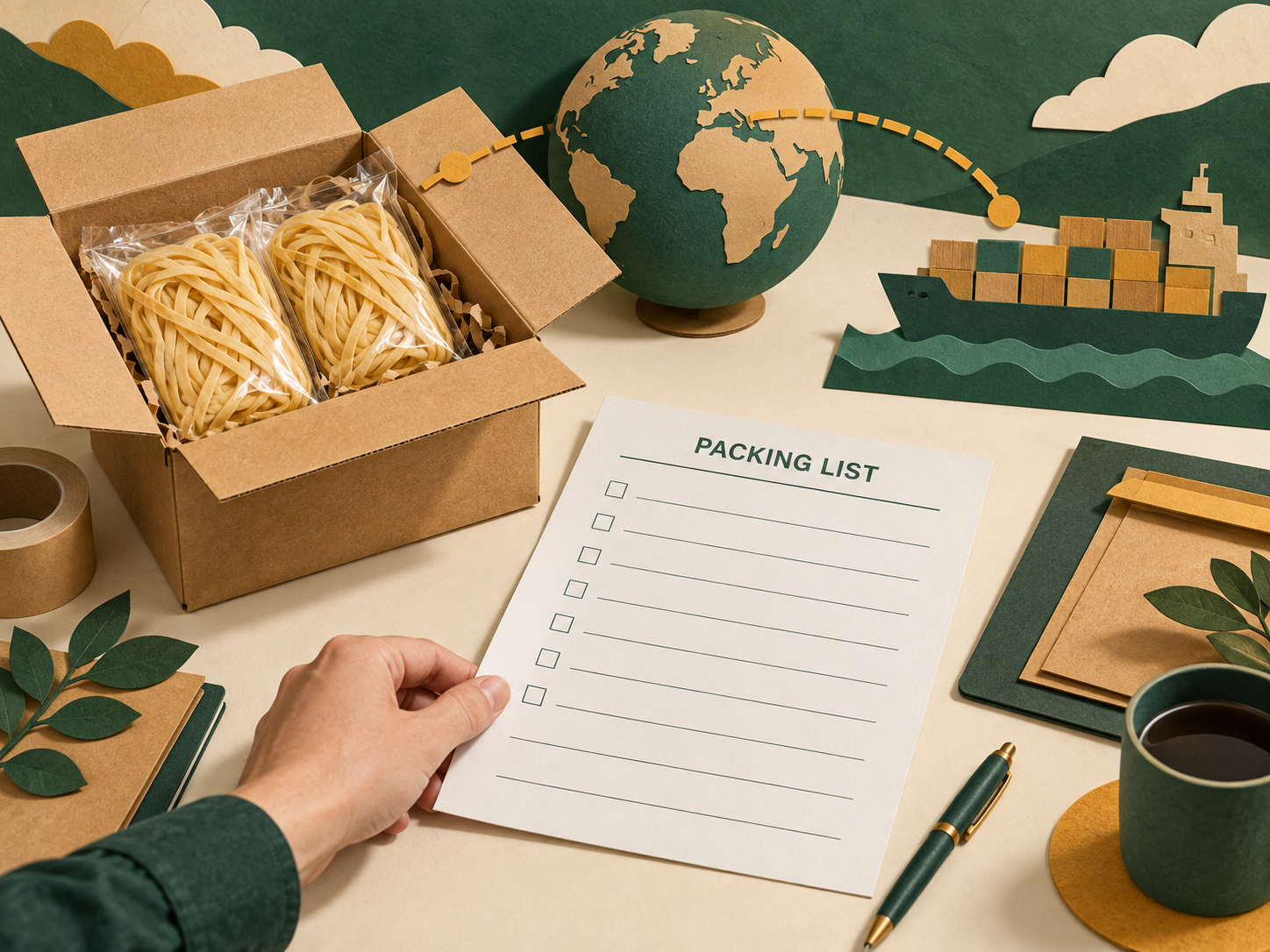
A supplier can discuss product price before the final shipping plan is complete. A reliable freight reference is different. It needs a named destination, a defined trade term, a shipment quantity and enough carton information to estimate weight and volume.
Requests such as “How much is shipping to Europe?” or “Please quote delivery to the United States” are too broad. The distance between ports, inland delivery requirements, shipment size and service type can change the result substantially.
This guide explains what destination information a noodle manufacturer or freight forwarder needs before checking freight for a wholesale order.
First Decide What the Freight Quote Should Include
Before sending the destination, choose the commercial basis you want to review.
• FOB is normally used when the buyer or buyer’s forwarder controls the main international freight from a named Chinese port.
• CFR normally includes cost and ocean freight to a named destination port.
• CIF normally includes cost, insurance and ocean freight to a named destination port.
• DAP or other door-delivery terms may include inland delivery to a named place, depending on the agreed Incoterm and quotation scope.
These simplified descriptions are useful for inquiry preparation, but the formal quotation and contract should state the named place, Incoterm version and exact responsibilities. Do not assume that destination charges, customs duties, taxes, inspection, demurrage or unloading are included unless the quotation says so.
- Give the Destination Country and Named Port
For a port-based freight check, send the country and the exact destination port.
Better:
Destination country: United Kingdom
Destination port: Felixstowe
Requested term: CIF Felixstowe
Too broad:
Destination: Europe
Please include shipping.
A country may have several ports with different schedules, carrier options and inland connections. If the buyer can use more than one port, list the alternatives and ask which route is practical for the proposed shipment.
The destination should also match the importer’s plan. The closest port on a map is not always the best port when customs clearance, warehouse location, congestion and inland transport are considered.
- Add the Delivery Address for Door Service
If delivery beyond the port is required, provide:
• full delivery city;
• postal or ZIP code;
• commercial or residential delivery type;
• warehouse access or appointment requirements;
• whether a loading dock or forklift is available;
• whether the buyer needs duties and taxes included;
• contact details for final coordination after the commercial route is approved.
A postal code is often essential because inland cost can vary within the same country. Avoid sending unnecessary personal information during an early estimate; city and postal code may be enough for the first review.
- Identify the Shipment Quantity by SKU
Freight cannot be separated from shipment size. Send the proposed cartons for each SKU, not only the number of products.
For example:
Egg Noodle: 100 cartons
Shanghai Noodle: 100 cartons
Shrimp Noodle: 100 cartons
Total: 300 cartons
Mixed-SKU shipment: Yes
If the order is not final, provide a low and high scenario. The supplier can then explain whether the shipment is likely to be handled as a smaller consolidated load or a full-container plan.
Noodle House Food’s public buying information states that regular wholesale discussions normally start from 100 cartons, subject to SKU and packaging. This does not mean every 100-carton shipment has the same freight method or cost. Carton size and total volume still need to be checked.
- Confirm Unit Packing and Master-Carton Details
The manufacturer or forwarder may need:
• unit net weight;
• units per carton;
• carton gross weight;
• carton length, width and height;
• total number of cartons;
• whether the carton data is final or estimated;
• pallet requirements, if any.
For early planning, current catalog carton information may be used as a reference. The commercial freight quotation should use the confirmed shipping carton for the selected SKU and order.
This matters especially for private label. A new retail box or bag may change the number of units per carton and the outer dimensions. Freight calculated from the manufacturer’s current packaging may no longer apply after the private-label pack is approved.
- State Whether the Freight Is LCL, FCL or Open for Recommendation
The buyer does not always need to decide the shipping mode in advance. It is acceptable to write “open to forwarder recommendation,” but provide enough information for a comparison.
• LCL, or less than container load, combines cargo from multiple shippers. It can be practical for smaller orders, but local handling and destination charges need careful review.
• FCL, or full container load, uses a dedicated container. It may offer better control for larger volumes, but the container should be used efficiently.
• Air or courier may be relevant for samples or urgent small shipments, not usually for normal wholesale cartons.
The lowest ocean-freight line is not automatically the lowest landed option. Compare origin charges, destination charges, documentation, customs handling, inland transport and likely transit time.
- Give the Required Timing
Freight is time-sensitive. Tell the supplier:
• when the quotation is needed;
• expected order confirmation date;
• desired cargo-ready date;
• latest acceptable arrival date;
• whether the shipment is linked to a promotion, launch or seasonal window.
Noodle House Food’s current public information lists a typical production lead time of 15–20 days after product and order details are confirmed. The final shipping schedule must also allow time for booking, export preparation, port operations, ocean transit and destination clearance.
Do not use a freight quote from a much earlier date as though it remains current. Ask for quotation validity and the rate basis.
- Identify Any Special Product or Document Requirements
Shelf-stable dried noodles normally do not require the same handling as frozen or chilled food, but the shipment still needs correct product, packing and import documentation.
Tell the supplier about:
• destination-market labeling requirements;
• importer or customs-broker document checklist;
• product-specific certificate needs;
• pallet or fumigation requirements;
• retailer delivery standards;
• mixed noodle and snack cartons;
• any restriction that may affect route or clearance.
Document availability should be confirmed by SKU, market and order requirement. A freight estimate does not itself confirm that the product is ready for import into the destination market.
A Complete Freight-Quote Request
Product/SKUs:
Quantity by SKU:
Total cartons:
Current or private-label packing:
Carton dimensions and gross weight available: Yes / No
Pallet required: Yes / No / Open to recommendation
Requested Incoterm:
Destination country:
Destination port:
Door-delivery city and postal code, if required:
Preferred shipping mode: LCL / FCL / Open to recommendation
Desired cargo-ready date:
Latest acceptable arrival date:
Required import or shipment documents:
Special delivery or retailer requirements:
Questions to Ask When the Freight Quote Arrives
Do not review only the total. Ask:
• Which port and route were used?
• Which shipment volume and gross weight were assumed?
• Is the rate based on LCL, FCL or another service?
• Which origin charges are included?
• Which destination charges are excluded?
• Is insurance included, and on what basis?
• Are customs duties and taxes excluded?
• What is the estimated transit time?
• How long is the freight rate valid?
• Does the quote use the final carton packing?
Common Freight-Quote Mistakes
• naming only a continent or country, not a port;
• requesting door delivery without a postal code;
• omitting the Incoterm;
• giving total pieces instead of cartons and carton specifications;
• using retail-package dimensions instead of master-carton dimensions;
• asking for private-label freight before final packing is known;
• comparing FOB and CIF totals as though they include the same services;
• ignoring destination charges on an LCL shipment;
• assuming a freight reference has unlimited validity.
FAQ
Can a manufacturer quote CIF without carton dimensions?
Only as a rough reference using assumptions. A useful commercial freight check needs shipment volume, gross weight and carton count based on the selected products.
Is destination country enough for an ocean-freight quote?
Usually not. Name the destination port. For door delivery, also provide the city and postal code.
Should a buyer request FOB and CIF at the same time?
It can be useful. Comparing both can help the buyer decide whether to use the supplier’s route or the buyer’s own forwarder, provided the product and packing basis are identical.
Does the lowest freight quote always have the lowest landed cost?
No. Review origin charges, destination charges, customs handling, inland delivery, transit time, free-time conditions and exclusions.
Request a Freight-Ready Noodle Quotation
Choose products from the wholesale noodle range, then send the quantity by SKU and destination details. Include the destination port, preferred trade term and postal code when door delivery is required. Noodle House Food can first confirm the product and carton basis needed for a freight review.