Sep 20, 2026Buying Guides
Pre-Production Sample vs Catalog Sample: What Changes?
Identify which product, process and packaging attributes a noodle sample represents, then record differences that remain unresolved before order approval.
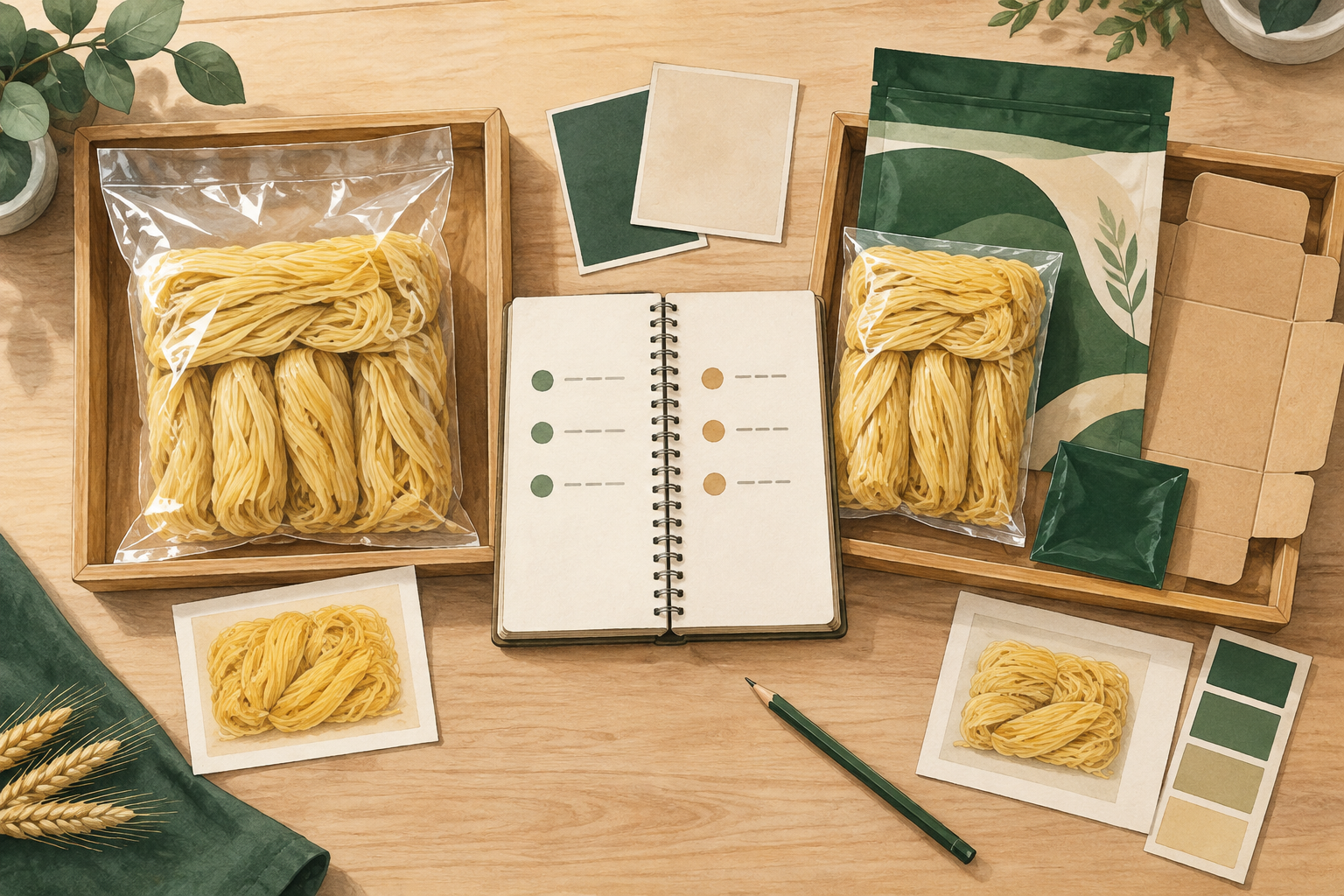
AI-generated illustration for explanation; not actual approved samples or a confirmed sample-service offer.
A sample is useful for approval only when the buyer knows which parts represent the intended order. A catalog sample may help shortlist an existing noodle, while a sample described as pre-production may be intended for a more defined project. Neither name tells you, by itself, whether the recipe, process, pack and printing match the proposed order.
Ask the supplier to identify the sample and list its differences from the intended product. Whether an additional sample is available or needed must be agreed for the particular SKU and project; this is not a promise of a fixed Noodle House sampling service.
Record what you have before deciding what it proves
Start with the sample reference, received date, product code and specification revision, if provided. Ask whether it is an existing catalog item, a development sample or a sample prepared against the proposed order. Record the supplier's description rather than upgrading it to “production approved” in an internal spreadsheet.
Keep the product and packaging descriptions separate. The noodle may match an existing SKU while the wrapper is temporary, or a printed mock-up may show a planned layout while containing a different reference product. Any such difference needs to remain visible in the evaluation record.
Map the sample's representation by attribute
Use the matrix below with three statuses: confirmed representative, different, or unknown. Ask for the evidence behind the status; the table is a suggested buyer tool, not a universal sample specification.
Attribute | Question for the supplier | What to retain with the decision |
|---|---|---|
Product/formulation | Does this sample correspond to the intended SKU and current product information? | Identified specification and any declared differences |
Production method | Which relevant preparation or production conditions differ from the proposed order? | Supplier's explanation and the buyer's follow-up decision |
Unit quantity and product arrangement | Is this the planned quantity and arrangement in each pack? | Sample measurement or confirmed packing reference |
Packaging material and closure | Are these the intended components and closure, or substitutes? | Component references and unresolved checks |
Print and presentation | Is the appearance from the planned print route or an illustrative mock-up? | Proof/sample identification and limitations |
Lot/date coding | Does the sample show the intended code position and application, if applicable? | Coding reference and outstanding confirmation |
Master carton | Does a reviewed carton arrangement accompany this sample? | Carton reference, or a clear statement that it has not been evaluated |
An unknown is not a defect finding. It means the buyer lacks enough information to extend the approval to that attribute.
Separate a good test result from a broader approval
Suppose, as a hypothetical example, a buyer likes a catalog noodle after a cooking test, but the intended order uses a different retail pack. The test result can be retained for the identified noodle and test conditions. It does not settle the unfinished packaging questions.
Keep the cooking observations in the noodle sample scorecard. Use the representation matrix to record which intended-order attributes remain unconfirmed. Ask the supplier and relevant reviewer what evidence would resolve those gaps: a document clarification, a different reference, a further sample or another agreed check.
Do not assume every difference calls for a new sample, or that a photograph can close every question. Record the reason for the chosen next step and what that step is expected to establish.
Close differences one at a time
For each material difference or unknown, create a short record with these fields:
- Attribute and sample reference:
- Intended-order requirement:
- Observed or declared difference:
- Effect on the buyer's current decision:
- Evidence or action needed next:
- Responsible person and agreed review point:
- Resolution, supporting reference and reviewer:
Close the item only when the agreed review has happened. If the outcome changes the intended specification, link the revised requirement to the sample record so the team does not compare future output with an obsolete reference.
State the scope of sample acceptance
Write down what the buyer accepts, for which sample and requirement, and which attributes remain outside that decision. For example, a record can accept the documented cooking result while keeping packaging representation unresolved. Avoid a single “approved” label that hides those differences.
Once the sample's scope and outstanding work are understood, the guide to moving from samples to a commercial trial order covers the wider order decisions. This matrix does not replace agreed production controls or acceptance criteria.
For a private-label noodle discussion, send the sample reference, selected product and requested changes through the contact page. Ask which available evidence can establish the attributes still missing from your evaluation.