Sep 16, 2026Buying Guides
How Carton Dimensions and CBM Affect Noodle Container Planning
Learn how carton measurements and CBM influence noodle loading plans, freight comparisons and mixed-SKU purchase decisions.
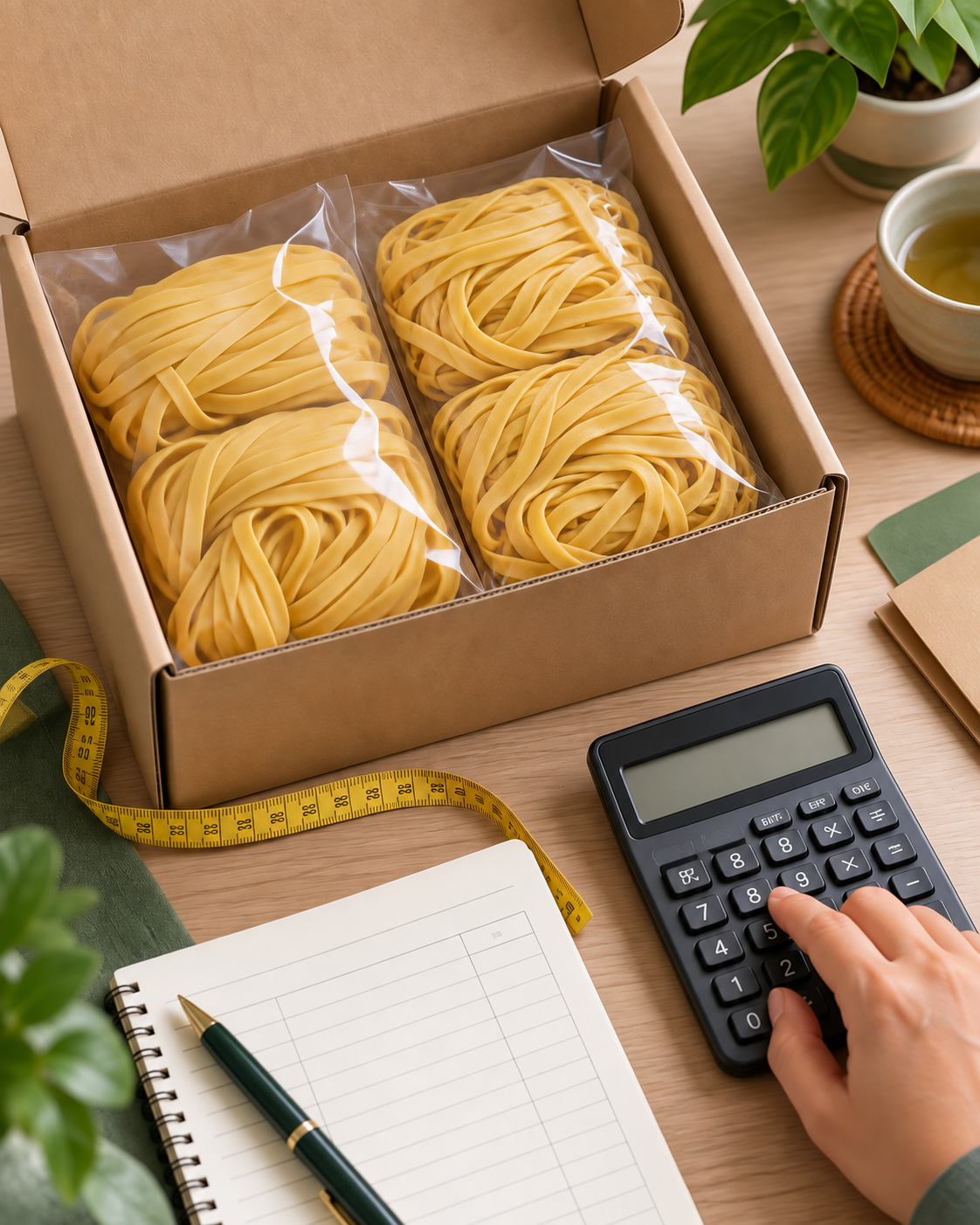
Noodles are relatively light compared with many industrial products, so shipment planning may be limited by space before it is limited by weight. That is why carton dimensions and cubic volume belong in the buying decision, not only in the freight department.
What CBM means
CBM is cubic metres, a measure of volume. For a rectangular carton, calculate it by converting length, width and height to metres and multiplying the three values:
Length (m) × Width (m) × Height (m) = CBM per carton
Multiply the result by the planned carton quantity to obtain a theoretical total volume. This is a planning value, not a guaranteed loading count.
Why theoretical volume is not the final load
Cartons do not always fill a container perfectly. Orientation, stacking strength, door clearance, product protection, pallets, mixed sizes and carrier rules can reduce usable space. A supplier or forwarder should review the actual loading pattern before the buyer treats a calculation as final.
Avoid publishing or relying on a fixed “cartons per container” number without a current carton specification and loading plan.
Request dimensions at SKU level
For each product, ask for:
• master carton length, width and height;
• measurement unit and dimension order;
• gross and net weight;
• units per carton;
• whether dimensions are current production measurements;
• whether private label packaging changes the carton;
• whether pallets are required.
A catalog photo cannot answer these questions. Keep the carton version linked to the quotation date.
Mixed-SKU orders need a combined plan
When several noodle or snack SKUs share one shipment, different carton sizes can create unused spaces or stacking restrictions. Create a table showing quantity, CBM per carton and total CBM for each SKU. Then ask the supplier or freight partner to review the proposed mix.
The best commercial mix is not always the one with the most product varieties. Buyers must balance assortment, MOQ, loading efficiency and expected sales velocity.
Use CBM to compare landed-cost scenarios
Product price alone does not show how efficiently each SKU uses shipment space. A bulky low-value pack may have a different landed-cost profile from a compact pack. Use current freight quotations and verified carton data to compare scenarios; do not use old freight rates as permanent assumptions.
A practical pre-quotation checklist
Before asking for a shipping-inclusive quotation, provide the destination city or port, Incoterm request, quantity by SKU, packaging route and whether palletization is required. In return, request the carton data, estimated total shipment volume and a clear statement of what the freight estimate includes.
FAQ
Can I calculate exact container quantity from CBM alone?
No. CBM provides a theoretical volume. The final loading quantity depends on carton arrangement, weight, protection and shipping requirements.
Does custom packaging change CBM?
It can. Retail pack dimensions, display boxes and master carton construction may all affect the final carton size.
Who should confirm the loading plan?
The supplier and freight provider should review the current carton specifications and shipment requirements. The buyer should retain the approved version with the order documents.
CTA
For a preliminary loading discussion, send the required SKUs, quantities, pack format and destination through the contact page. Any CBM or loading figure should be confirmed against the current carton specification.