Sep 16, 2026Buying Guides
Soup, Dry-Tossed or Stir-Fried: Choosing a Noodle for the Menu
Match noodle dimensions, texture, cooking and holding performance to soup, dry-tossed and stir-fried menu applications.
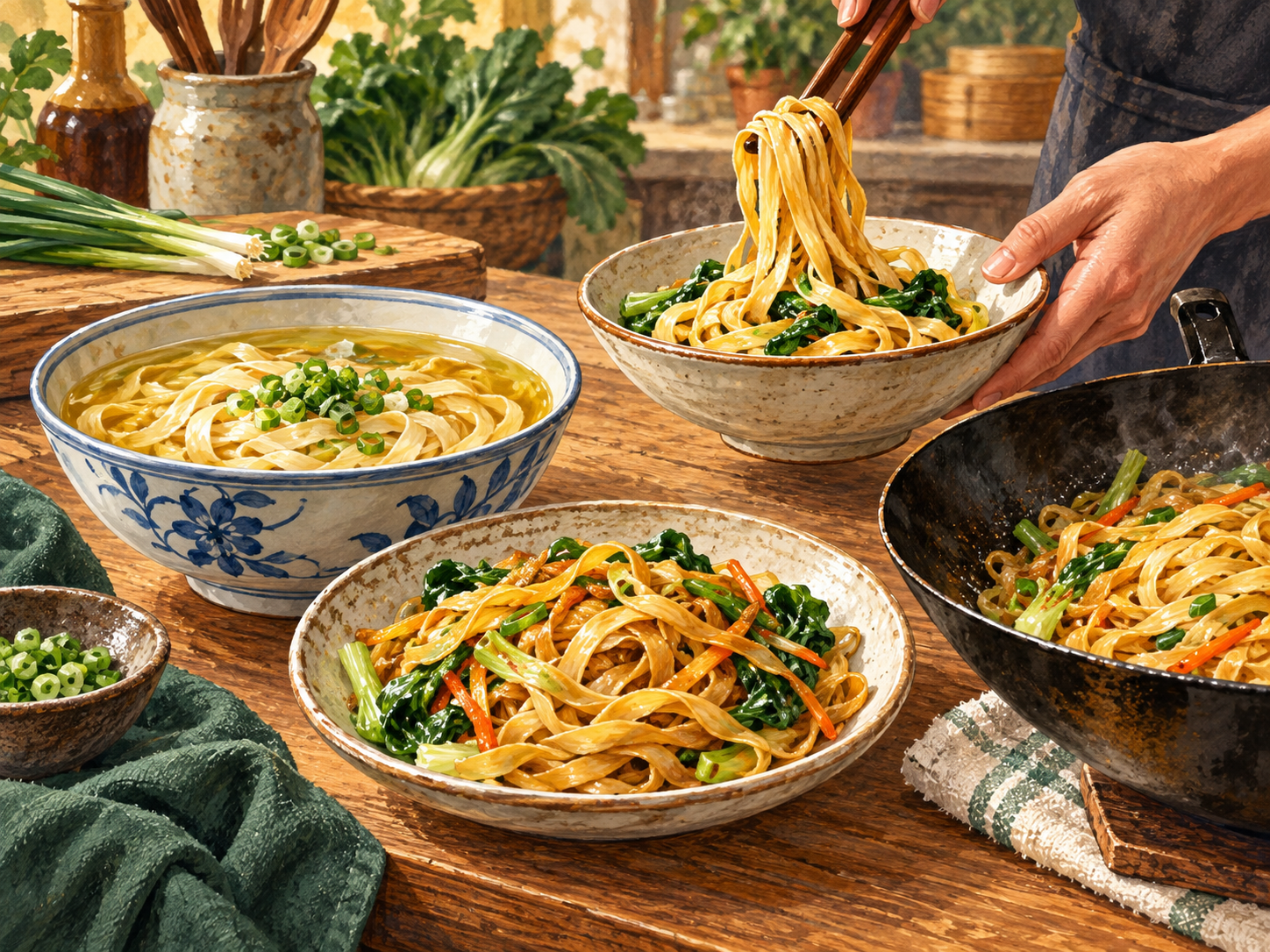
The best noodle depends on what happens after cooking. Broth, concentrated sauce and wok preparation expose different product characteristics, so foodservice buyers should define the menu process before choosing a SKU.
Noodles for soup
Test how the noodle cooks and holds in hot liquid. Observe strand separation, broth cloudiness, flavor transfer and texture during the expected serving time. A noodle that is ideal immediately may soften during service.
Noodles for dry-tossed dishes
Surface texture, sauce coating and separation become important. Test the actual oil, sauce and mixing method. Record sticking, clumping and how evenly the sauce distributes.
Noodles for stir-fry
The product may be cooked before wok finishing. Test handling after draining, breakage during mixing, sauce absorption and texture after the full process. Commercial batch size and equipment can change results.
Compare dimensions and cooking window
Width and thickness can affect bite and preparation, but formulation also matters. Request coded samples and run each through the same method. Record the acceptable cooking window rather than one casual time.
Include operational fit
Evaluate portioning, pack size, storage, staff instructions, batch consistency and holding. The technically best bowl may not be the easiest item for a busy kitchen to execute.
Build the inquiry around the dish
Send the dish type, preparation stages, holding period, target texture, portion, pack and estimated volume. Ask the supplier to recommend products for testing, then approve based on evidence.
FAQ
Can one noodle work for all three applications?
Possibly, but test each process. Do not assume equal performance.
Should buyers choose by noodle name?
No. Use the specification, sample and real application test.
What should a restaurant sample test include?
Use actual equipment, batch size, recipe and holding time, then record texture, breakage and handling.
CTA
Explore the product range and send your menu application and test requirements through the contact page.