Are Dried Egg Noodles Gluten-Free? Check the Flour Before Choosing a SKU
Check the wheat flour in our egg and plain dried noodles before shortlisting a gluten-free product. Removing egg does not remove wheat.
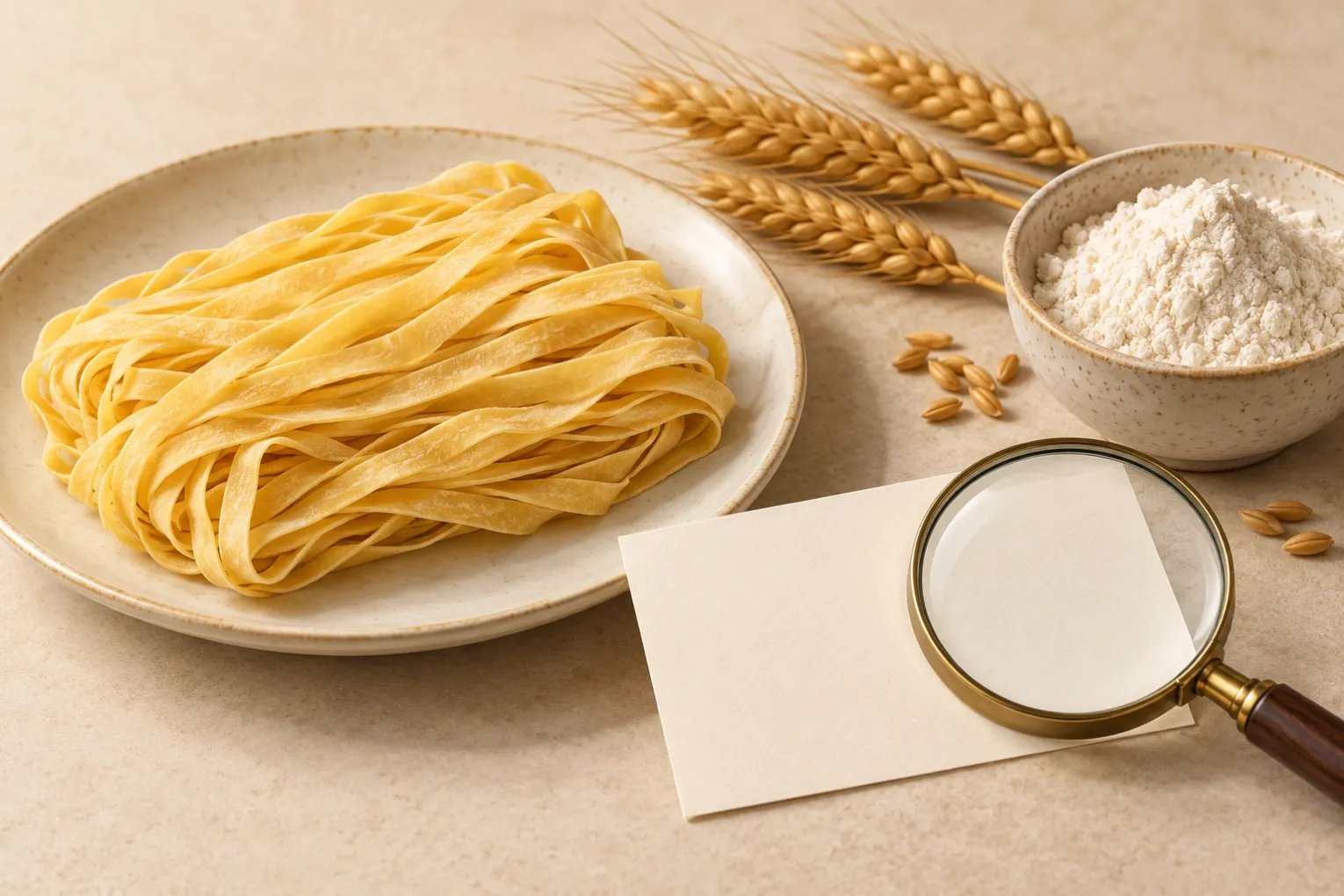
AI-generated editorial illustration of wheat-flour ingredient review. The noodles are generic, not a photograph or shape specification of our catalog products; no testing or certification is depicted.
Dried egg noodles made with wheat flour are not a gluten-free option. For Noodle House buyers, the ingredient lists give a clear first decision: our catalog Egg Noodle contains wheat flour, and our plain Dried Noodles contain wheat flour too. Switching from the egg product to the plain product does not meet a gluten-free purchasing requirement.
The word “egg” identifies one part of the formulation. It does not tell you which flour supplies the noodle's base. Start with that flour before comparing pack sizes, samples or private-label artwork.
What the two product pages actually list
The Egg Noodle product page lists wheat flour, water, egg and salt. The Dried Noodles product page lists wheat flour, water and salt.
For a buyer choosing between these two products, the useful comparison is:
- Egg Noodle: egg is listed, and wheat flour is listed. It does not fit a gluten-free brief.
- Plain Dried Noodles: egg is not listed in the catalog ingredients, but wheat flour remains. It also does not fit a gluten-free brief.
These are catalog ingredient descriptions, not a substitute for the current label and specification of the exact product ordered. The absence of egg from the plain product's catalog list also does not establish an egg-free assurance. That is a separate requirement to check.
“Plain” and “gluten-free” answer different questions
A plain noodle can be a useful starting point when a buyer wants to compare formulations without an egg ingredient. It is not automatically a suitable substitute when the requirement is gluten-free.
For example, consider a purchasing brief that asks for “dried noodles without egg, gluten-free.” It contains two separate conditions. Choosing the plain wheat-flour product addresses the catalog egg-ingredient comparison only; it fails the gluten-free screening condition. The correct next step is to record the product mismatch before requesting a cooking trial or packaging design.
This distinction also keeps a vegan retail brief separate from a gluten-free brief. One claim does not establish the other.
A short note for US retail buyers
The FDA's gluten-free labeling questions and answers explain that the voluntary claim has ingredient restrictions as well as a limit for unavoidable gluten. Ordinary wheat flour is an example of an ingredient that has not been processed to remove gluten. A result below 20 ppm does not override that ingredient restriction. This is US labeling context, not a test result for our products or a claim that their gluten content has been measured.
For these two catalog products, the listed wheat flour is already enough to stop a gluten-free shortlist. There is no reason to treat a missing certificate as the only unresolved issue.
Put the required product in the inquiry
Before asking for a sample, identify the exact catalog product and state whether gluten-free is a mandatory purchasing requirement. If it is mandatory, neither of the two wheat-flour products above is a suitable candidate. This article does not offer a gluten-free reformulation or an alternative gluten-free product.
If you are sourcing ordinary wheat noodles, you can contact Noodle House with the product link, intended dish or sales channel, destination market and preferred pack format. Request the current ingredient and product information for that exact SKU before approving the order. Keeping the requirement explicit helps avoid comparing samples that cannot meet the brief in the first place.