Oct 18, 2026Buying Guides
Choosing Dried Noodles That Stay Intact During Pack Handling
Assess the received dry-noodle format and ordinary portion handling. Read bending load and distance together before choosing an egg or plain noodle sample.
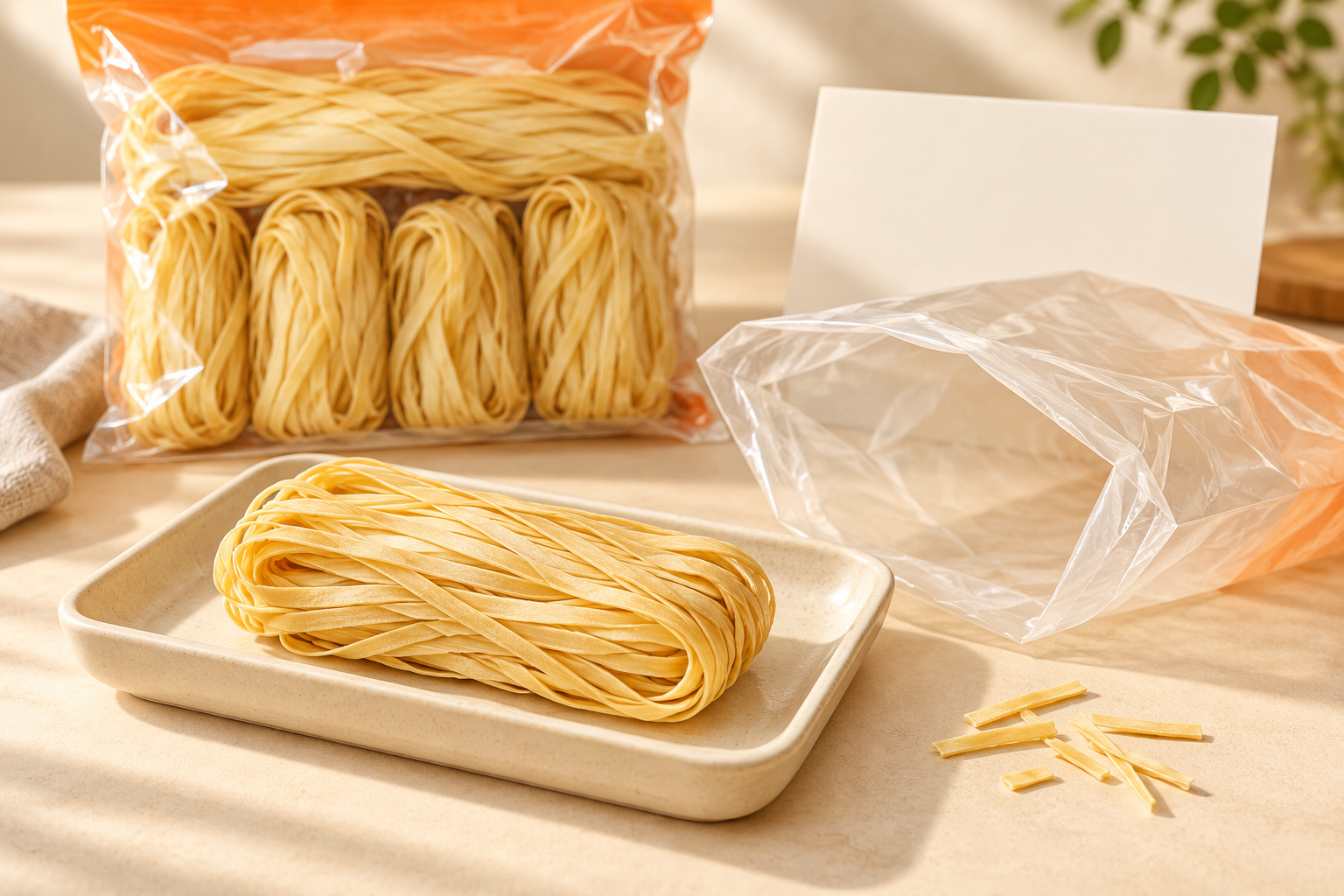
AI-generated conceptual illustration of dry-noodle handling; not an actual SKU photograph, measured breakage result or packaging specification.
For a buyer who needs intact noodles when a pack is opened and portioned, sample selection should include the dry product. Keep two observations together: the condition in which the noodles arrive, and what happens during the handling your kitchen or customer actually needs. A cooked texture score cannot answer that dry-handling question.
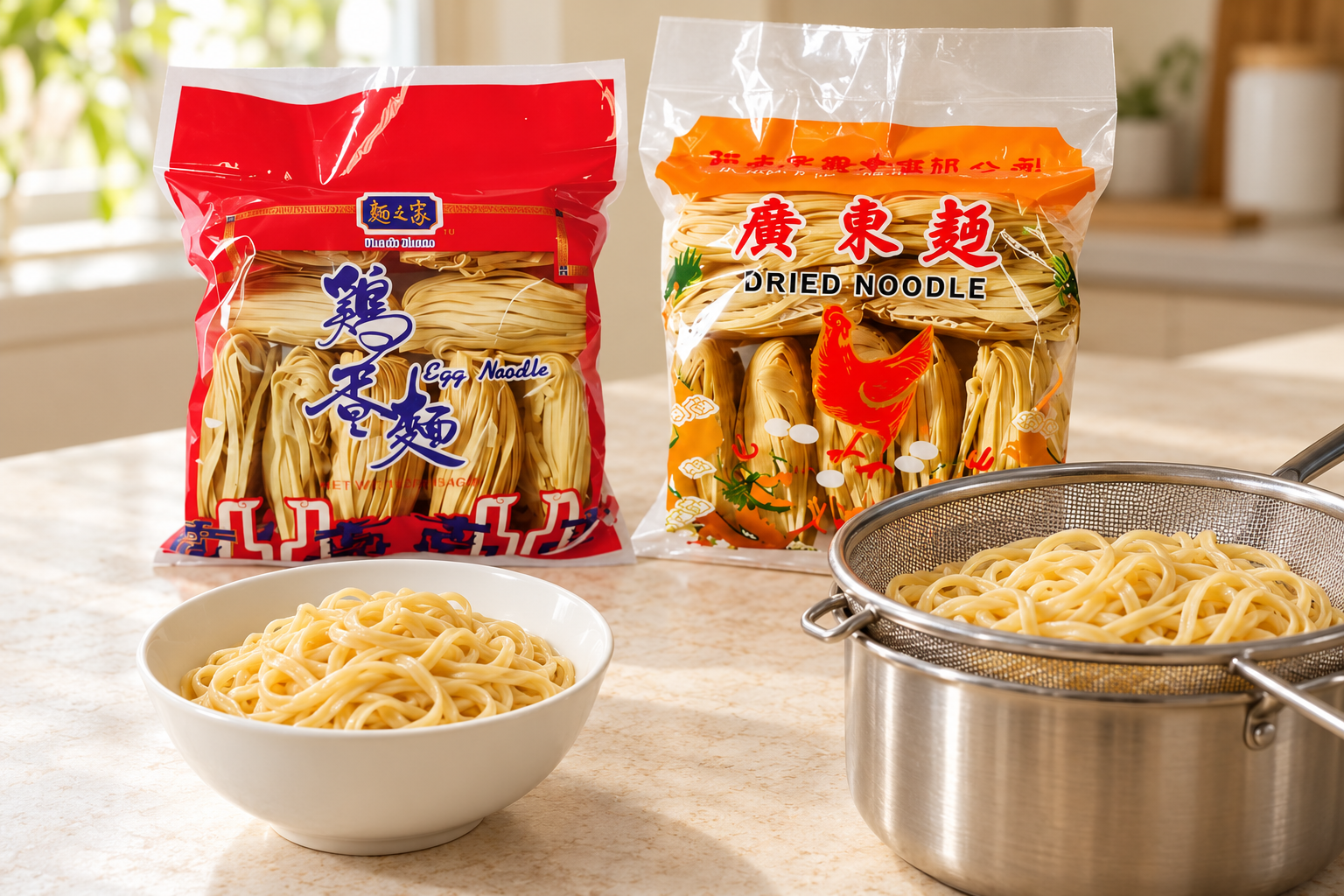
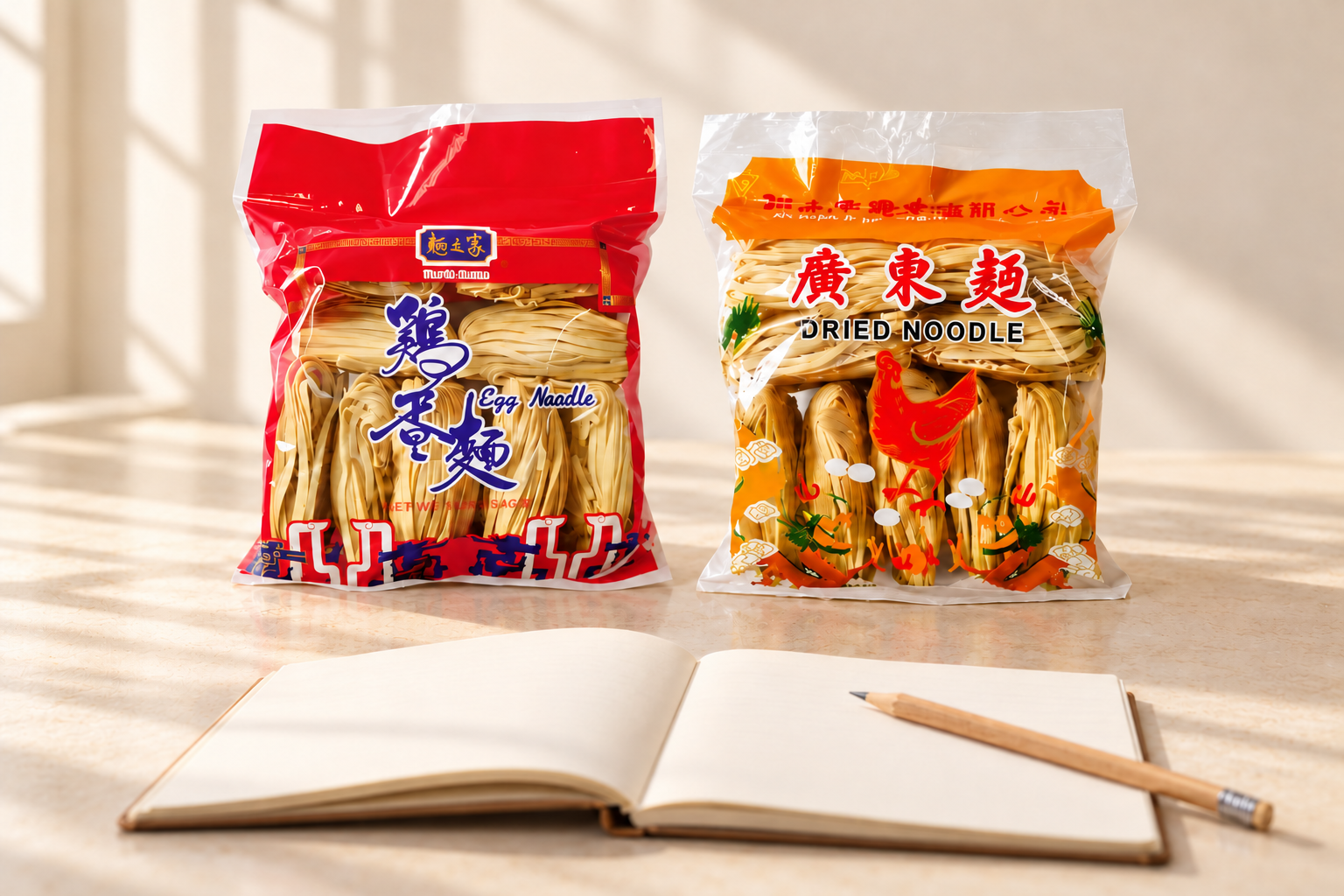
Noodle House Food's catalog lists Egg Noodle with wheat flour, water, egg and salt, and Dried Noodles with wheat flour, water and salt. Both entries list 454 g bags and 30 bags per carton. These are starting points for identifying samples, subject to confirmation against the current specification. They do not tell you which product better retains its strand format during opening.
Define the handling requirement before shortlisting
Describe the actual task: taking a whole noodle portion from its wrapper, separating the amount needed for a pot, or transferring the contents into the kitchen's usual container. Include whether the portion is normally cooked intact or deliberately broken. A format that suits one task can be inconvenient for another.
For each candidate, retain photographs of the unopened pack, the contents just after opening and the contents after the agreed handling step. Keep existing fragments distinguishable from changes observed during that step. Avoid repeatedly bending individual strands by hand and treating the result as a standardized strength test.
This is a proposed buyer comparison, not a company test result or transport simulation. Agree what counts as an unacceptable change for your application before comparing samples. No universal fragment percentage or minimum strand length is supplied here.
What a dry-noodle bending report can add
A 2020 study by Zhang and colleagues evaluated Chinese dried noodles made under different drying conditions. Its method recorded both the peak resistance as a probe bent a noodle and the distance travelled from contact to breakage. Those measurements describe different aspects of the same event: the load reached and the movement before the strand broke.
The study's table also illustrates why it is useful to retain both. The drying condition with the largest mean peak-load reading was not the one with the largest mean breaking-distance reading. This is an illustration from experimental noodles, not a statistically established ranking of our products or a recommendation for a particular drying process. Its individual-stick test also does not reproduce the folded portions shown in our product photographs or their removal from a wrapper.
For a buyer, the practical question is whether the available report describes the property relevant to the handling concern. “Strong noodle” without a result definition is too vague to resolve it.
Ask for the complete comparison, if measurements are available
Request the product code, tested dry-strand format, conditioning information and measurement method alongside the result. The laboratory or report author should explain the support arrangement, probe movement and units used. Keep repeat readings or the reported variation with the summary.
Read peak load and breaking distance together when both are measured under a compatible method. Do not choose between different noodle shapes using two isolated numbers from unrelated tests. Do not convert a hand-snap observation into an instrument reading.
If measurements are unavailable, say so. An observed handling comparison can still support a limited application decision, but it should not be renamed a laboratory strength result. This guide does not establish that Noodle House Food offers a particular mechanical-testing service.
Use the observations to decide the next sample step
Consider these possible outcomes when reviewing the identified Egg Noodle and Dried Noodles samples:
- Damage is already visible on opening. Record the received pack condition and discuss the sample's handling history before attributing the damage to formulation.
- The received format is acceptable, but normal portion removal causes unwanted fragments. Review the portion format and the actual removal step together. Ask whether another confirmed product format would better suit the task.
- The dry handling is acceptable. Continue to the cooked application assessment. Passing the opening check does not establish the preferred bite or performance in the finished dish.
Repeat important comparisons using more than one pack where samples permit. Keep conclusions tied to the samples and operations assessed; a few successful openings do not predict an entire shipment's breakage rate.
The existing noodle sample scorecard provides the wider review. Add this dry-handling record when retaining the intended noodle format is a material part of your buying decision.
Bring the handling problem into the product discussion
Contact Noodle House Food with the exact products, pack-opening photographs and the portioning task you need to perform. Include any existing mechanical report with its method rather than only its headline result. Ask which current sample options can be evaluated against that requirement.