Oct 18, 2026Buying Guides
Dry-Tossed Noodle Samples: Trace Where Strands Start to Stick
Compare plain and finished portions from the same prepared batch to locate strand-separation problems before replacing a noodle for a dry-tossed menu.
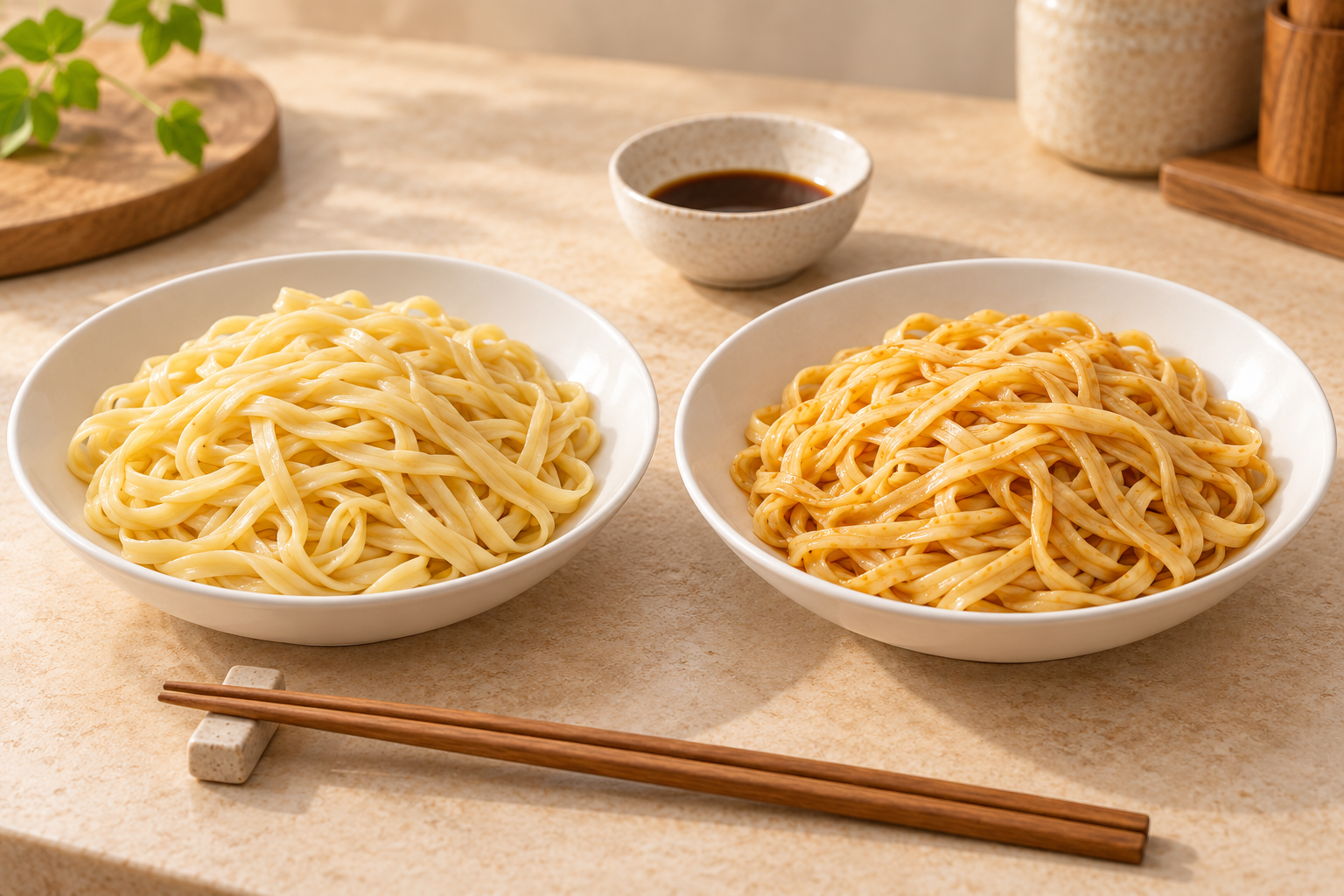
AI-generated conceptual illustration of plain and finished noodle portions; not a company cooking trial, actual SKU photograph or comparative performance result.
When a dry-tossed sample clumps, compare a plain portion with a finished portion from the same prepared batch before replacing the noodle. Record both at a comparable time. The pair helps locate whether the separation problem is already apparent before finishing or appears only in the completed recipe; it does not identify the cause by itself.
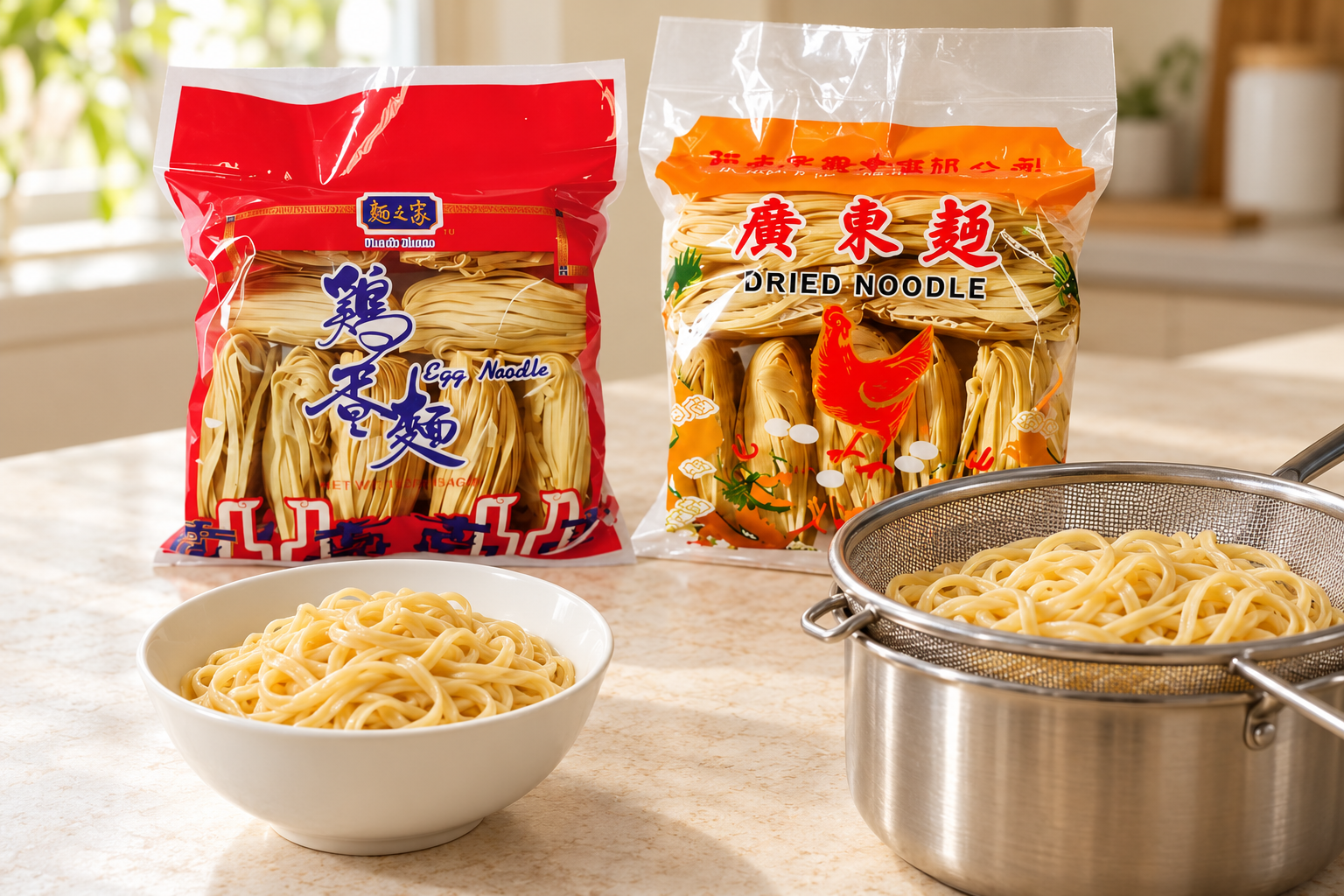
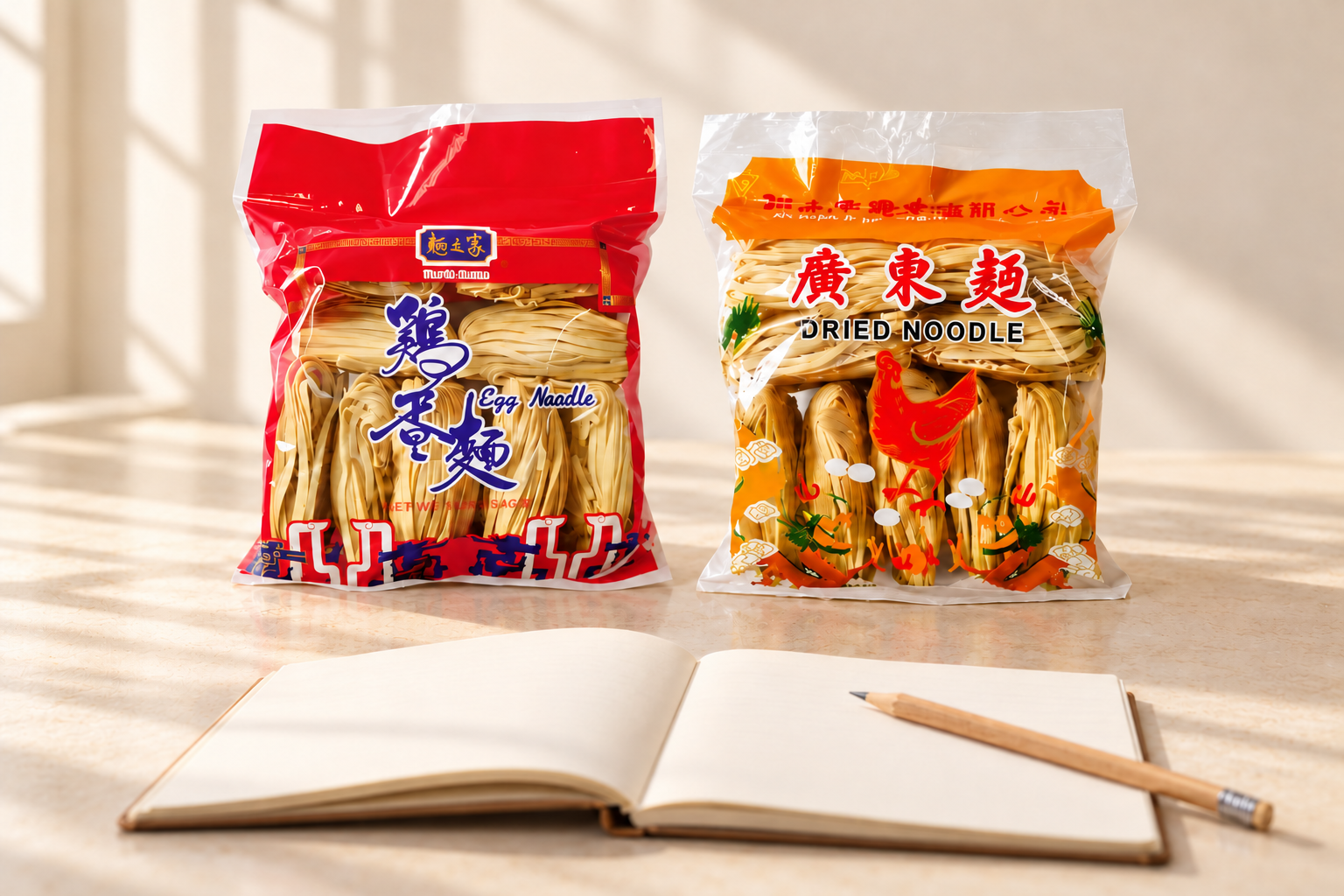
Noodle House Food's catalog includes dry-tossed serving suggestions for Egg Noodle and Dried Noodles. Their listed ingredients differ: the former includes egg alongside wheat flour, water and salt; the latter lists wheat flour, water and salt. The suggestions make them candidates for discussion, not a ranking of their ability to separate. Confirm the current product specification and preparation instructions for the samples supplied.
Make “separates cleanly” an observable requirement
Explain what the kitchen must be able to do. For example, should the cooked portion loosen with the kitchen's normal tossing action, distribute through the sauce and lift without pulling up a compact mass? Record the intended operation rather than using “non-stick” as an undefined promise.
Keep strand-to-strand adhesion separate from noodles sticking to a pan. The contact surface and the practical problem are different. This guide addresses separation between cooked strands in a dry-tossed dish; it does not provide a remedy for wok adhesion or scorching.
Also record bite independently. A noodle can meet the requested firmness while failing your separation requirement. One overall “texture” score can conceal that trade-off.
Why the noodle surface deserves its own check
In An and colleagues' 2022 research, cooked noodles made with reconstituted wheat flour were evaluated for adhesiveness. The researchers also examined material released at the noodle surface. Their analysis linked adhesiveness with the rheological behaviour of that material and investigated the amount and molecular structure of leached starch.
This provides a noodle-specific reason to assess surface behaviour separately from bite. It does not identify the starch structure of either Noodle House product, establish which is less adhesive, or show that adding egg resolves clumping. The explanation here draws on the published abstract and publisher preview, not a company experiment.
Compare a plain portion with the intended finished dish
The following is a suggested kitchen comparison, not a validated laboratory protocol. Follow the kitchen's approved preparation and food-safety procedures.
Start with coded samples and record cooking, draining and any rinsing actually used. Use the existing cooking-test record for those controls. Compare each product at its documented suitable cooking endpoint; do not force different products through the same unverified cooking time.
From the same prepared batch, set aside a plain portion for observation and finish another portion using the intended sauce and normal tossing operation. Match the assessment time as closely as practical and record it. The plain portion is a reference, not an alternative recipe or a proposed serving method.
For both portions, note whether strands lift individually, loosen with the agreed action, or remain joined in a mass. Record whether attempts to separate them introduce breakage. For the finished portion, also record whether the intended sauce distribution and bite are acceptable.
Specify any oil, rinse or extra liquid used. If you later change one of these steps, record a new trial rather than comparing the revised dish with an earlier result as though the process were unchanged.
Read the pair of observations before changing the product
If the plain portion is difficult to separate, investigate the sample and its preparation before attributing the problem solely to sauce. If the plain portion separates but the finished dish does not, review the finishing step as well as product fit. Neither observation alone proves a molecular cause.
If both portions meet the requirement, retain the tested preparation with the sample decision. Repeat the comparison under the batch size and service conditions that matter to the kitchen before adopting it operationally. Do not turn a successful small bowl into an unrestricted holding-time claim.
When a candidate consistently misses the agreed requirement under a practical process, compare another confirmed SKU through the same observation sequence. Selection should reflect the finished dish the team can reproduce, not a promised ingredient shortcut.
Ask for samples around the operation you need
Send Noodle House Food the selected product names, intended dry-tossed dish and the preparation and finishing steps. If samples have already been evaluated, include separate notes for the plain and finished portions. That gives the product discussion a specific question: which current candidate should be assessed next for this kitchen's strand-separation requirement?