Sep 16, 2026Buying Guides
How to Evaluate Chinese Noodle Samples Before Placing an Order
Test noodle samples consistently for appearance, cooking, texture, packaging and commercial fit before approving an order.
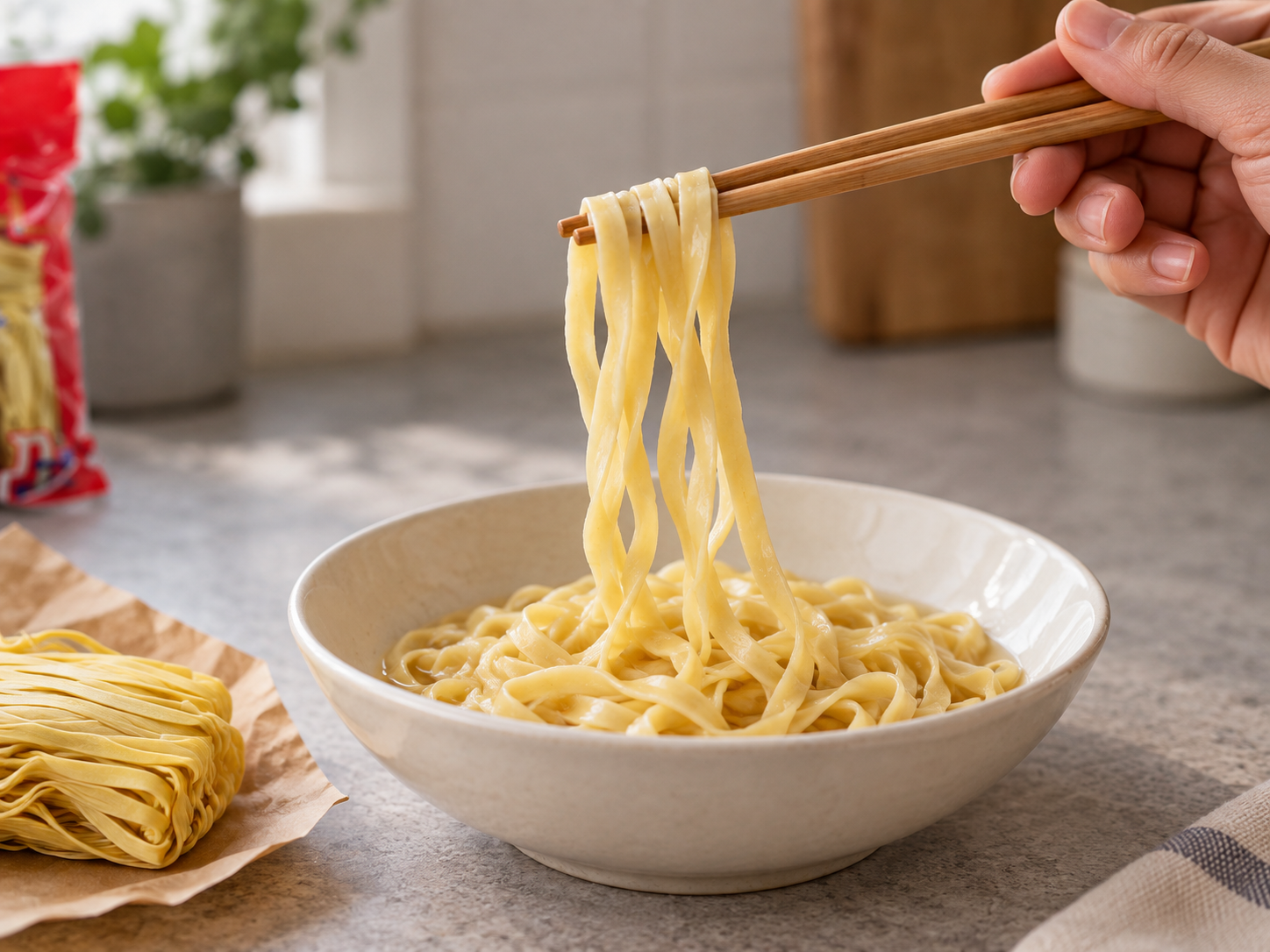
Receiving samples is only the start of supplier evaluation. A useful sample test turns personal impressions into repeatable observations linked to the intended market, pack and cooking method.
The goal is not to choose the sample that tastes best in isolation. It is to identify the product that fits the buyer's channel and can be described clearly enough for commercial approval.
Identify every sample before opening it
Record the supplier, product code, sample code, date received, pack format and stated cooking guidance. Photograph the sealed pack and any labels. If multiple products arrive together, assign your own internal code so notes cannot be mixed.
Also record whether the sample is a standard catalog product, a reference product or a customized trial. Those are different approval stages.
Inspect the uncooked product
Check strand or piece dimensions, color, odor, surface condition, breakage, bundle consistency and packaging protection. Compare the net weight and pack structure with the information supplied.
Do not reject natural variation without understanding the product, but document anything that could affect shelf appearance, portioning or cooking.
Use a controlled cooking method
For each sample, keep water volume, sample weight, equipment and heating level consistent. Start timing at the same stage and record observations at several time points. If the supplier provides instructions, test those first, then test the buyer's real application.
Measure or score:
• time to target texture;
• strand separation and breakage;
• water cloudiness;
• cooked appearance;
• bite and elasticity;
• flavor and aroma;
• yield or portions;
• texture after the expected holding time.
Test the intended dish
A noodle can perform differently in broth, sauce, stir-fry or a meal kit. Test it with the actual preparation process and typical serving delay. Foodservice buyers should simulate peak operation; retail buyers should confirm that consumer instructions are realistic.
Include packaging in the approval
Review seal quality, label readability, date-code area, portion convenience, retail presentation and carton protection. A technically good noodle in an unsuitable pack is not a complete commercial solution.
Compare results with the specification and price
After tasting, connect the winning code to a written specification, packaging route, MOQ, quotation and document list. Ask the supplier to explain any difference between the sample and intended production.
Do not approve a product only through a chat message. Keep a dated scorecard, photos and final decision.
FAQ
How many people should test a sample?
Use a small, relevant group that represents product, sales or kitchen needs. Record individual scores before discussing them to reduce group influence.
Should samples be tested blind?
Blind coding can reduce brand or supplier bias, while the procurement team still retains traceability in a separate record.
Does sample approval guarantee production will be identical?
Approval creates a reference, but the production specification and change controls must also be agreed. Confirm what the sample represents.
CTA
First read how to request noodle samples. Then send your target product, application and destination through the contact page.