Oct 1, 2026Buying Guides
Can a Noodle Barcode Prefix Prove the Country of Origin?
A GS1 prefix does not establish where noodles were made. Separate barcode identity checks from the evidence needed for an origin declaration.
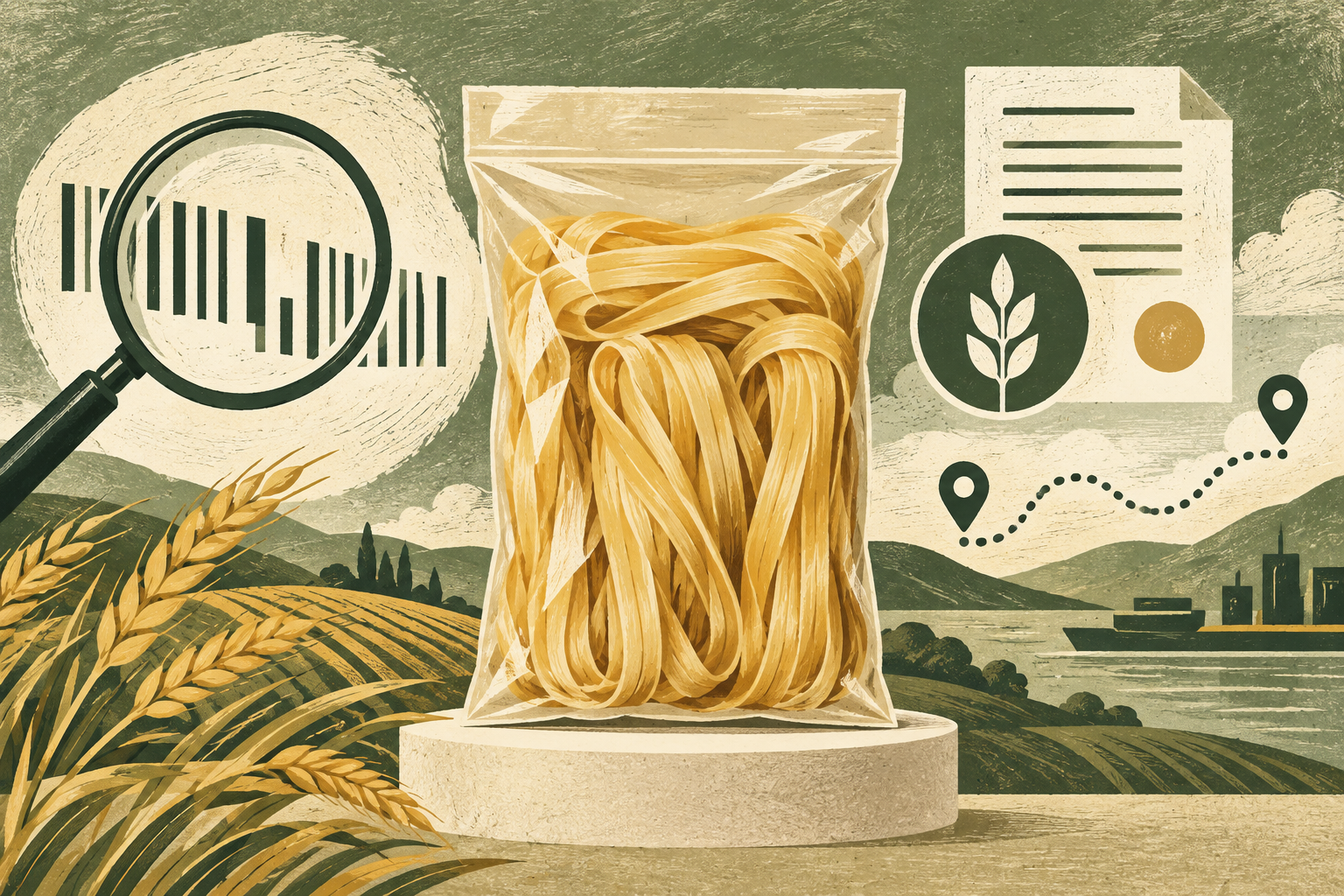
AI-generated editorial illustration of separate product-identification and origin evidence; not a usable barcode, origin certificate or actual supply chain.
No. A GS1 barcode prefix does not prove a noodle product’s country of origin. A prefix that appears associated with a different country is not, on its own, evidence that the declared manufacturing origin is wrong.
A buyer should investigate the product and its records without turning the first digits into an unsupported acceptance or rejection rule.
What the prefix actually tells you
GS1 explains that an EAN-13 number begins with the prefix of the GS1 Member Organisation that allocated the number. It does not show where the product was manufactured or identify a particular manufacturer. GS1 member companies can have products made in different countries. GS1 prefix and country-of-origin explanation.
Separate three questions at product setup
For a new noodle SKU, keep these questions apart:
- What trade item does the full identifier represent?
- Which party is responsible for the identifier and product data?
- What evidence supports the product’s declared origin for the intended purpose?
A barcode lookup may help the first two questions. It should not be promoted into a customs origin determination or a guarantee that the physical goods are authentic. Conversely, a valid origin document does not establish that the barcode artwork or item setup is correct.
Resolve an apparent mismatch with documents
Imagine an importer receives private-label noodles described as manufactured in China, while the barcode prefix is allocated through another GS1 Member Organisation. That combination is not inherently contradictory. It could reflect how the responsible brand owner obtained its identifiers; the actual arrangement still needs verification.
Ask the responsible party to explain the identifier assignment and provide the relevant product record. Separately, request the manufacturing and origin information required by the importer or its customs adviser. Match those records to the exact SKU and shipment instead of comparing only company names or countries.
This example is hypothetical. It does not describe an actual Noodle House Food barcode, brand owner or manufacturing arrangement.
Keep a short discrepancy file
A useful buyer file can record the full number, a clear photograph of the actual pack, the product reference, the disputed origin statement, the source of each statement and the explanation received. Preserve unanswered questions rather than replacing them with a country inferred from a search result.
If the number identifies a different product, or the documents concern another SKU, investigate that discrepancy directly. If all that differs is the prefix allocation and the stated origin, ask for clarification without assuming fraud. These are different evidence situations.
For tariff planning, see the separate guide to origin documents and preferential duty. Whether goods qualify for a particular tariff treatment is not answered by their barcode prefix. For a changed pack or carton configuration, use the GTIN change guide.
For an OEM noodle project, send the selected SKU, destination and precise product-data question through the contact page. Confirm identifier responsibilities and required documents for the actual project before releasing artwork.
Reviewed: 1 October 2026. No product’s origin or identifier ownership is verified by this article.