Oct 1, 2026Buying Guides
Can You Remove a Supplier's May-Contain Warning from a Noodle Label?
An ingredient list alone does not justify deleting a supplier's allergen warning. Keep the upstream information until a suitable risk assessment resolves its relevance.
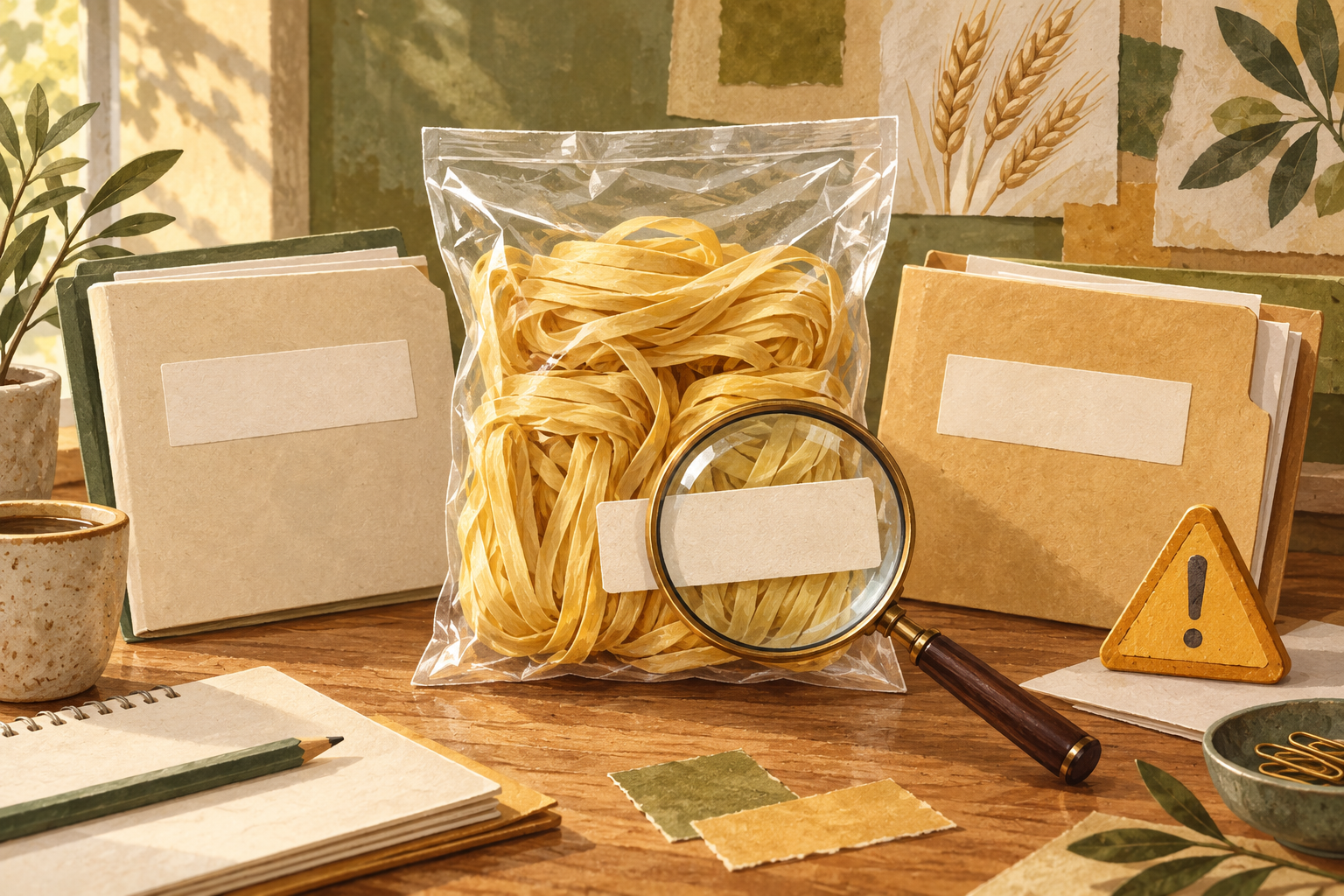
AI-generated editorial illustration of an allergen-label review; not an approved label or evidence that a warning may be removed.
Do not remove a supplier's “may contain” warning solely because the allergen is absent from the ingredient list. The two records answer different questions: what is intentionally included and what may be present through unintended cross-contact.
For a private-label buyer, the useful next step is to obtain the assessment behind the warning and have its relevance to the finished product reviewed. A shorter label is not evidence that a warning is unnecessary.
Source review: October 1, 2026. Next review: October 31, 2026, or sooner if guidance changes. This article uses UK guidance and does not determine any specific noodle product's allergen status.
What the official guidance says about supplier information
GOV.UK's precautionary allergen labelling guidance says supplier precautionary information should be passed to final consumers unless a risk assessment supersedes it. It links precautionary warnings to an identified cross-contamination risk that cannot be controlled, rather than a general-purpose disclaimer.
The guidance also says PAL should not substitute for hygiene and safety practices, should not conflict with a free-from statement for the same allergen, and should be reviewed when suppliers or processes change.
That means neither automatic deletion nor indiscriminate addition is a sound artwork decision.
Ask what the supplier statement actually covers
Before changing a label, identify the source document, date, exact product or ingredient and the wording being discussed. A warning on a component specification may need a different assessment from a finished-noodle declaration.
Ask the relevant technical contact to clarify whether the information covers the selected SKU, a particular facility or process, or a wider product group. If the supplied document is generic, request the clarification needed for a product-specific review.
These questions do not imply that any named allergen is present in Noodle House products. They are a way to avoid using an unrelated document as the basis for artwork.
A proposed label-change record
Keep the original supplier information beside the proposed wording change.
Record | What the buyer should retain |
|---|---|
Upstream statement | Exact wording, source and applicable product reference |
Proposed change | The warning to be removed, retained or revised |
Technical assessment | Reference to the assessment and the competent person responsible |
Decision | Rationale, product/process scope and any unresolved conditions |
Artwork link | Version reflecting the reviewed decision |
This is an editorial purchasing checklist, not a prescribed regulatory form. Ask the technical reviewer what evidence is appropriate; it does not provide a test limit or promise that a single laboratory result proves absence.
Resolve the example before approving the design
Consider a hypothetical supplier specification that states “may contain milk,” while a designer's ingredient list contains no milk ingredient. The brand proposes deleting the warning to simplify the back panel.
The missing intentional ingredient does not explain the upstream warning. Request clarification of the cross-contact assessment and its applicability to the product. Record the reviewer’s conclusion before changing the consumer information.
If there is no adequate assessment resolving the statement, leave the removal request pending. Do not turn the absence of an answer into approval, or replace it with a generic “may contain allergens” sentence.
Carry the decision into the next order
After a decision, keep its scope visible. A different component supplier, process or product revision should trigger a check of whether the previous assessment still applies. Ask for relevant change information as part of the specification handover.
Our shrimp and scallop allergen review addresses a different question: US ingredient and major-allergen classification. It does not authorise deleting a UK precautionary statement.
For an OEM noodle enquiry, identify the SKU, intended market and exact supplier statement that needs clarification. Contact Noodle House Food to confirm available product information for your qualified reviewer; final wording must reflect the applicable evidence.