Oct 1, 2026Buying Guides
Comparing Oxygen-Barrier Reports for Noodle Packaging
Compare the measured parameter, specimen and test conditions before ranking oxygen-barrier figures for a proposed noodle film.
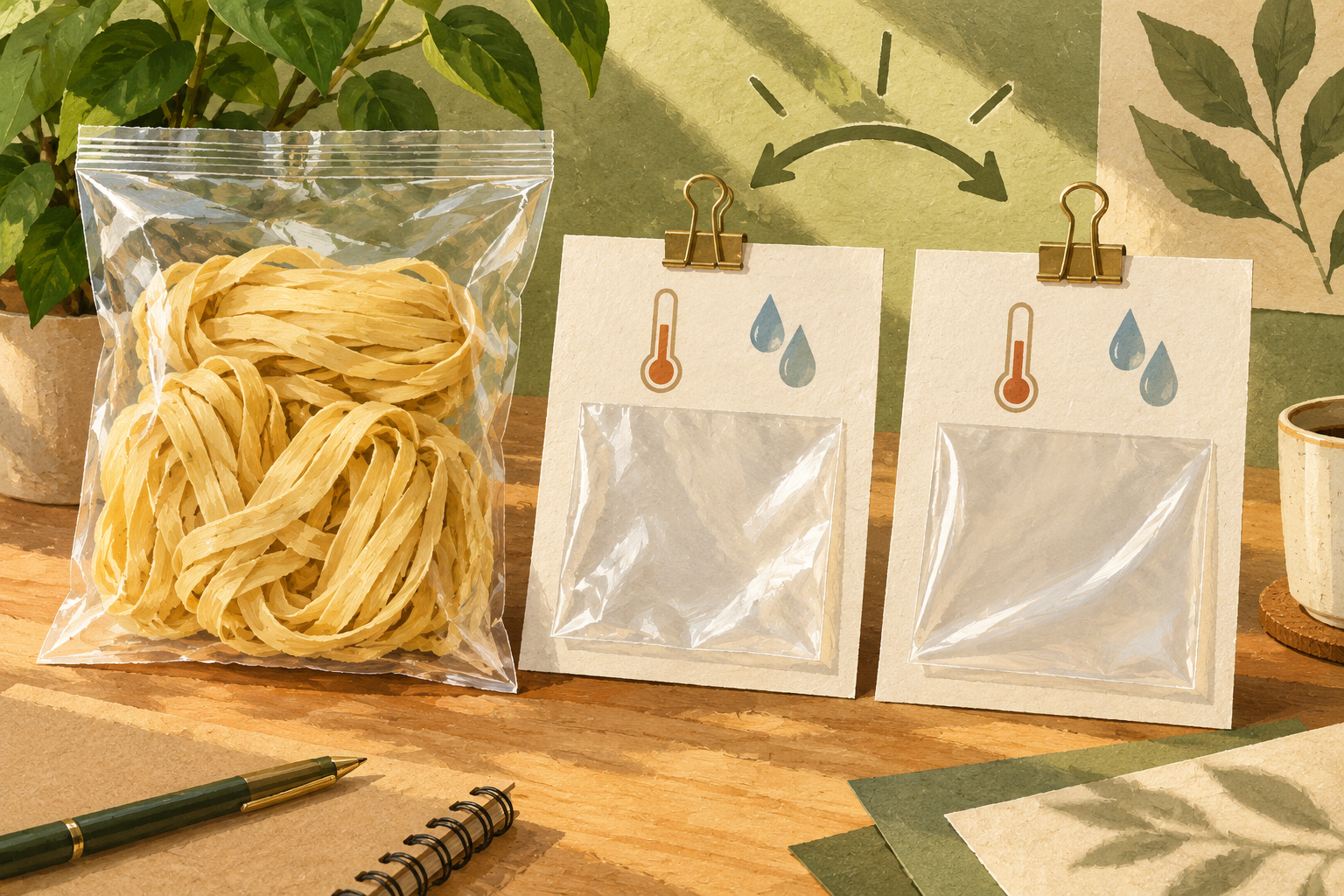
AI-generated editorial illustration of comparing packaging test conditions; not an actual test report, film specification or factory scene.
A lower oxygen-transmission number is not enough to select a replacement noodle-packaging film. First establish what each report measured and under which conditions. If temperature, humidity, specimen or reported quantity differs, the numbers may not answer the same purchasing question.
The useful question is narrow: does the proposed film have evidence that can be compared with the agreed oxygen-barrier requirement? That is separate from deciding the shelf life of the filled noodle pack.
Read the conditions with the result
ASTM's public summary of F1927 describes oxygen transmission through barrier materials at specified temperature and relative humidity. It notes that humidity affects many materials and that oxygen transmission is only one part of packaging protection. The summary also distinguishes transmission rate, permeance and permeability-related quantities. These headings should not be collapsed into one spreadsheet column just because every result contains the word “oxygen.” See the ASTM F1927 scope and significance.
Ask the report issuer to identify the full measured parameter, units, test method and edition, temperature, humidity conditions and tested specimen. Retain material construction, thickness and sample identity so that the result stays attached to the film being proposed.
This is a buyer's comparison aid, not the full test method or a laboratory operating procedure. The testing provider should determine the appropriate method and interpretation.
A conditional result should remain conditional
Imagine two proposed films, A and B. Both reports show oxygen-transmission values, and B has the smaller numerical result. A was tested under the buyer's specified humidity conditions; B's report gives a different humidity or leaves it unstated.
The buyer cannot resolve the choice by highlighting B's lower number. The missing step is evidence under a compatible basis, or a qualified explanation of what comparison is justified. Do not assume a conversion factor or infer which material would perform better under the missing conditions.
This is a hypothetical comparison, not a result for Noodle House Food packaging. No oxygen-transmission limit, film specification or shelf-life extension is being claimed.
Use a comparison sheet with an unresolved column
Place the requirement and both proposals side by side. For each field, record whether it matches, differs or is unknown:
- Result parameter and units, copied without renaming them.
- Method and edition, with any stated deviations.
- Temperature and humidity conditions shown by the issuer.
- Material structure, thickness, specimen identity and report revision.
- Required acceptance basis and the person responsible for the comparison.
For every difference, give the technical reviewer a specific question. For example: “Does this report cover the material construction now quoted?” or “What additional evidence would permit comparison with the agreed condition?” Keep the response beside the original reports.
An unknown entry is useful information. Replacing it with a familiar value from another supplier would make the sheet look complete while weakening the decision.
Approve the film question and the finished-pack question separately
A compatible film comparison can help select evidence for the material decision. It does not demonstrate every property of the converted pouch, its seals or the filled product through distribution. Keep the packaging-validation plan separate and have qualified staff decide which evidence is needed for the actual application.
When a film revision is accepted, carry its exact identity into the purchasing specification and the proposed private-label noodle project. An unchanged appearance should not hide a different material reference.
For an OEM discussion, send the intended product, destination, proposed packaging structure and the performance requirement through the contact page. Ask which material records and evaluation arrangements are available for that project. This guide does not imply an in-house oxygen-transmission laboratory or a particular barrier-film offering.
Reviewed October 1, 2026, using the public F1927-20 summary. Review due January 1, 2027, or when the applicable method or packaging requirement changes.