Oct 2, 2026Buying Guides
Noodle Pouch Tests: Seal Strength Is Not Leak Detection
Separate seal-strength and leakage evidence before approving a noodle pouch; a passed force result does not answer every packaging-integrity question.
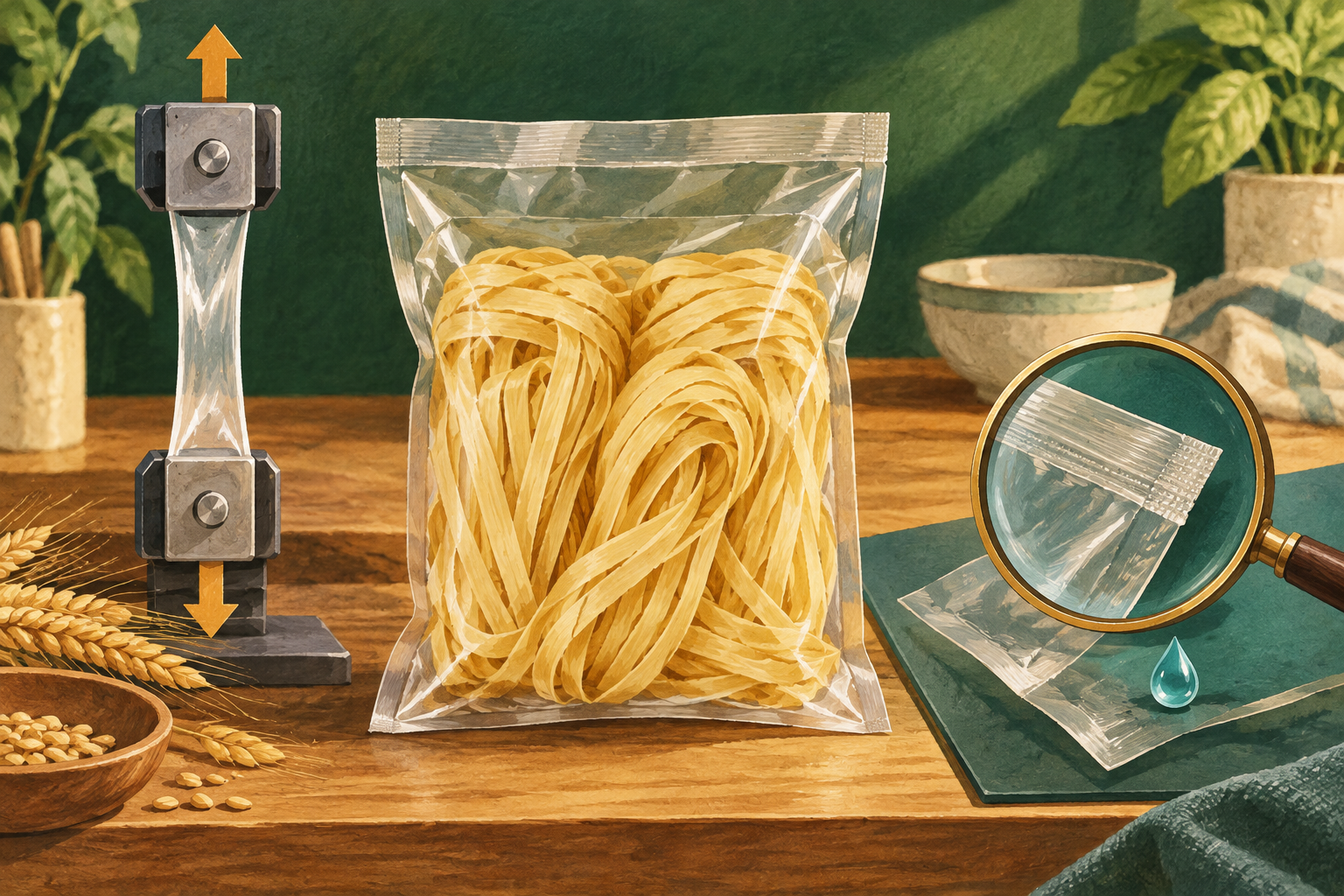
AI-generated editorial illustration of separate seal-strength and leak-evidence questions; not an actual test, laboratory procedure or product result.
Does a passed seal-strength test establish that a noodle pouch does not leak?
No. A seal-strength result and a leak-detection result answer different questions. Before approving a proposed pouch for dried wheat noodles, identify which question each report actually addresses. A satisfactory pulling-force result should not fill an empty leakage-evidence field in the buyer's approval file.
This distinction matters when a packaging change arrives with a short message saying that the seal passed. Purchasing needs to know what passed, on which specimen, under which method, and against which agreed requirement. Otherwise, a report can appear to close a risk that nobody tested.
Read the measured property before the pass statement
The public scope of ASTM F88/F88M-23 describes measuring the force needed to separate a strip containing a seal and identifying how the specimen failed. It addresses seal strength. The result concerns the sampled area; it is not a survey of every possible leakage path around the complete pouch.
ASTM F3039-23 addresses dye detection and location of leaks in specified nonporous packaging or flexible-barrier materials. Its public explanation describes a qualitative result, not a measurement of leak size. The method is destructive, and tested components must not return to final product packaging.
These are examples of different evidence types, not an instruction to perform both methods on every noodle pack. A competent packaging specialist must choose methods applicable to the material, pack construction and decision. This article provides no laboratory procedure or universal acceptance limit.
Build two separate entries in the packaging review
For a proposed retail noodle pouch, prepare a short review sheet with two headings: seal-strength evidence and leakage evidence. Under each, record the following:
- Question: what concern is the evidence intended to resolve?
- Subject: which film structure, pouch revision, sealing area and sample identification does it cover?
- Method: which method and revision were used, and are the conditions recorded?
- Result: what was actually measured or observed, including the reported limitations?
- Decision: which agreed requirement was applied, who assessed it, and what remains open?
This sheet is a purchasing aid, not an ASTM test plan. Its purpose is to keep a missing result visible. If only one evidence type is available, write that explicitly and ask the reviewer whether further assessment is necessary.
Do not combine the two entries into a single score. A force value and a qualitative leak observation cannot be averaged into a meaningful packaging grade. Keep the underlying reports attached so the next reviewer can see their different scope.
Work through a packaging-change example
Consider a hypothetical switch to a different pouch structure for the same dried wheat noodle. The packaging provider supplies a seal-strength report, while the approval checklist asks whether the proposed pack has been assessed for leakage. No actual supplier result is assumed here.
The buyer should first match the report to the proposed revision. Then ask the technical reviewer whether the submitted evidence answers the leakage question and, if it does not, what applicable evidence is needed. Do not rename the strength report “integrity certificate” to complete the checklist.
Conversely, a leak-detection report does not provide the force needed to separate a seal. If opening performance is an agreed concern, keep that question visible too. A useful approval record closes each requirement with the relevant evidence or states why the responsible reviewer considers it inapplicable.
Keep the conclusion narrower than the shipment
A result from selected specimens does not establish that every retail pouch in a production lot is free from defects. Our guide to acceptance sampling explains the separate question of how a sample supports a lot decision.
Likewise, these packaging results alone do not establish a noodle shelf life. Avoid extending a report to a changed material, product or pack revision without technical review.
For an OEM packaging discussion, send the selected noodle SKU, proposed pack revision and the exact evidence question. Confirm available records and responsibility for any further testing. This guide does not claim that Noodle House Food performs these tests or holds a particular result.
Sources checked: 2 October 2026. Method selection and acceptance criteria require review for the actual package.