Sep 30, 2026Buying Guides
Noodle Display Trays: Shipping vs Shelf Dimensions
Preserve closed shipping measurements and record prepared display dimensions separately when a proposed noodle tray changes shape on the shelf.
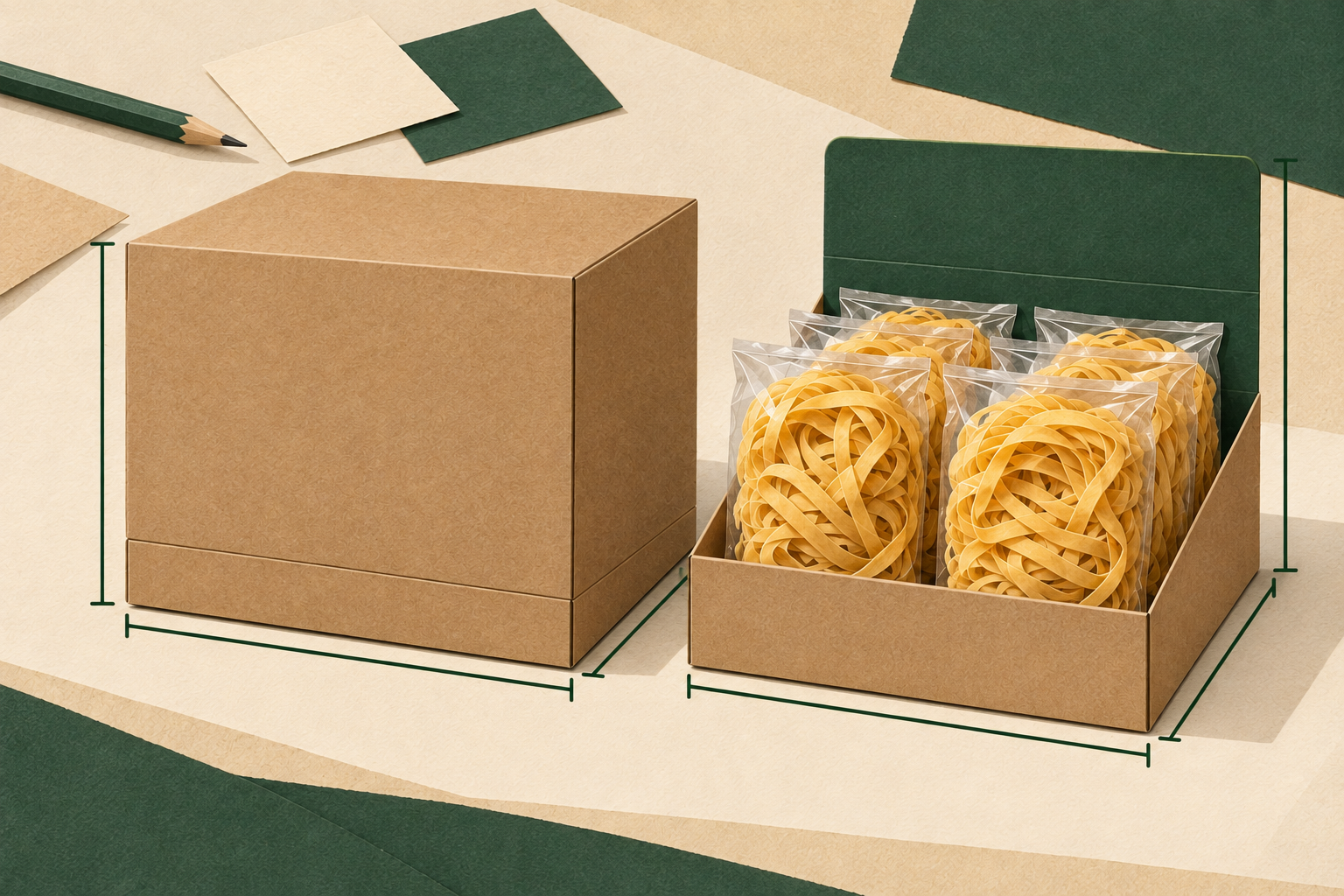
AI-generated editorial illustration of shipping and display states, not to scale; not an available packaging specification or measured sample.
A proposed retail display tray may fit the shipment plan yet need a different space on the store shelf after opening. Keep the closed shipping measurements and the prepared display measurements as separate records. Replacing one with the other can leave logistics and merchandising working from different versions of the same pack.
This is a planning question for a proposed noodle or snack display format. It does not mean that any particular tray, display carton or retailer program is currently available from Noodle House Food. Confirm feasibility for the selected product and quantity.
A closed carton does not describe every display state
Suppose a buyer proposes a tray of individually packed noodles with a removable cover and a header that folds upward. The closed tray has one height; the prepared display has another. If the front also folds outward, the shelf depth may change.
These are hypothetical design features, not a catalog specification. They illustrate why a single unlabeled set of “length, width and height” can be insufficient for a retailer's space plan.
The GS1 Package and Product Measurement Standard, release 3.3, says that counter and shelf-ready display package measures are communicated in their as-shipped state, using the non-consumer trade-item natural-base rules. That standard measurement should not quietly become the open display measurement.
Ask the retailer which state its field represents
GS1's Trade Item Implementation Guide, section 14, explains that additional display measurements can be supplied when preparation changes the dimensions. These supplement the standard measurements. It also distinguishes the retail display from the package as supplied and links dimensions to a display type.
For the buyer's handoff, ask whether the retailer needs the individual consumer pack, the closed tray, the prepared tray or a larger shipping case. Confirm the unit of measure and the orientation used for each. A correct number attached to the wrong packaging level is still unsuitable for the requested field.
Use the retailer's current submission instructions for field names and required evidence. This article is not a substitute for that data specification, and not every retailer uses the same intake system.
Review the sample in the intended configuration
A practical design discussion can use two labeled views of the same identified reference: closed for shipment and prepared for display. Keep the product count visible and show what has been removed, folded or raised between the views.
Then ask merchandising to assess the intended shelf position. The questions may include whether the prepared header clears the shelf above, whether the display projects beyond the allocated depth and whether a shopper can remove a pack without disturbing the remaining arrangement. These are proposed review questions, not guaranteed performance claims.
A drawing can communicate an idea. A physical reference can help evaluate fit. Record which one supplied each dimension instead of presenting an early concept rendering as a measured finished pack.
Do not solve a shelf problem by changing an unlinked number
Imagine the retailer finds that the raised header is too tall and requests a shorter version. Give the proposed change its own reference and ask which measurements actually change. The closed outer dimensions may remain the same or may also change; neither outcome should be assumed.
If the packing arrangement changes, return to the master-carton specification review. Keep the retail display decision linked to the correct shipping-carton reference, rather than treating display approval as approval of protection or loading performance.
The store-facing image should also show the configuration being discussed. An attractive open display picture cannot establish how the tray is supplied or how much volume the closed shipping unit occupies.
Make two receiving teams agree on one reference
Before the data handoff closes, have logistics identify the record it will use for receiving and freight planning, and have merchandising identify the record it will use for shelf placement. Both should point to the same product and approved packaging version while naming the relevant state.
Unconfirmed figures should remain marked as estimates. Keep open questions about display fit separate from unresolved manufacturing feasibility, product protection or retailer acceptance.
For an OEM packaging discussion, send the selected noodle or snack product, proposed display concept, retailer requirements and expected order quantity through the contact page. Ask which reference can be provided and which measurements still need confirmation before committing to the design.