Which Product Documents Should Noodle Importers Request Before Ordering?
A buyer guide to specifications, labels, certificates, test reports and shipping documents for a noodle purchase.
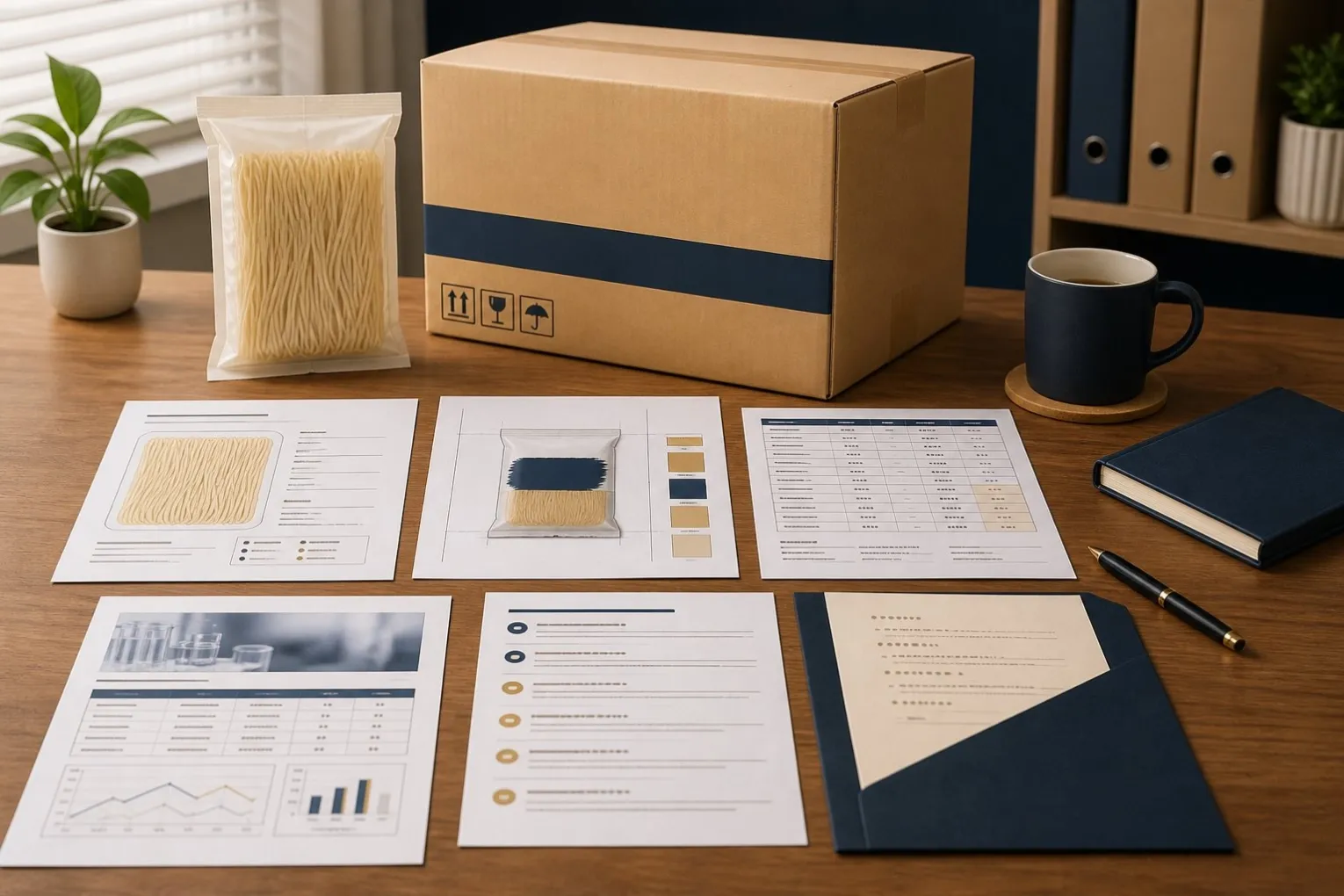
Importers often ask a supplier to “send all certificates,” but that request is too broad to protect a purchase. The correct document set depends on the product, destination market, buyer's sales channel and shipment. Each document also answers a different question.
This guide is a procurement framework, not legal advice. The importer and its local compliance advisers remain responsible for confirming destination requirements.
Begin with the product specification
The product specification is the working reference for the item being purchased. It should identify the product code and describe the approved product and pack. Depending on the SKU, relevant fields may include ingredients, allergens, net weight, pack count, carton data, storage, shelf life, cooking guidance and sensory characteristics.
Check that the specification version matches the sample and quotation. A generic catalog page is not a substitute.
Review label and artwork files
For branded or private label products, confirm the final artwork and, as applicable in the destination market, the ingredient statement, allergen declaration, nutrition information, net quantity, country-of-origin statement, date and lot coding area, barcode, importer details and required language.
Approval should be documented. A visual mock-up helps, but the buyer should also inspect the final text and print-ready file.
Understand certificates and registrations
A certificate may apply to a company, facility, management system, product, ingredient or shipment. Before relying on it, check:
- issuing organization;
- holder and site name;
- scope and covered products;
- issue and expiry dates;
- certificate or reference number;
- whether the destination authority accepts it.
Do not assume a website badge proves that every SKU is covered. Request the relevant current file and confirm scope.
Distinguish specifications, COAs and test reports
A specification defines agreed requirements. A certificate of analysis commonly reports results for a batch or defined sample. A laboratory test report records particular methods, samples and results. These documents are related but not interchangeable.
Ask which document is available for the exact SKU and whether shipment-specific testing is required.
Confirm shipment and customs documents
Commercial and shipping documents may include a commercial invoice, packing list, transport document and other destination-specific certificates or declarations. Requirements vary by market and product. Agree in writing who prepares each item, which details the buyer must provide, and when drafts will be reviewed.
Build a document responsibility matrix
Use four columns: document, responsible party, due date and approval status. Link each file to the exact SKU and order number. This prevents a team from approving artwork while assuming someone else checked product scope or import requirements.
FAQ
Is a supplier certificate enough to confirm import compliance?
No. Its scope, validity and acceptance for the specific product and destination must be checked.
When should documents be reviewed?
Review core product and compliance documents before committing to the order, final artwork before printing, and shipment documents before dispatch according to the agreed workflow.
Can one document cover every noodle SKU?
Sometimes a document has broad scope, but buyers should never assume this. Verify the exact scope and product relationship.
CTA
Send the exact SKU, destination and required document list through the contact page and request current, SKU-specific files. Availability, validity, scope and destination acceptance must be confirmed for each project; a general checklist is not an import-compliance conclusion.