Sep 16, 2026Buying Guides
Reference Sample vs Supplier Standard Product: Which Is Better?
Decide whether to begin a noodle project with a buyer reference sample or a supplier's existing standard product.
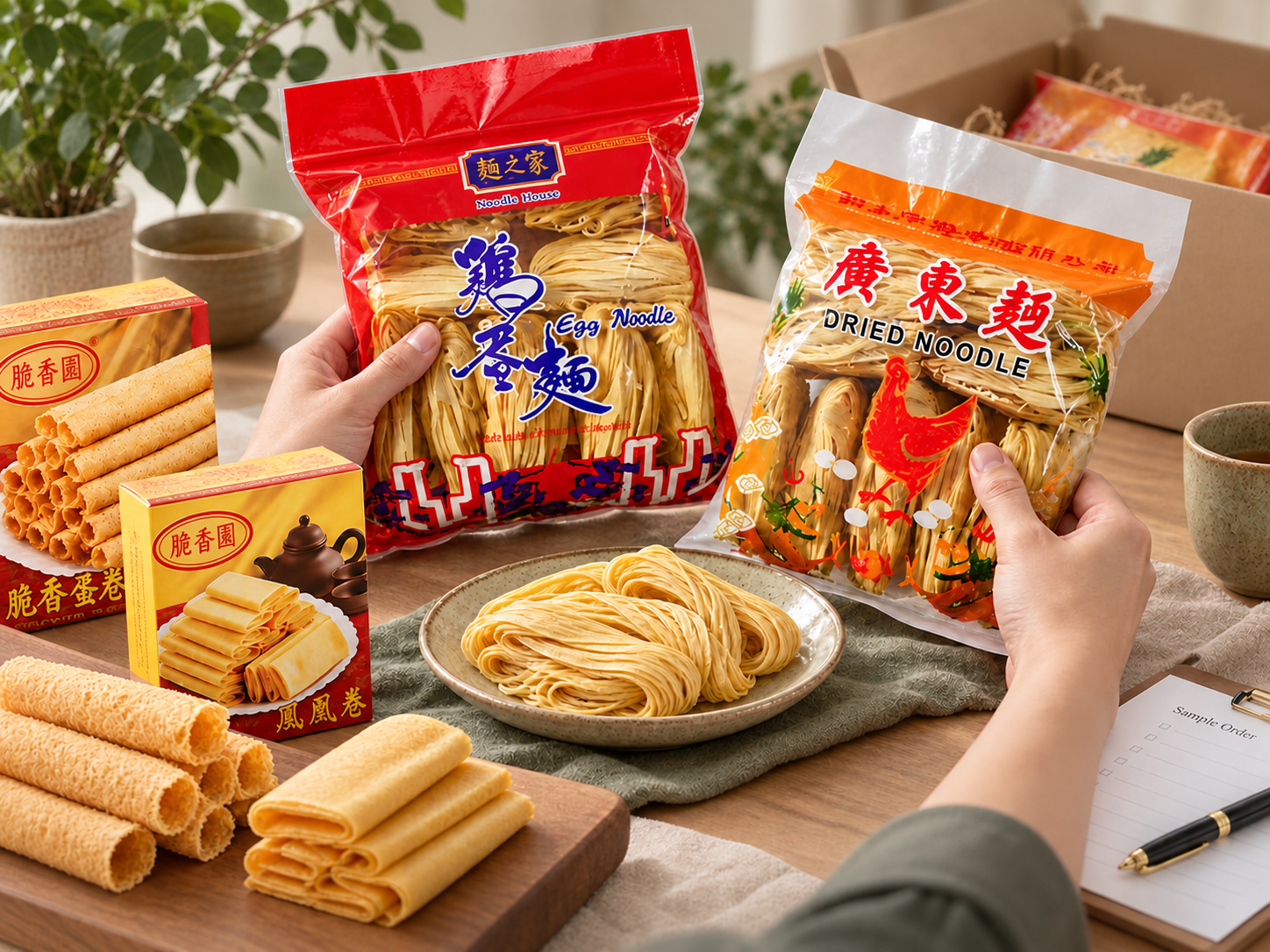
Buyers commonly start with either a product they want to match or a supplier's existing catalog item. Neither route is always better. The right starting point depends on whether speed, differentiation, technical fit or order simplicity matters most.
Starting from a supplier standard product
An existing product can reduce uncertainty because the supplier already knows its normal specification and packaging routes. It is often useful for market testing, distributor range expansion or a project that does not require a unique texture.
The buyer still needs to test the sample, review the specification and confirm current commercial terms.
Starting from a buyer reference sample
A reference communicates the target appearance, texture, portion or cooking behavior. It is useful when the market already recognizes a style or when a product must fit a specific recipe.
However, a physical reference is not a complete specification. Explain which characteristics matter, provide lawful product information and avoid requesting copied branding or protected design.
Compare the development burden
Custom matching may require several trials and measurable feedback. Changes to formulation, dimensions or packaging can affect feasibility, MOQ, cost and timing. A standard product with adapted labeling may be a lower-risk first step.
Use a decision table
Choose the standard route when launch speed, smaller complexity and testing an existing category are priorities. Choose reference-led development when the target difference is commercially important and the buyer can support samples, technical feedback and approval work.
A hybrid approach is also possible: screen standard products first, then customize only the closest candidate.
Make feedback measurable
Replace comments such as “not close enough” with observations about width, thickness, color, cooking time, firmness, elasticity, aroma and pack. Rank changes by must-have and preference.
FAQ
Can a manufacturer make an exact copy of another brand?
Buyers should respect intellectual property and legal requirements. Define functional targets instead of requesting copied protected elements.
Is a standard product automatically cheaper?
Not automatically, but it may reduce development and packaging complexity. Request a specific quotation.
When should packaging design begin?
Confirm product and pack architecture before final artwork so dimensions and mandatory information are stable.
CTA
Review the product range and private label route, then send your reference, must-have features and target quantity through the contact page.