Sep 2, 2026
Shelf-Stable Chinese Noodles for Foodservice and Wholesale
Evaluate shelf-stable Chinese noodles using pack format, shelf life, preparation tests, carton data, stock rotation and buyer documentation.
Shelf-stable noodles can simplify storage compared with chilled or frozen formats, but buyers still need to evaluate preparation, portion use, inventory rotation and the exact product specification.
Identify the foodservice or wholesale use
State whether the noodles are intended for restaurants, distributors, Asian grocery, meal kits or private label. The same noodle may perform differently when cooked to order, held in a buffet or prepared in batches.
Compare available catalog formats
Current references include:
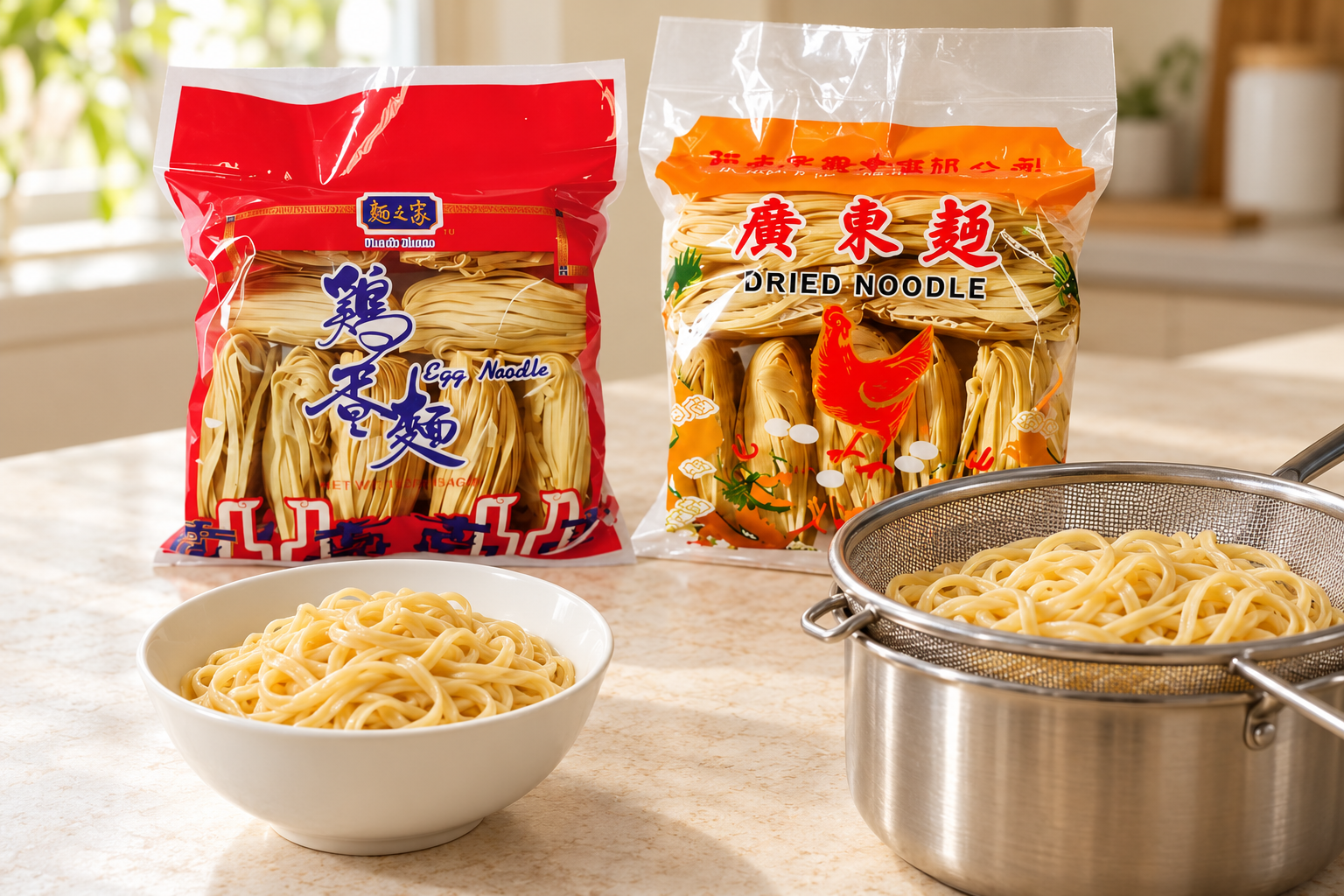
- Egg Noodle and Dried Noodles: 454 g bags, 30 bags per carton and 24-month shelf life.
- Fried Noodle: 200 g bags, 40 bags per carton and 24-month shelf life.
- Shanghai Noodle: 340 g bags, 30 per carton, plus a separate 227 g format packed 60 per carton; both list 24 months.
- Amoy Flour Vermicelli: 300 g bags, 40 per carton and 24-month shelf life. It is made with wheat flour, not rice.
Shelf life is a catalog reference and must be confirmed for the selected SKU and packaging.
Test preparation under real operating conditions
Evaluate cooking time, yield, texture, sauce absorption and performance after holding. Record water volume, cooking temperature, batch size and hold time so results can be compared.
Do not choose a product only from photographs or a generic description.
Calculate storage and case movement
Use actual carton dimensions, gross weight and expected weekly usage. A longer shelf life reduces some expiry pressure but does not replace first-expiry-first-out rotation or realistic purchasing quantities.
Request documents before final approval
Ask for the current specification, ingredients, allergen information, shelf life, storage statement, preparation guidance, label file and any destination-market documents. Verify every certificate or report against its holder, scope and validity.
Start with a controlled commercial trial
The catalog lists a typical 100-carton MOQ for standard products, subject to SKU and order confirmation. Select enough product for a meaningful test, but avoid mixing so many items that no SKU produces usable sales or kitchen feedback.
Does shelf-stable mean no storage controls?
No. Follow the product's stated storage conditions and protect cartons from heat, moisture, damage and pests.
Can these noodles be private labeled?
The catalog states that OEM and private-label options can be discussed. Confirm product, packaging, label content, MOQ and lead time for the actual project.