Sep 20, 2026Buying Guides
How Buyers Compare Clear Inner Wrappers and Printed Retail Packs for Noodles
Compare clear-wrapper and printed-pack options on the same saleable-unit basis, including added components, assembly, purchase quantities and later changes.

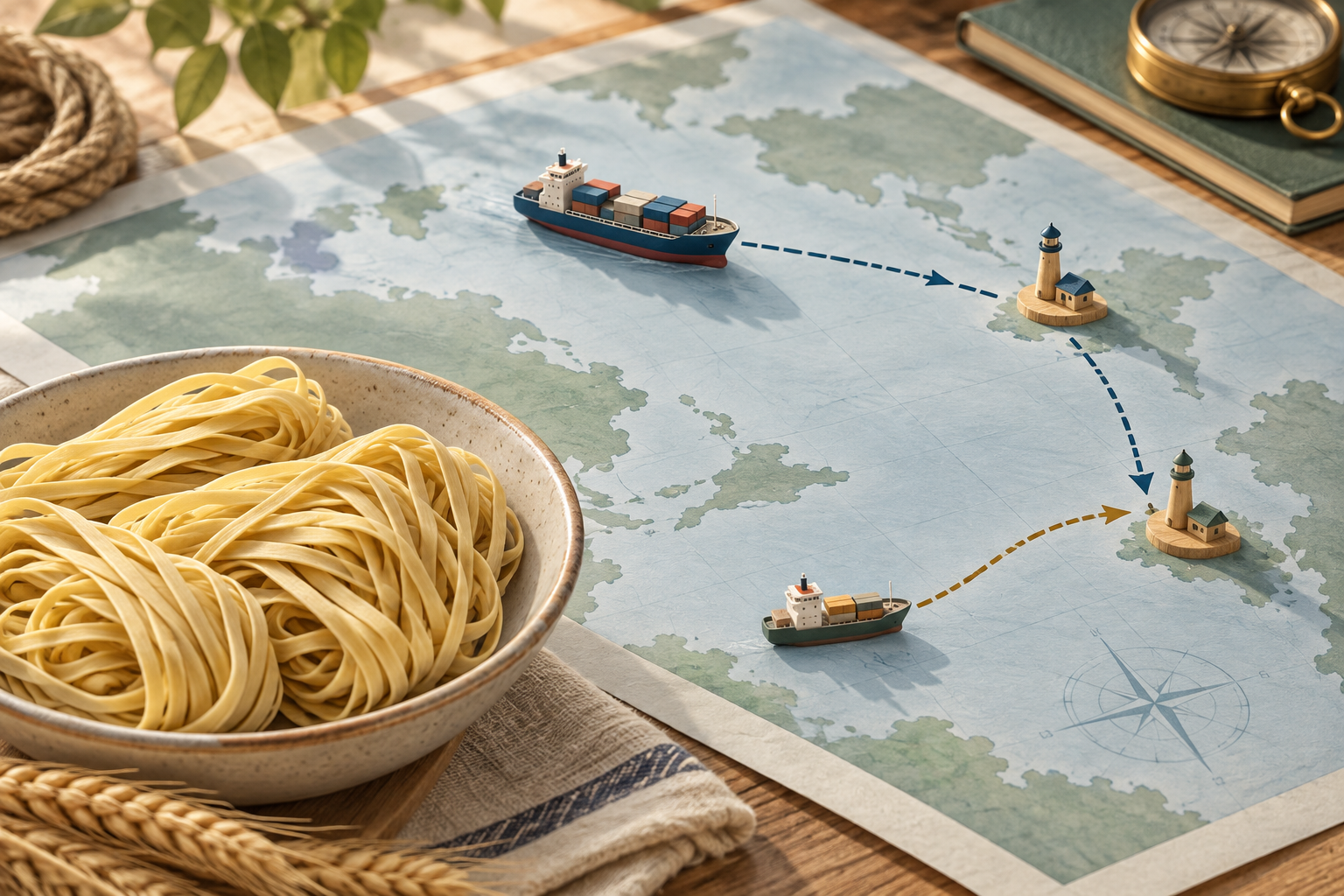
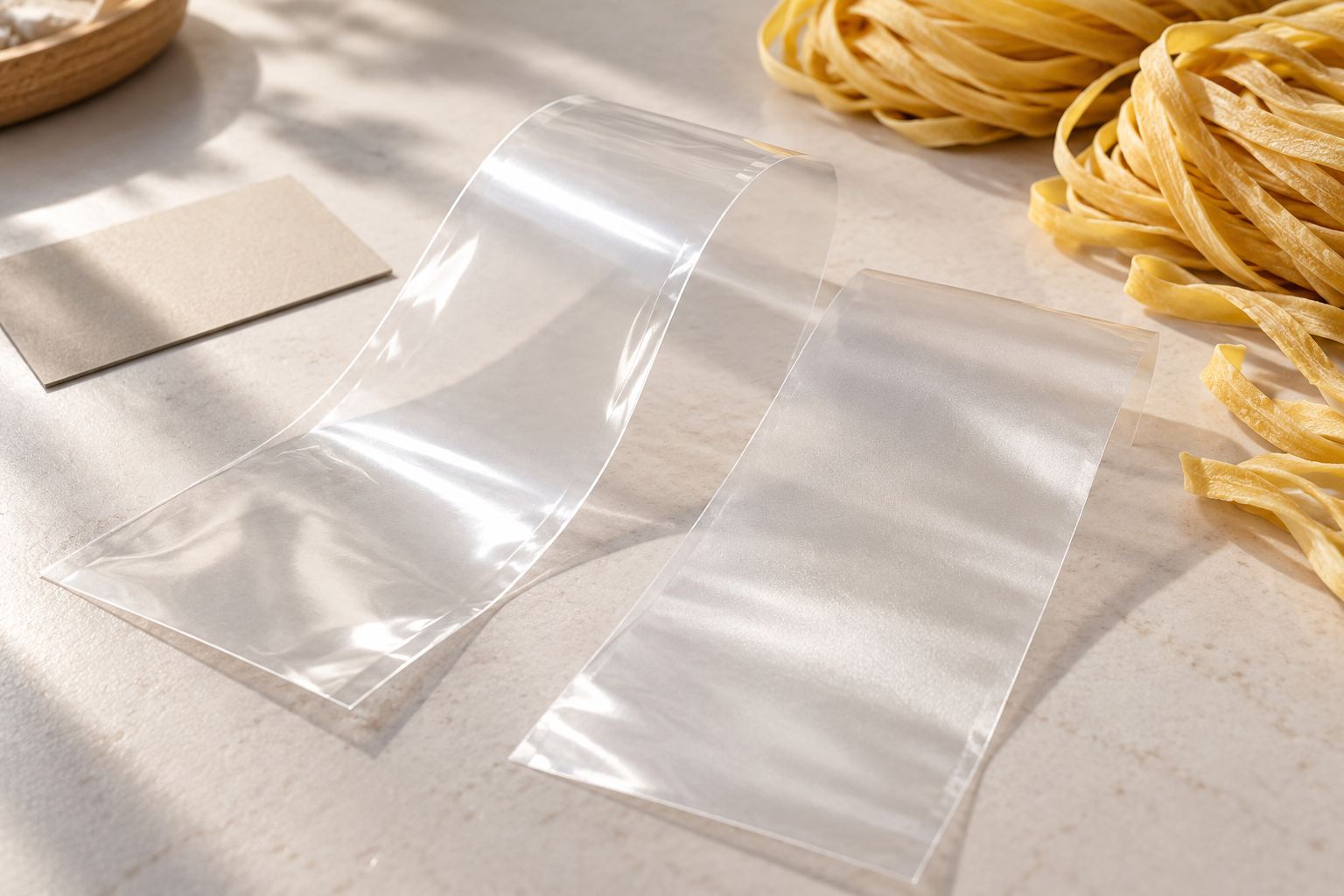
AI-generated illustration for explanation; not actual customer packaging or a confirmed packaging offer.
Compare the complete unit the customer will buy, not an empty clear bag against a finished printed pack. A clear inner wrapper may still need a label, sleeve or outer box. The useful comparison includes those components, the work needed to assemble them and the information the finished unit must carry.
Start with the same noodle SKU, net quantity and sales channel for both options. The routes below are options to ask about, not confirmation that every format is available from Noodle House Food. Availability and suitability need review for the exact project.
Establish what reaches the shelf
Draw a simple sequence for each proposed route: product, immediate wrapper, any added label or outer pack, then shipping carton. Circle the unit that will be ordered and sold to the end customer.
For example, if several inner packs sit inside one retail box, the inner wrapper and the box have different roles. Comparing the wrapper price alone with a single printed retail bag would leave part of the first route unpriced.
Tell the supplier whether the plan is for retail shelves, foodservice handling or another defined channel. Ask the buyer's market and channel reviewers to confirm the finished presentation and information requirements. Transparency by itself is not evidence of product protection, hygiene or shelf-life suitability.
Request two answers to the same comparison sheet
Use the table as questions for the supplier and the parties responsible for packaging and market review. Keep answers conditional until confirmed for the chosen product.
Decision item | Clear inner wrapper plus added components | Printed retail pack |
|---|---|---|
Saleable unit | Which label, sleeve or box completes the unit? | Is the printed pack itself the saleable unit? |
Information location | Which component carries each approved text block and code? | Which areas carry fixed text and variable coding? |
Assembly | Who supplies and applies each added component? | Which printing, filling and coding activities are included? |
Quantity basis | What minimum or purchase quantity applies to each component and version? | What quantity applies to each material and artwork version? |
Carton arrangement | How are the completed units packed and counted? | What arrangement and carton data apply to the finished pack? |
Evidence needed | Which material, closure and finished-pack checks are proposed? | Which material, print, closure and finished-pack checks are proposed? |
Later changes | Which components remain usable if text or a version changes? | Which printed stock or files would need review after that change? |
Record “not confirmed” where an answer is missing. Do not fill that gap with a packaging vendor's advertised minimum or assume the same figure applies to a noodle order.
Compare cost by finished unit and committed stock
Ask for separate quotation lines where they matter: wrapper or printed pack, labels or sleeves, any outer retail box, application or assembly work, setup items and shipping-carton packing. Record what is included, excluded or still provisional.
Then ask what must be purchased before the first finished unit is delivered. For both routes, identify quantities by component and version, who holds unused stock, and what happens when the artwork changes. These answers can affect the decision even when the quoted price per finished pack is similar.
Neither route has an automatic cost or minimum-order advantage. Compare the actual offers on the same product, quantity and finished-unit basis. The quotation-comparison guide explains the wider commercial comparison.
Test the decision against one likely change
Use a hypothetical change that matters to the project: one market needs different wording before a repeat order. This is a planning exercise, not an account of a customer order.
For the clear-wrapper route, ask whether the change affects only an added label or also another component. For the printed route, ask which stock and files are affected. In either case, ask who would review the revised finished pack and which costs or timing would need a new quotation.
Do not assume a label makes every change simple, or that printing locks every detail permanently. The proposed pack design and actual supply arrangement decide the answer.
Choose a route before approving its artwork
Summarise the decision in five lines: selected route; confirmed saleable unit; reason it fits the channel; unresolved questions; and the next evidence needed. If one route lacks essential information, keep it under evaluation rather than describing it as approved.
Use the OEM packaging checklist to organise the selected pack's detailed requirements. Artwork release is a later decision; this comparison does not approve text, printing or production.
For private-label noodle options, send the SKU, intended saleable unit, channel, market and quantity by version through the contact page. Include both complete routes if you want them evaluated on the same basis.