Buying Guides
Egg Noodles for Chicken Soup: Cook in the Broth or Separately?
Choose a chicken-soup noodle with its cooking route in mind. Compare direct broth cooking with separate preparation against the actual noodle directions and serving process.
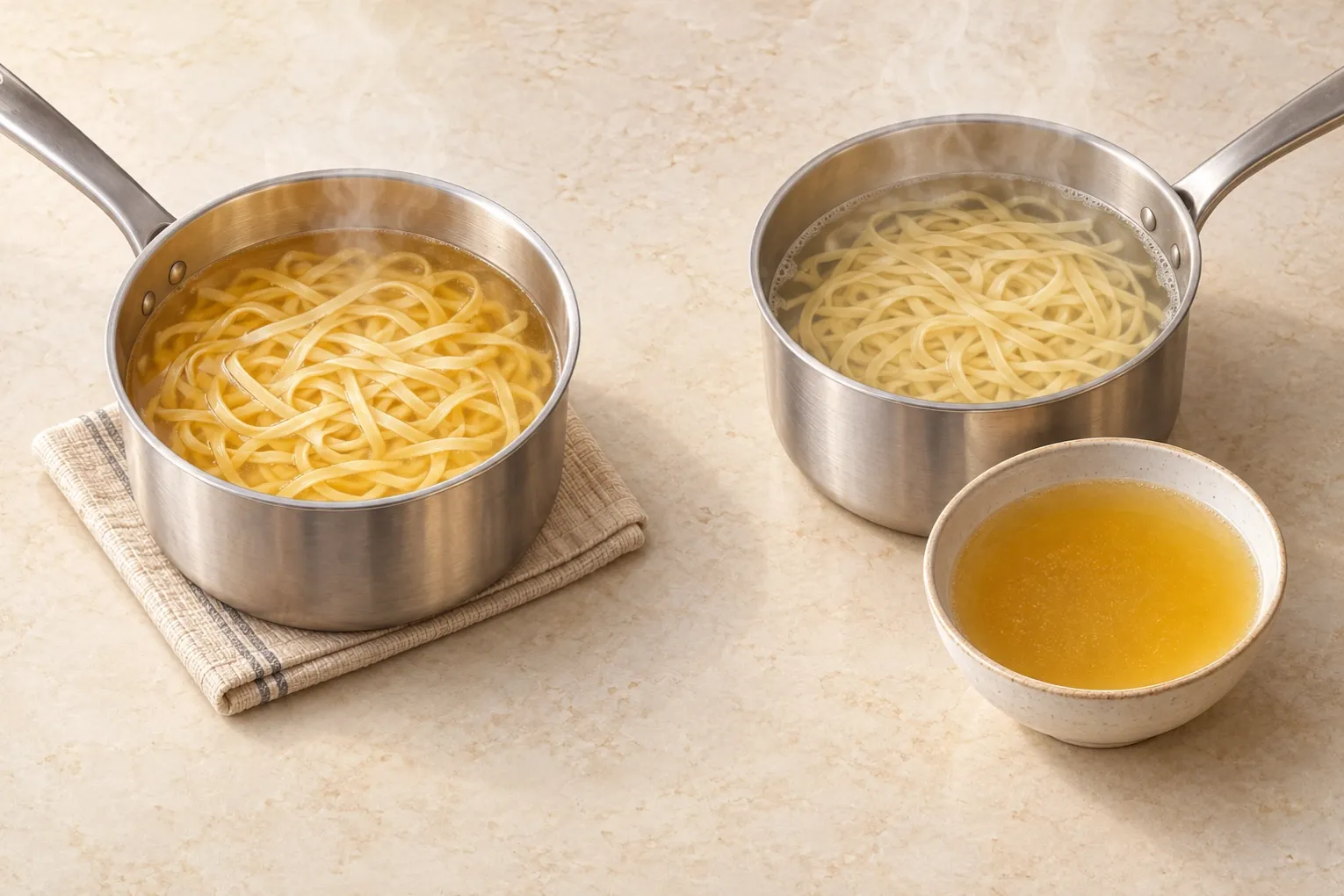
AI-generated illustration of two preparation approaches; not a product photograph or a company cooking trial.
Choose the cooking route before approving an egg-noodle sample for chicken soup. Cooking the noodles in the soup and cooking them separately are both workable recipe approaches. The useful question is which approach fits the selected noodle's directions, your finished broth and the way each bowl reaches the customer.
Why recipes give different answers
In Molly Baz's Bon Appétit chicken noodle soup, small, quick-cooking pasta goes into the broth; longer-cooking alternatives are prepared separately to avoid excessive broth reduction and added starch. That is guidance for a particular recipe, not a rule that every egg noodle must be cooked in a separate pot.
Betty Crocker Kitchens' chicken noodle soup provides a counterexample: its egg noodles cook in the broth. The same page notes that noodles continue taking up broth while the soup stands. These examples explain why a recipe's noodle and serving sequence matter. Neither recipe tests a Noodle House product.
Make the broth part of the selection decision
For a kitchen choosing a noodle, start with the finished bowl you need, then assess the two routes:
Kitchen requirement | Route worth evaluating | What would make it unsuitable? |
|---|---|---|
The recipe deliberately cooks its noodles in the soup | Direct cooking, using directions appropriate to that noodle | The finished bowl misses your required broth quantity, consistency or noodle texture |
The broth is prepared to a fixed finished specification before noodles are added | Separate noodle cooking, draining and assembly | The extra preparation step does not fit the kitchen, or the assembled bowl misses its target |
Bowls are assembled individually during service | Separately prepared components, combined according to the kitchen's approved process | Preparation and assembly cannot be reproduced at the intended service pace |
This table is a proposed selection framework, not a record of product tests. It does not prescribe holding times or establish that one route uses less labour.
Treat cooking and serving as two decisions. A noodle cooked separately can still spend time in the finished soup before it is eaten. Assess that actual interval rather than assuming separate cooking solves every serving-stage problem. Use the kitchen's existing food-safety procedures throughout.
Compare the route without changing the purchasing question
For a small kitchen comparison, identify the noodle and follow its current preparation guidance. Set a target for the finished serving: the noodle portion, broth quantity and eating texture. Compare a direct-cook version with a separately cooked and assembled version only where both are appropriate to the product's instructions.
Note any changes needed to reach the target, including adjustments to broth or the preparation sequence. Judge the bowl at the intended eating stage. If a route requires changes the kitchen cannot maintain, that matters to the sample decision even if a freshly prepared bowl tastes acceptable.
These are suggested observations, not results from a Noodle House trial. For the separate question of interpreting a laboratory or kitchen measurement, see cooking loss versus visible cloudiness.
Discuss the Egg Noodle sample with the actual soup in mind
Our Egg Noodle product page lists a dried wheat noodle containing wheat flour, water, egg and salt, with soup among its suggested applications. It is a candidate for discussion; that listing does not determine its cooking time in your chicken broth or approve a particular service process.
Send your soup application brief with the selected product, broth description, intended cooking route and when the bowl will be eaten after assembly. Request current product directions and sample availability. A useful sample decision identifies both the noodle and the process that fits your soup, rather than naming a universally “best” egg noodle.