Choosing Noodles for a Microwave Meal Kit: Read the Preparation Behind Each Test Result
Compare noodle test results by the preparation used for each measurement before selecting an ingredient for a microwave meal kit.
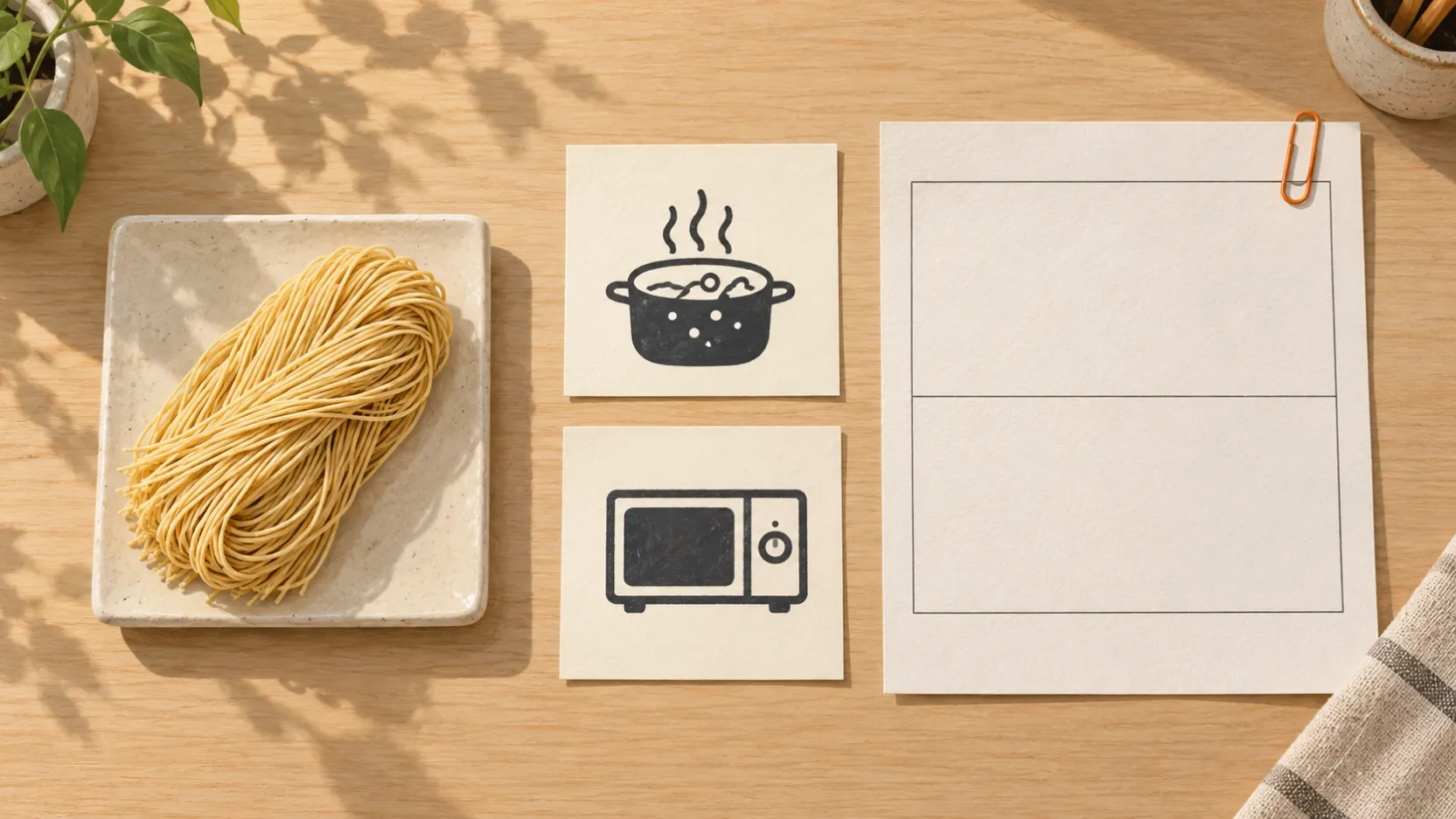
AI-generated editorial illustration of two preparation routes and a report. It does not depict a Noodle House trial, approved microwave package or measured result.
When selecting a dried noodle ingredient for a meal kit, a boiling-water test result does not automatically describe the noodle after microwave reheating. Before accepting a comparison, identify how the sample behind each result was prepared. A report can legitimately use different methods for different measurements; the purchasing mistake is treating all its numbers as results from the same finished meal.
This is a question for a meal developer or foodservice purchasing team reviewing noodle candidates. It is not a microwave cooking recipe.
Define the ingredient you are buying
Noodle House Food lists Dried Noodles, PF-002, with wheat flour, water and salt, and Egg Noodle, PF-001, which also lists egg. Both have a 454 g bag and 30 bags per carton as catalog references. These identify dry ingredients to discuss, not complete microwave meals.
If your business will cook the noodles, assemble the meal and define its final reheating instructions, include that downstream use in the sample brief. The ingredient choice and the evidence for the finished meal are separate parts of the approval. The catalog does not establish either SKU as a validated microwave-meal ingredient.
Why one noodle study used two reheating routes
In a 2026 study of refrigerated precooked alkaline noodles, Ji and colleagues described microwave reheating before quality evaluation. For water absorption and recooking loss, they instead used boiling water, explaining that those measurements require contact with excess water to assess uptake and released solids.
The two methods served different analytical purposes. A water-absorption or loss figure from the boiling procedure is therefore not a measurement of that same quantity in a microwave meal. This study used a specific experimental formulation, including an investigated gum treatment; it did not test our dried noodles. Its preparation details are not a process specification for your product.
Separate the result from the claim it is being used to support
Use the following distinction when discussing a candidate with your technical team:
| Evidence in the report | What to establish before using it | Decision it cannot supply by itself |
|---|---|---|
| Water absorption or recooking loss from immersion in boiling water | Sample identity and prior preparation; water-contact method; calculation basis | How the noodle eats after your microwave reheating route |
| Texture measured after microwave reheating | Which noodle sample was reheated, its prior preparation and the measurement method | That a separately measured boiling-water result came from the same preparation |
| Evaluation of the buyer's assembled meal | Whether it uses the selected dry ingredient and the defined final meal process | Performance of another SKU or a changed meal formulation |
This is a suggested way to read evidence, not a record of tests performed by Noodle House Food. It does not set numerical acceptance limits or claim that every supplier has these reports available.
A shortlist decision this distinction changes
Consider a hypothetical meal-kit buyer comparing PF-001 and PF-002. One candidate's supporting sheet contains a recooking-loss result from boiling; the other contains a texture result after microwave reheating. There is no common measure from which to declare a winner. The different headings do not become comparable simply because both sheets say “reheated noodles.”
Ask for the preparation and measurement attached to each result. Keep an available boiling result as evidence about that test. If the buying criterion is noodle texture after the intended microwave process, identify the missing evidence for that criterion separately. A candidate need not be rejected because a report is incomplete, but it should not be approved on a substituted measurement.
Our cooking-loss guide explains the distinction between solids loss, cooked weight and water appearance. The narrower point here is that even a valid reported measurement retains its own preparation route. It must not silently become a result for another route.
Put the missing question in the sample request
Contact us with the dry SKU and your intended meal-kit application. Ask for current product details and sample availability. If you are reviewing results, include which requirement remains unresolved and the preparation method behind the information already available.
Your technical team should define and validate the finished meal's safe process and assess the noodle in that process. Neither this article nor the cited research confirms microwave-safe packaging, a finished-meal shelf life, or ready-to-microwave supply from Noodle House Food. The practical purchase is an identified dry noodle, with the evidence needed for your downstream use made explicit.