Oct 1, 2026Buying Guides
Can a Paper Noodle Pack Be Labelled Recyclable in the US?
Review the complete packaging item and available recycling routes before approving a US claim; the word paper alone does not establish recyclability.
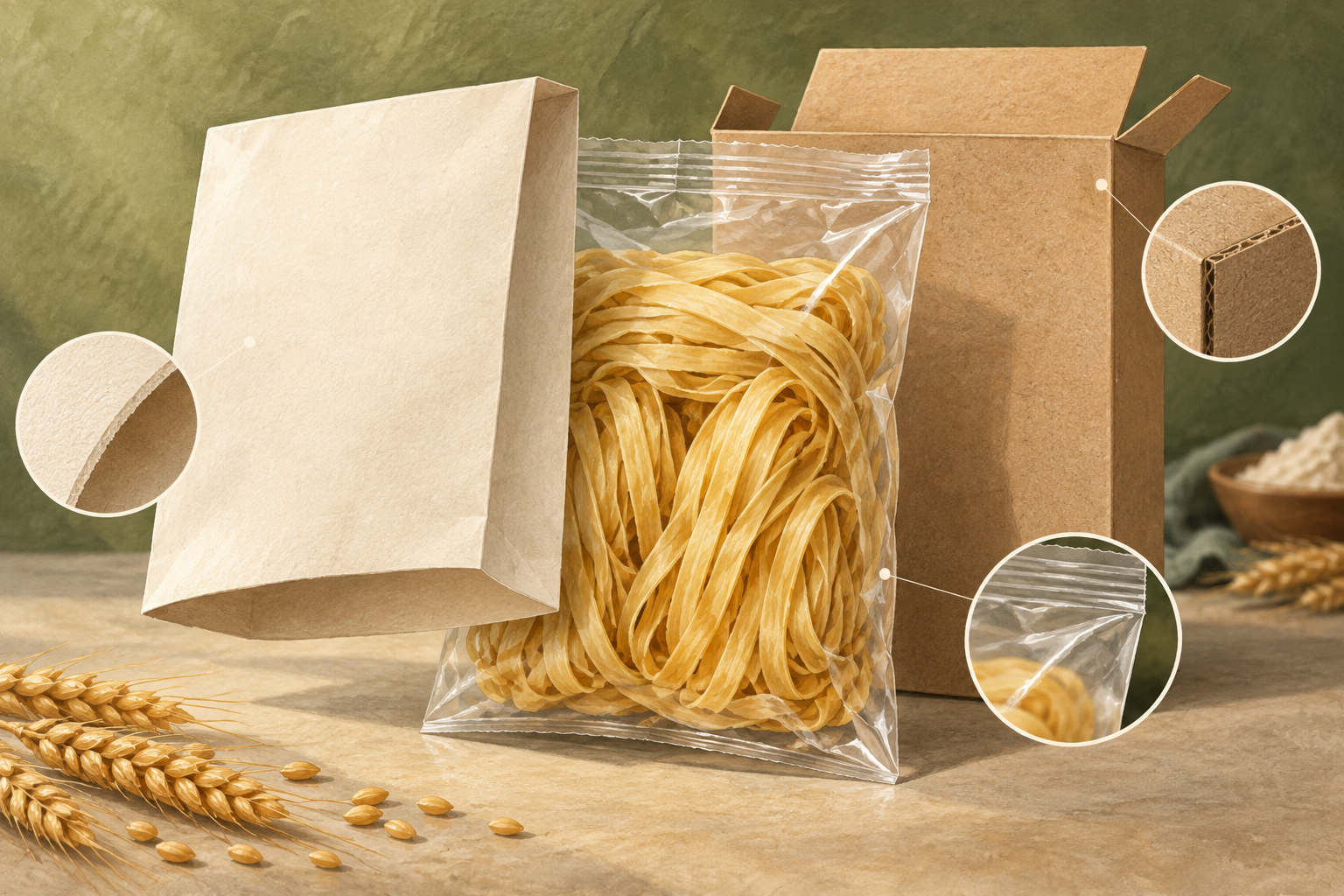
AI-generated editorial illustration of reviewing separate packaging components; not a claim that a Noodle House package is recyclable or a statement of its actual construction.
Not solely because it contains paper. Before approving a US recyclable claim for noodle packaging, assess the actual item, which components the claim covers and the recycling facilities available where it will be sold.
A removable sleeve, a coated pouch and an outer carton are different items. A statement about one should not silently become a claim about the entire retail package.
Start with the finished item
The FTC’s Green Guides address recovery through an established recycling programme. They also state that an item made from recyclable material should not be marketed as recyclable if its characteristics prevent acceptance in recycling programmes. A component that significantly limits recycling cannot be ignored. 16 CFR 260.12(a), (c) and (d).
For purchasing, this means the material description is only a starting point. Ask the packaging supplier to identify the complete construction, including bonded layers or other features relevant to processing. Do not infer a finished pouch’s recyclability from a paper layer considered on its own.
Match the claim to the market
The FTC summary says claims need qualification when appropriate facilities are not available to at least 60% of consumers or communities where the item is sold. Lower availability needs stronger clarification. FTC summary of the Green Guides.
That percentage concerns access to recycling facilities for the item. It is not the percentage of paper in the package, a recycled-content percentage or the proportion of units actually recycled. A supplier’s material composition sheet cannot answer all these questions.
The federal guidance is not a complete assessment of state or local requirements. Have the responsible US reviewer confirm the applicable rules and proposed wording before print release.
Use a packaging-specific evidence request
For a proposed claim, ask the responsible parties to provide:
- The exact packaging component and its final construction.
- The intended sales territory and channel.
- Evidence about collection and processing of that particular item.
- The proposed wording and any necessary qualification.
- The person responsible for checking the evidence and approving the wording.
This is a suggested purchasing brief, not a certification form. Record missing evidence as unresolved. Avoid treating a familiar recycling symbol as harmless decoration when it may communicate a consumer claim.
A hypothetical sleeve-and-bag example
Imagine a noodle pack with a removable paper sleeve around a separate inner bag. A buyer proposes placing “recyclable” prominently on the sleeve. Before approving it, the team needs to establish what a consumer would understand the statement to cover and whether the supporting evidence applies to that item in the intended market.
Evidence concerning only the sleeve does not establish the inner bag’s recyclability. Equally, a later switch to a bonded paper-and-plastic structure changes the item being assessed. Retaining the same wording without checking the changed construction would leave a gap.
These configurations are hypothetical. They are not confirmed packaging options or environmental claims for Noodle House Food products.
Keep separate claims separate
An FSC packaging claim concerns its own sourcing and trademark requirements. It does not, by itself, establish the consumer’s ability to recycle the finished item. Recycled content and recyclability also answer different questions.
Once the evidence and wording are resolved, tie them to the exact version in the artwork approval workflow. For an OEM packaging discussion, send the product, target market and component requiring assessment through the contact page. Confirm feasibility and evidence before presenting an environmental claim to buyers.
Reviewed: 1 October 2026. Source check used eCFR content displayed as current through 28 September 2026. This guide does not certify any package as recyclable.