Oct 8, 2026Buying Guides
Before Replacing a Noodle SKU, Compare the Cooking Water
The same noodle can produce conflicting sample feedback across kitchens. Record the actual cooking water and retest the identified SKU before choosing a replacement.
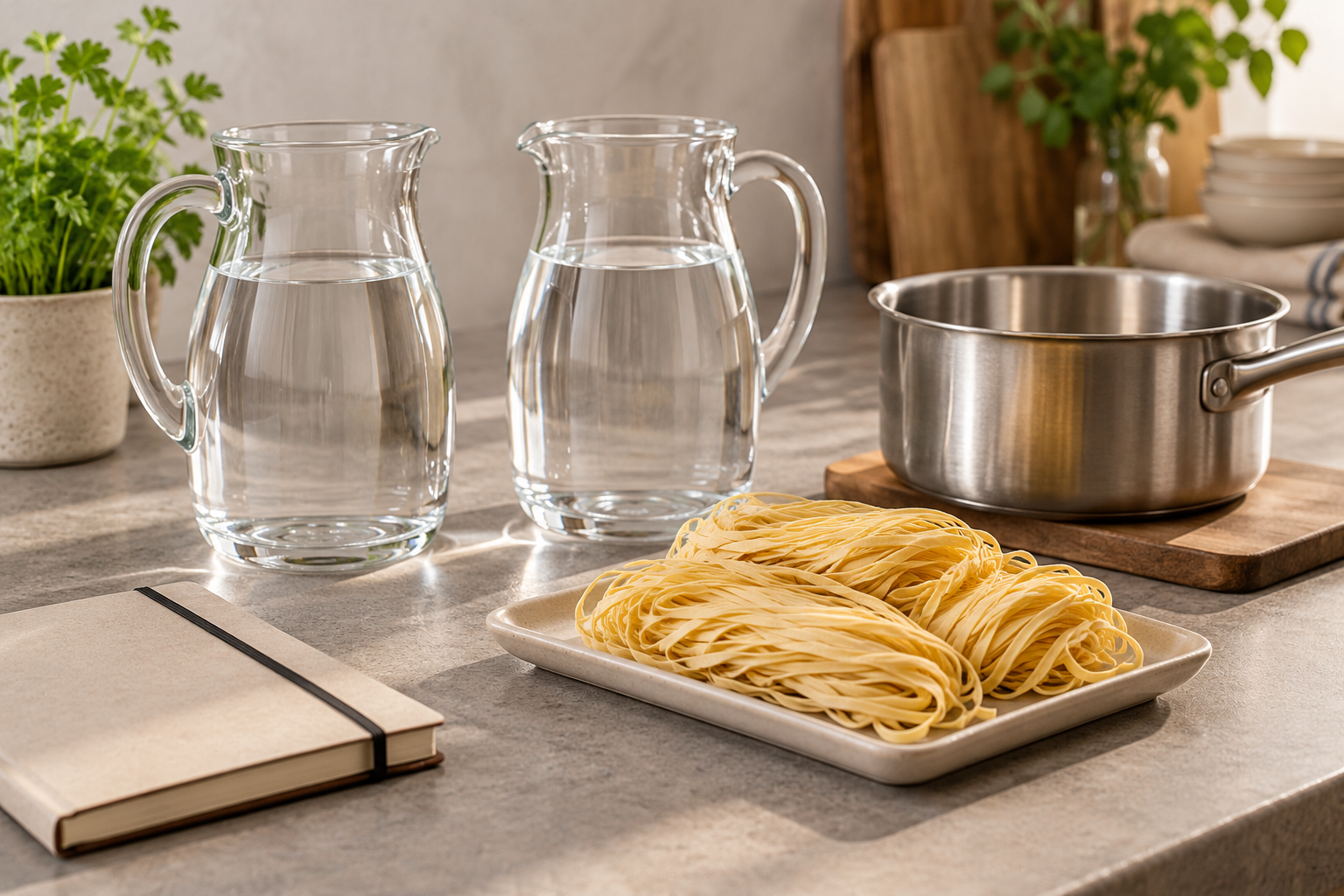
AI-generated editorial illustration of planning a noodle sample comparison; not an actual kitchen trial or product performance result.
When the same noodle sample performs differently in two kitchens, do not choose a replacement solely from those two results. First check whether both kitchens used the same preparation conditions, including the cooking water. A repeat trial can help separate a product-selection problem from a difference in how the product was evaluated.
For buyers considering Noodle House Food's Dried Noodle or Egg Noodle, this is a proposed sample-review method. We do not present company water-comparison results or claim that either SKU performs better in a particular water supply.
Why water deserves a place in the sample record
Water volume is only one part of the record. The US Geological Survey explains water hardness mainly in terms of dissolved calcium and magnesium. It also cautions that a regional hardness map is not a basis for decisions at an individual property. Information about the actual supply matters more than a general description of the country or city.
There is noodle-specific evidence for considering the water used in cooking. In Sung-Ho Lee's 2012 study, a commercial Korean noodle was cooked using deionized, tap and Cheong-song mineral water. The study reported differences in cooked weight and some other measured characteristics between the water conditions.
That finding has a narrow use here: water should not automatically be treated as identical across sample trials. The paper did not test Noodle House products, establish an ideal hardness for our range, or isolate calcium as the sole cause. Its separate experiments on water used to make noodle dough should not be confused with changing the water used to cook an existing product.
Check that the comparison concerns the same product
Imagine a buyer approves a sample in a distributor's kitchen, but a restaurant evaluating the same proposed SKU reports a different finished result. This is a hypothetical purchasing situation, not a customer case.
Confirm the product code, batch where available, pack condition and preparation instructions before investigating water. Two packs bearing the same general noodle name may not be the same specification. Likewise, one kitchen's immediately drained sample and another kitchen's noodles after the final sauce step are different evaluation points.
- Supply used: identify the actual tap, drinking-water product or documented treated supply.
- Available evidence: retain the relevant water report or product information and its date. Leave unknown values unknown.
- Treatment at the kitchen: note any treatment actually used; do not assume that the word “filtered” defines the resulting water composition.
- Cooking additions: record whether either trial added salt, broth or another ingredient to the water.
This record does not require a buyer to invent a water specification. It identifies what was and was not kept consistent.
Retest the water question without changing the noodle
A practical next step is a same-kitchen comparison using the same identified noodle sample and two documented, food-suitable water supplies. Keep the pot, noodle quantity, water volume, timing, draining and assessment point consistent. Repeat the comparison rather than treating one bowl as conclusive evidence. This is a proposed diagnostic trial, not a standardized laboratory protocol.
If the responsible kitchen team can safely and practically compare the supplies used in the original trials, that is more informative than changing to an unrelated bottled water and assuming it represents the other location. When the original water cannot be reproduced, record that limitation.
Agree the buying criterion before tasting: for example, acceptable strand separation and bite after the restaurant's actual finishing step. Record what happened under each water condition. A difference may justify further investigation, but it does not by itself identify which dissolved component caused it.
Decide whether a different SKU is actually needed
If repeated results change with the water condition, resolve the intended kitchen process before asking for a reformulated noodle. This does not mean the customer must install treatment equipment or accept a process that is impractical for daily service.
If the selected noodle still fails the agreed dish requirement under the intended operating conditions, compare an alternative SKU using those same conditions. If results remain inconsistent, keep the selection unresolved and review the remaining controls. Do not turn an unexplained difference into either a supplier-defect claim or an approval.
For a focused sample discussion, contact Noodle House Food with the product code, intended dish, the two preparation records and the result your kitchen needs. The next decision is whether to retest the current product or shortlist another confirmed option—not to assign a universal cooking-water rule to the entire noodle range.