Oct 1, 2026Buying Guides
Does the Laboratory’s Accreditation Cover Your Noodle Test?
Match the issuing laboratory, detailed accreditation scope and reported testing activity before treating a credential as evidence for a noodle test.
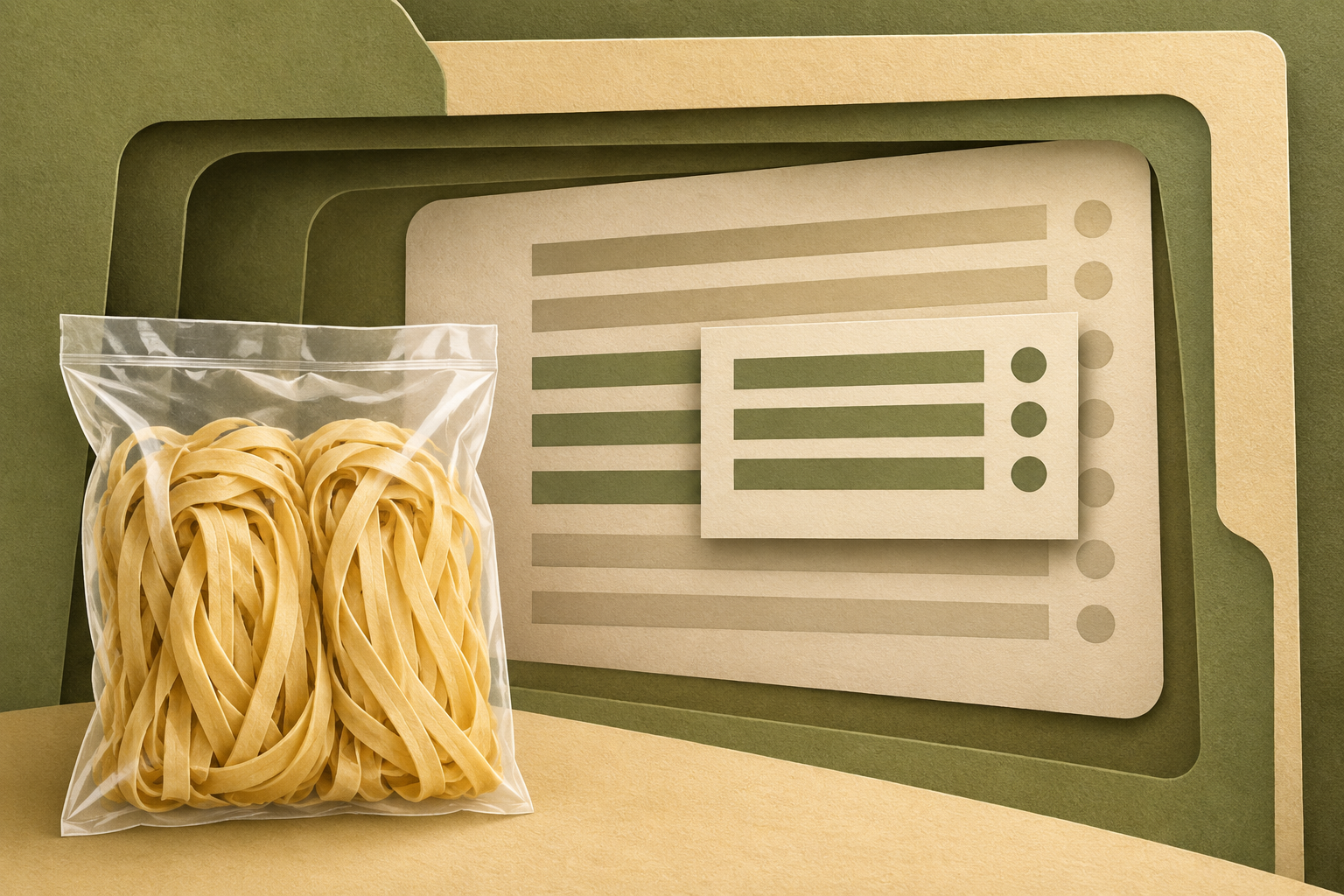
AI-generated editorial illustration of reviewing a laboratory scope; not an actual accreditation certificate, test result or approved laboratory.
A laboratory accreditation certificate is not evidence that every service sold by that laboratory is accredited. For a noodle test report, compare the actual testing activity with the detailed scope of accreditation and resolve any mismatch before relying on the accreditation claim.
This check answers a narrow question: whether the claimed accreditation covers the activity. It does not by itself establish that the sampled product complies with a destination market’s requirements.
Look beyond the certificate heading
UKAS describes an accreditation schedule as the formal record of the organisation’s scope. It identifies the activities covered and any relevant limits or conditions. ANAB likewise explains that a laboratory’s scope identifies the specific tests or calibrations for which it is accredited. UKAS accreditation schedules; ANAB laboratory accreditation FAQ.
The practical consequence is that a broad phrase such as “food testing laboratory” is not enough to settle a particular test’s coverage. Nor should a buyer treat a management-system certificate as an interchangeable document for laboratory activity accreditation.
Match three pieces of evidence
Start with the report’s issuing laboratory and address, its accreditation reference where provided, and the named test and method. Then use the accreditation body’s official directory or verification service to find the relevant organisation and scope.
A proposed buyer checklist is:
- Does the organisation and laboratory location match the report?
- Does the scope cover the relevant testing activity and product or material category?
- Does the method reference match, or is the basis for coverage explained?
- Are there limitations or conditions relevant to the reported work?
- Is the evidence relevant to the date the testing was performed, as well as the laboratory’s current status?
Scope formats differ. An unfamiliar term, a broad category or a flexible scope needs clarification from the laboratory or accreditation body; it is not a reason to invent a match. Keep the explanation with the purchasing file.
An example of a gap that needs an answer
Imagine a noodle buyer receives a report for a chemical analysis and a certificate from the same laboratory. The supplied scope pages show only microbiological activities. That package has not yet established accreditation coverage for the reported chemical test.
The next step is to request the applicable scope and an explanation of the activity’s accreditation status. Do not label the result fraudulent merely because the evidence is incomplete. A test outside the scope is a different issue from a falsified report, and its acceptability depends on the buyer’s purpose and applicable requirements.
This is a hypothetical document example. It does not describe a Noodle House Food test report or assert that a particular laboratory is suitable or unsuitable.
Ask before commissioning additional work
When asking for a quotation for testing, specify the product, intended use of the report, destination and required activity. Ask which parts of the proposed work will be covered by accreditation, who will perform them and how that status will be communicated on the report.
If the buyer requires accredited results, clarify that requirement before ordering the service. Also confirm whether the intended recipient accepts the laboratory and method for that purpose. A scope match should not be converted into a blanket promise of acceptance in every country.
For the broader purchasing file, see documents to request before ordering noodles. For a reported value near a limit, the separate measurement uncertainty and decision-rule guide addresses the interpretation of the result.
Send the SKU, destination and required evidence through the contact page. Document availability and additional testing arrangements must be confirmed for the specific product and order.
Reviewed: 1 October 2026. No laboratory’s current accreditation has been endorsed by this article.