Sep 19, 2026Buying Guides
Palletized or Floor-Loaded Noodle Cartons? What to Confirm Before Shipping
Confirm warehouse acceptance, unloading, pallet dimensions and mixed-SKU handling before choosing how to ship your noodle cartons.
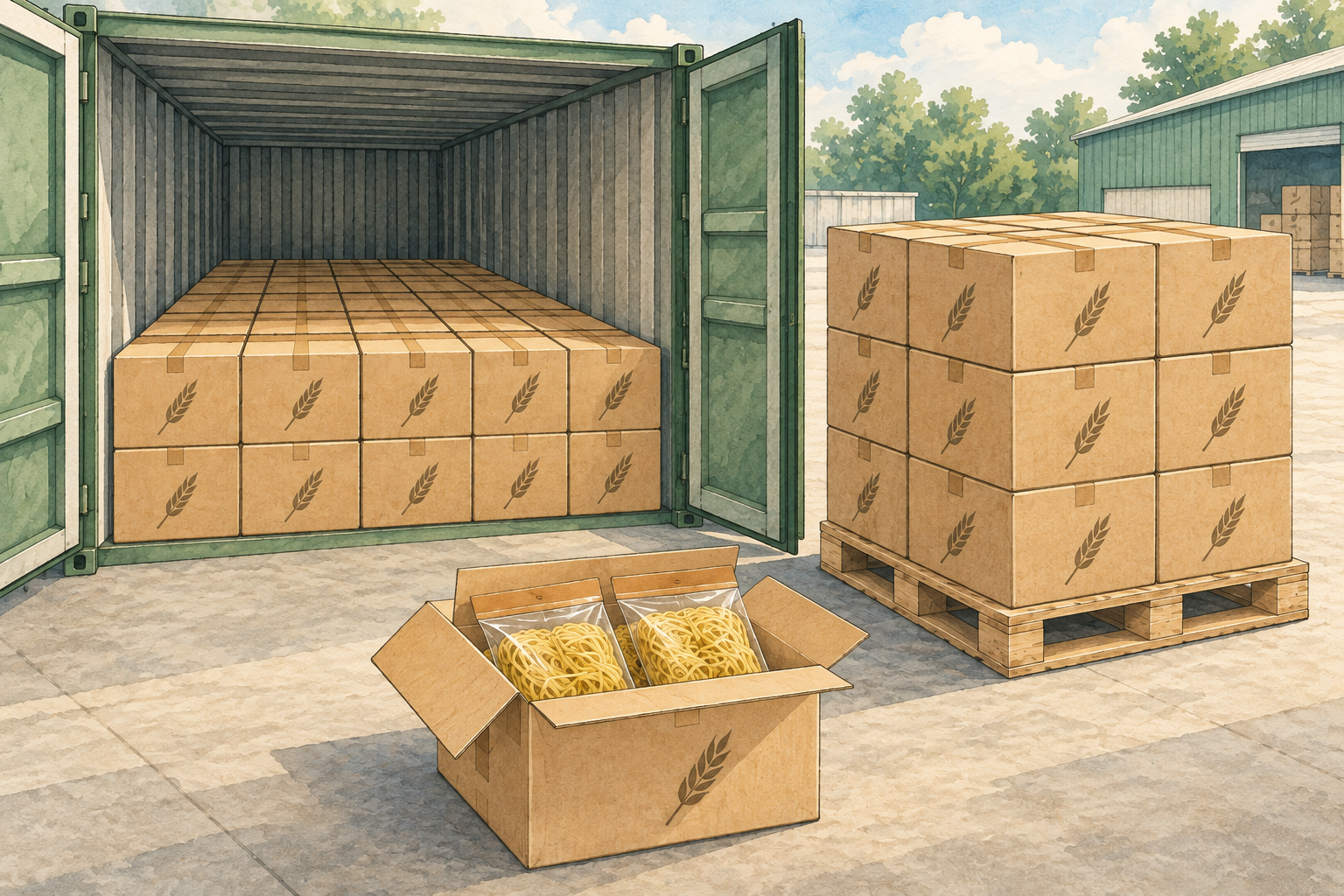
AI concept illustration of floor-loaded and palletized noodle cartons; not an actual shipment, packaging specification or cargo-securing design.
Start with the receiving warehouse's written requirements. For a container of dried wheat noodles, choose a loading method only after the warehouse confirms what it can receive, how it will unload the cargo and which preparation charges apply. Then ask the supplier and forwarder to check that method against the actual cartons.
Floor-loaded cartons travel without pallets; palletized cartons travel secured on pallet bases. Flexport's palletization guide explains the trade-off: pallets occupy container space but can simplify unloading, while some warehouses will not accept floor-loaded containers. Neither option is automatically the better order plan.
Confirm the ocean leg and final delivery separately
Ask two questions: “How will the cartons leave the factory?” and “In what form must they arrive at our warehouse?” Record both answers.
If the route includes a warehouse transfer or consolidation facility, ask whether cartons will be unloaded, sorted or put onto different pallets there. Name the party responsible for that work and request its charge. Approval for one stage should not be treated as approval for the next.
For the receiving location, request written confirmation of:
- acceptance of floor-loaded containers or palletized deliveries;
- unloading arrangements, available equipment and who supplies labor;
- delivery appointments and whether the vehicle waits or leaves the container;
- accepted pallet footprint, total loaded height and gross weight;
- carton and pallet identification requirements;
- charges for unloading, sorting, pallet supply or rebuilding loads.
These are questions for the actual receiver, rather than standard limits to copy from another warehouse's website.
Compare two complete plans for the same noodle order
Keep the SKU list and carton quantities identical when requesting the initial comparison. For Egg Noodle and other shelf-stable wheat noodles, use the confirmed shipping cartons for that order, including any packaging changes.
If the proposal uses pallets
Request a drawing or clear loading description showing cartons per layer, layers per pallet, total pallet count, finished dimensions and gross weight. Ask the supplier to confirm carton support, stacking limits, load securing and any restrictions on placing another loaded pallet above it. Have the receiver check the finished load, not just the empty pallet size.
If the proposal is floor-loaded
Ask how cartons will be grouped by SKU, protected and secured, and identified during unloading. Confirm that the receiver has accepted the unloading plan and included the required handling in its quotation. An available delivery appointment alone does not answer those questions.
Use our carton dimensions and CBM guide for the volume calculation. This decision also needs the warehouse's handling conditions. Ask for a revised carton count if the approved arrangement changes the proposed shipment, and compare charges on that same basis.
Check what happens to mixed-SKU pallets on arrival
A pallet that is acceptable for transport may still need sorting before storage. For example, Flexport's published warehouse requirements state that mixed-product pallets entering its Reserve Storage are separated into single-SKU pallets, with storage billed on the resulting pallets. That is a policy for those facilities, not a universal rule.
Ask your own warehouse whether egg noodles, other wheat noodles and snack cartons can share a received pallet, and whether they must be separated for storage. Request the sorting and storage basis before choosing the mix. Keep the SKU quantities on the packing list consistent with the carton identification and the approved loading plan.
Check pallet material for the destination
For a U.S.-bound shipment using regulated wood packaging, USDA APHIS guidance requires appropriate treatment and an ISPM 15 mark, alongside other wood-packaging conditions. APHIS separately lists alternatives such as plywood and plastic pallets in its wood-packaging guidance.
Ask the supplier to identify the actual pallet and any wood used to brace the cargo. Have the importer or broker check the applicable destination requirements against those materials. The warehouse's approval of pallet dimensions does not answer the material question. This U.S. example does not establish requirements for another country.
Send one confirmation sheet before booking
Use the following blank checklist to bring the supplier, forwarder and receiver onto the same plan:
- Order: SKU names, carton quantities and approved carton specification version.
- Route: origin loading method; any transfer; final delivery method.
- Receiving approval: facility, accepted arrangement and confirmation date.
- Load details: pallet material, finished dimensions, weight and count, if applicable; approved stacking and securing plan.
- Identification: SKU separation, carton marks and required receiving labels.
- Handling: unloading party, appointment arrangement, sorting or rebuilding work.
- Cost basis: included charges, exclusions and who pays each handling charge.
- Open items: responsible party and confirmation needed before booking.
For a wholesale noodle order, send your SKU list, quantities, destination and warehouse receiving instructions through our contact page. Ask Noodle House Food to confirm the product and carton basis, then agree the loading arrangement with the parties handling your shipment.
Guidance checked 19 September 2026. Warehouse policies and destination requirements should be reconfirmed for the shipment.