Buying Guides
Wonton Noodles for Soup or Dry Tossing: Specify the Noodles and Dumplings Separately
Separate noodle strands, wontons and soup or sauce in your purchasing brief. Dry-tossed serving does not establish the received noodle form or a complete meal-kit offer.
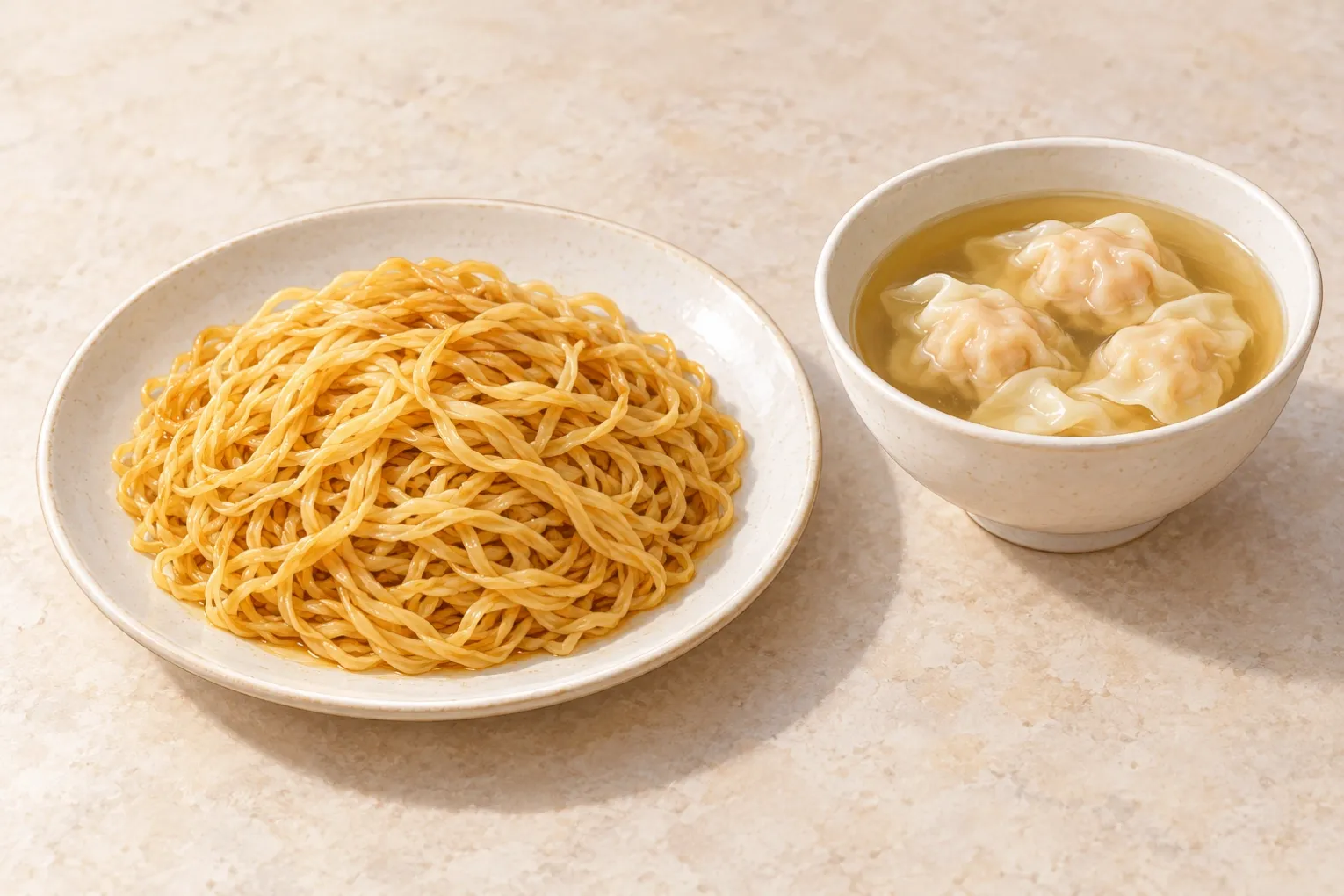
AI-generated serving illustration. Dumplings and soup are generic components and do not represent a Noodle House supply offer.
A request for “wonton noodles” needs two descriptions: the components you want to buy and the way you intend to serve them. Dry-tossed noodles may be served alongside a separate bowl of wonton soup. The word “dry” on the menu therefore does not establish that the purchased noodles are dried, or that the meal contains no soup.
One dish name can cover several purchased components
Grace's Nyonya Cooking wonton-noodle recipe shows sauce-tossed noodles with wonton soup served alongside. She also suggests dried egg noodles as an alternative to the fresh or frozen noodles described on that page. Bee Yinn Low's Rasa Malaysia guide describes soup and dry versions and lists noodle ingredients separately from the wrappers and filling used for wontons.
These are examples of particular recipes, not a universal specification or endorsements of our products. Their useful purchasing lesson is to identify the components separately before selecting a noodle sample.
Component | What the buyer should specify |
|---|---|
Noodle strands | The exact noodle product, received form and its own preparation directions |
Wontons | Whether the kitchen wants finished dumplings or will prepare them from wrappers and filling |
Wrappers and filling, if purchased separately | Separate product descriptions and requirements; the noodle ingredient list does not describe either one |
Broth, sauce and garnishes | Which components the kitchen makes itself and which, if any, are part of the requested supply |
Use separate order lines or a clearly itemised brief. A noodle-only quotation should not be treated as a price for a complete wonton meal.
Keep the delivered form separate from the serving style
There are two independent choices to record:
- Delivered form: What noodle product arrives in the pack? Record the supplier's actual description and preparation instructions.
- Serving style: Will the prepared strands sit in soup, or be tossed with sauce and served with any soup separately?
For example, “dried egg-noodle strands for a sauce-tossed dish, with wontons and broth sourced separately” describes both choices. It is an illustrative brief, not a customer order or a statement that a specific noodle has passed that application test.
A photograph of the finished dish can clarify the intended arrangement, but include the received-product requirement as well. A plate of sauced noodles does not show whether the starting noodles were fresh, frozen or dried. Preparation directions for one format should not be transferred to another.
Where our Egg Noodle fits in the discussion
Noodle House's Egg Noodle is listed as a shelf-stable dried wheat noodle containing wheat flour, water, egg and salt. The product page includes soup and dry-tossed dishes among its suggested applications. That makes it a noodle candidate to discuss for the intended dish; it is not confirmation of equivalence to a recipe author's fresh noodle.
This product reference covers the noodle strands. It does not establish an offer of wonton wrappers, fillings, finished dumplings or a complete meal kit. Keep any request for those components explicit so it can be assessed separately.
When assessing an available sample, use its current preparation directions and your actual broth or tossing sauce. The decision here is whether this noodle belongs in the dish you intend to assemble. For a specific problem with cooked strands sticking together, use our separate dry-tossed noodle adhesion guide.
Send a component-level sample request
Contact Noodle House with the Egg Noodle link, your intended soup or dry-tossed serving style, and a short list of which meal components you want included in the inquiry. Add the destination and pack requirement for the noodles. That gives the supplier a defined noodle question to answer without turning a dish name into an unsupported promise to supply every ingredient.