Oct 2, 2026Buying Guides
Will a Loaded Noodle Pallet Fit Through the Container Door?
Container internal height is not the same as door clearance. Check the completed pallet and handling route before approving a noodle loading plan.
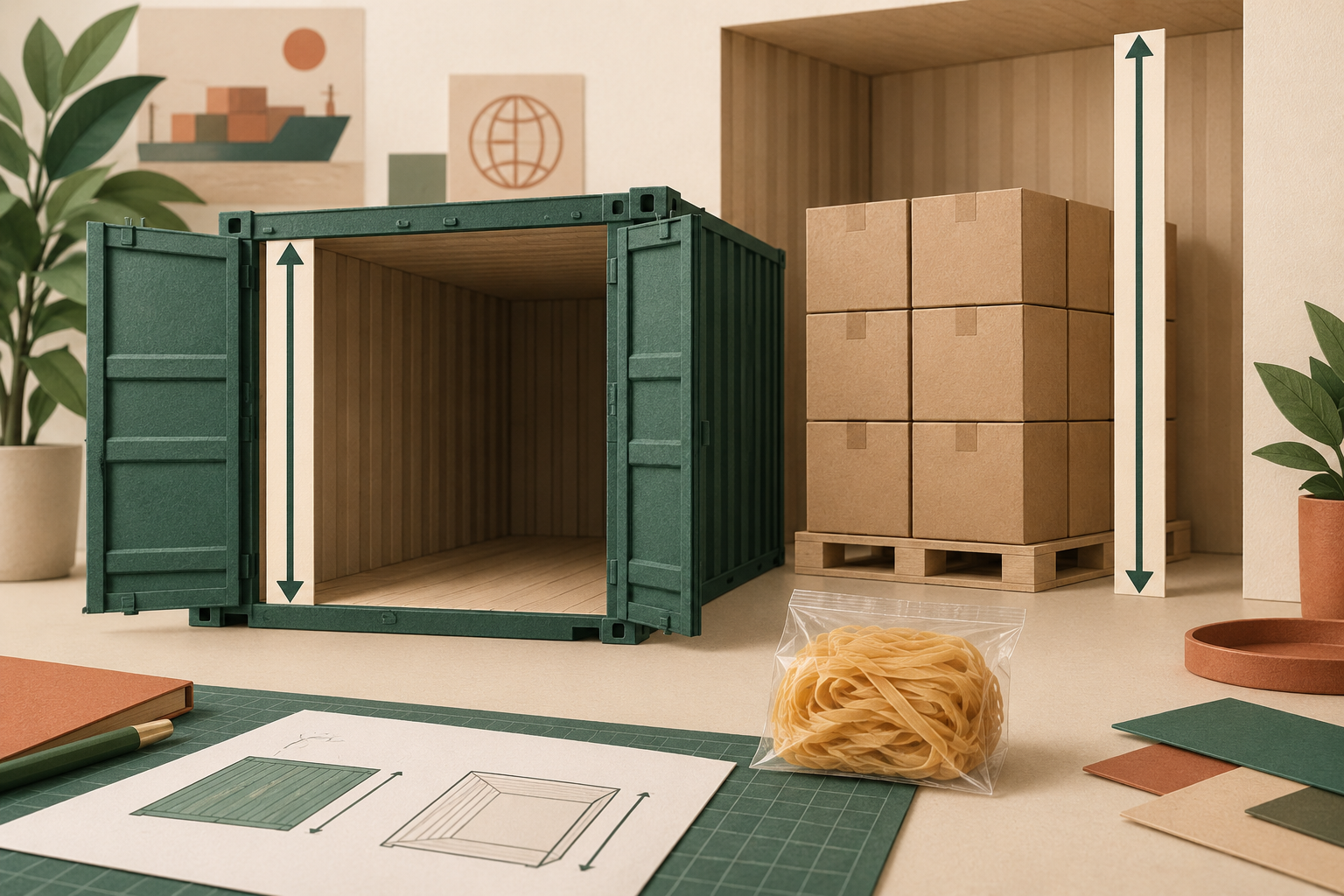
AI-generated editorial illustration of container-door and interior clearances; the models are not to scale and cannot establish equipment dimensions or loading feasibility.
A pallet can be lower than a container’s internal roof and still be too tall to pass through the door. Approve a noodle loading plan against the actual door opening, completed load dimensions and handling method—not just the container’s cubic capacity or internal height.
The useful question is whether the complete load can move through the entire route in its approved orientation. A plan that works only after removing top cartons is a different plan and needs agreement before dispatch.
Compare the opening with the interior
Hapag-Lloyd’s example specification for a 40-foot standard high-cube container lists an internal height of 2,700 mm and a door-opening height of 2,597 mm. The carrier warns that its figures are examples because equipment varies by manufacturer. Confirm the actual equipment for the shipment rather than treating those dimensions as a guarantee. Hapag-Lloyd container specification.
In that published example, the door is 103 mm lower than the interior. A volume calculation alone does not expose this restriction.
Imagine a hypothetical completed noodle pallet measuring 2,600 mm high. It is 100 mm below the example interior height, but 3 mm above the example door opening. In its stated upright configuration it cannot pass through that opening. These are teaching calculations, not a recommended pallet height or a Noodle House loading specification.
Measure the finished load, not the carton stack alone
Ask the packing team for the maximum completed dimensions. The height should include the pallet base, cartons and any top protection. The width and length should reflect the finished load, including anything that projects beyond the base.
Do not assume that a drawing of neat rectangular cartons describes every wrapped pallet. Ask how the final dimensions will be checked and how any departure from the approved configuration will be handled.
A proposed confirmation sheet is:
Item | Evidence to request |
|---|---|
Completed pallet | Maximum height, width, length and gross weight |
Container | Actual type and confirmed door-opening dimensions |
Loading route | Dock, doorway and other relevant restrictions |
Handling method | Equipment and operating clearance agreed by the handler |
Load protection | Top sheets, edge protection, wrap and overhang included in dimensions |
Approval | Named packing, transport and receiving parties; drawing revision |
This worksheet is a request for the responsible parties’ assessment. It does not replace their safe handling or cargo-securing plan.
Leave the clearance decision with the handler
A load being numerically smaller than the opening is only one part of the review. The operator needs room to move and position it using the actual equipment and route. Ask the handler to state the required operating clearance and assess it against the proposed finished load.
Do not turn the 3 mm shortfall in the example into advice to squeeze, tilt or force a pallet through. Changing orientation may create different stability or handling problems. Equally, there is no single clearance allowance in this article that can be applied to every facility or forklift.
If the plan fails, ask for a revised layer count, pallet configuration or loading arrangement. Recalculate carton quantities and related handling costs on the revised basis; do not leave the original carton count in the purchase file after lowering the load.
Check the destination route as well
A pallet that enters the shipping container can still conflict with the receiving warehouse’s requirements. Have the receiver confirm its completed-load limits and unloading arrangement. Keep origin and destination approvals together with the final drawing.
The palletized versus floor-loaded guide addresses which delivery method the warehouse can accept. The carton volume guide addresses CBM planning. Door clearance is a separate physical check within the chosen arrangement.
For a wholesale noodle order, provide the SKU quantities, destination and receiver instructions through the contact page. Confirm the actual carton and pallet proposal with the parties handling the shipment before relying on a loading count.